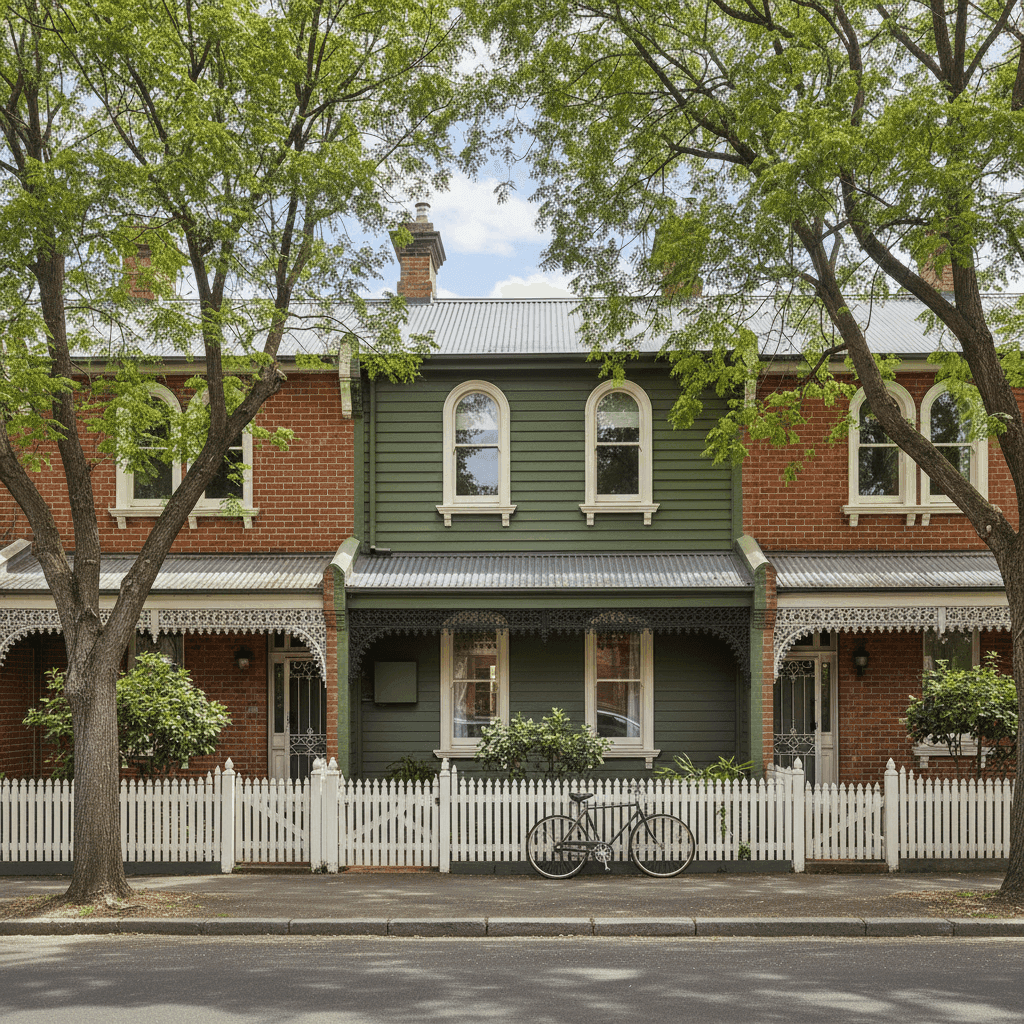
Erskineville is one of Sydney's most beloved inner-west suburbs — a tight-knit community of Victorian-era terraces, tree-lined streets, and a distinctly local character that sets it apart from the city's newer developments. If you own a heritage terrace here, understanding what you should be paying for building insurance is just as important as protecting the home itself. This article breaks down a real building-only insurance quote for a 2-bedroom, 1-bathroom weatherboard terrace in Erskineville, and puts it into context against suburb, state, and national benchmarks.
---
Is This Quote Fair?
The quote in question comes in at $1,143 per year (or roughly $111 per month) for building-only cover on a 135 sqm terrace with a sum insured of $578,000. Our pricing model rates this as CHEAP — below average for the area.
To put that in plain terms: this is a genuinely competitive quote. It sits well below what most homeowners in Erskineville are paying, and it's not even close to the suburb's average. For a heritage-listed property with timber construction — two factors that often push premiums higher — landing a quote at this level is a strong result.
The building excess is set at $2,000, which is on the higher side and is likely one reason the annual premium is as low as it is. A higher excess means you're agreeing to cover more of any claim yourself, which reduces the insurer's risk exposure and, in turn, lowers your upfront cost. Whether that trade-off suits your situation depends on your financial buffer and how risk-tolerant you are.
---
How Erskineville Compares
Here's how this quote stacks up against broader market data:
| Benchmark | Premium |
|---|---|
| This quote | $1,143/yr |
| Erskineville suburb average | $2,647/yr |
| Erskineville suburb median | $2,477/yr |
| Erskineville 25th percentile | $1,815/yr |
| Erskineville 75th percentile | $4,054/yr |
| Sydney LGA average | $2,041/yr |
| NSW state average | $3,801/yr |
| NSW state median | $3,410/yr |
| National average | $2,965/yr |
| National median | $2,716/yr |
This quote is 57% below the Erskineville suburb average and sits beneath even the 25th percentile — meaning it's cheaper than at least 75% of quotes recorded in the area. It also comes in well under the NSW state average of $3,801/yr and the national average of $2,965/yr.
It's worth noting that the Erskineville sample size is 19 quotes, which gives us a reasonable snapshot of local pricing but isn't a massive dataset. Premiums across the suburb vary enormously — from around $1,815 at the lower end to over $4,054 at the upper end — reflecting the diversity of property types, construction materials, sum insured values, and insurers operating in the area.
You can explore the full breakdown of Erskineville home insurance data here.
---
Property Features That Affect Your Premium
Several characteristics of this property are worth understanding from an insurance perspective.
Heritage Overlay This terrace sits under a Heritage Overlay, which means any repairs or rebuilds must comply with heritage guidelines. That can significantly increase the cost of reconstruction — specialised trades, period-appropriate materials, and council approvals all add up. Insurers factor this into their risk assessments, which is why heritage properties often attract higher premiums. Getting a competitive quote here is particularly noteworthy.
Weatherboard Timber Walls Weatherboard construction is common across inner-west Sydney terraces of this era, but it does carry a higher fire risk compared to brick or rendered masonry. Some insurers price this more cautiously, especially for older homes. It's important to ensure your policy explicitly covers the replacement of period timber cladding, as costs can be higher than standard materials.
Stump Foundation Homes built on stumps — particularly those dating back to the 1890s — can be susceptible to subsidence, termite damage, and moisture-related issues over time. While these aren't necessarily covered under standard building policies (especially if they're considered gradual damage), they're relevant to the overall risk profile of the property.
Colorbond Roof The steel/Colorbond roof is actually a positive from an insurance standpoint. Metal roofing is durable, low-maintenance, and performs well in storms compared to older terracotta or slate tiles. This may be contributing to the favourable premium.
Timber and Laminate Flooring Original or period-style timber floors add character and value, but they can be costly to repair or replace after events like flooding or fire. Ensuring your sum insured accounts for the full replacement cost — including these finishes — is essential.
Building Size and Sum Insured At 135 sqm with a sum insured of $578,000, the rebuild cost per square metre works out to approximately $4,281/sqm. For a heritage terrace in inner Sydney requiring period-appropriate reconstruction, this is a reasonable figure, though it's always worth reviewing against current building cost estimates to avoid being underinsured.
---
Tips for Homeowners in Erskineville
1. Review your sum insured regularly Construction costs in Sydney have risen significantly in recent years. If your sum insured hasn't been updated to reflect current rebuild costs — including heritage compliance requirements — you could be underinsured when it matters most. Consider using a quantity surveyor or your insurer's calculator to validate your figure annually.
2. Understand what your heritage listing means for claims Not all insurers handle heritage properties the same way. Before committing to a policy, confirm that your insurer will cover like-for-like replacement of heritage materials and that they have experience managing claims on listed properties. The cheapest premium isn't always the best value if the policy doesn't adequately cover your specific circumstances.
3. Consider the excess trade-off carefully This quote carries a $2,000 building excess. While it helps keep premiums low, make sure you're comfortable covering that amount out of pocket if you need to make a claim. If your financial situation changes, it may be worth requesting a lower excess — even if it bumps the annual premium slightly.
4. Don't set and forget Insurance markets shift, and so do individual risk profiles. Even if you're happy with your current quote, it's worth comparing again at each renewal. Premiums can change significantly from year to year, and a quote that was competitive last year may not be the best available today.
---
Compare Your Options with CoverClub
Whether you're renewing your policy or buying for the first time, it pays to see what the market looks like before you commit. CoverClub makes it easy to compare home insurance quotes across multiple insurers — so you can see exactly where your premium sits relative to your neighbours and the broader market. Get a quote at CoverClub and find out if you're getting a fair deal on your Erskineville home.