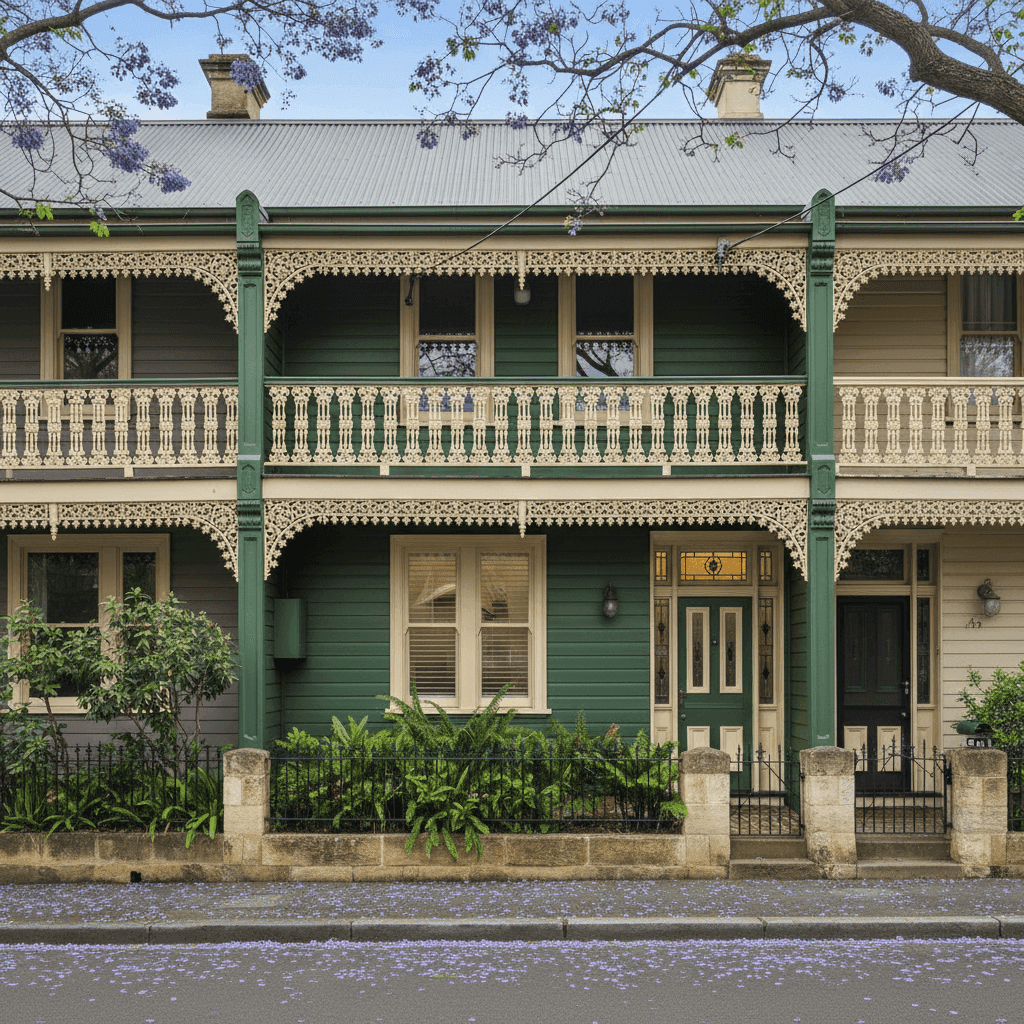
Erskineville is one of Sydney's most characterful inner-west suburbs — a tight-knit community of narrow streets, corner cafés, and rows of heritage terraces that date back to the late 19th century. If you own a two-bedroom terrace here, you're sitting on a genuinely unique piece of Australian architectural history. But that charm comes with its own insurance considerations, and understanding what you're paying — and why — can make a real difference to your hip pocket.
This article breaks down a recent building-only insurance quote of $2,651 per year (or $254/month) for a 135 sqm, two-bedroom, one-bathroom terrace in Erskineville, built in 1890, with a sum insured of $578,000. We'll look at whether that price is fair, how it stacks up against local and national benchmarks, and what you can do to manage your premium.
---
Is This Quote Fair?
The short answer: this quote sits above average for the area, earning a price rating of Expensive.
At $2,651 per year, this premium lands just above the suburb's 75th percentile of $2,237 — meaning it's higher than roughly three-quarters of comparable quotes in Erskineville. The suburb average is $1,577/yr and the median is $1,356/yr, so this quote is running 68% above the local median.
That said, context matters. The sum insured here is $578,000, which is on the higher end for a 135 sqm terrace — and rightfully so, given the age of the property and the cost of heritage-compliant reconstruction. The building excess is set at $1,000, which is fairly standard.
It's also worth noting that the quote isn't wildly out of range. The suburb's 75th percentile sits at $2,237, and this quote isn't dramatically beyond that threshold. If you're seeing a figure like this, it's not a red flag — but it is a signal to shop around and see whether another insurer can offer comparable cover for less.
---
How Erskineville Compares
To put this quote in perspective, here's how Erskineville stacks up against broader benchmarks:
| Benchmark | Average Premium | Median Premium |
|---|---|---|
| Erskineville (2043) | $1,577/yr | $1,356/yr |
| Sydney LGA | $1,975/yr | — |
| NSW | $9,528/yr | $3,770/yr |
| National | $5,347/yr | $2,764/yr |
A few things stand out here. Erskineville's premiums are notably lower than both the NSW and national averages, which is a genuine positive for homeowners in this postcode. The suburb sits in a relatively low-risk zone — no cyclone exposure, no bushfire fringe — which keeps base rates competitive compared to many other parts of the state.
The NSW state average of $9,528/yr is heavily skewed by high-risk regional areas (think flood plains and coastal zones), so the median of $3,770/yr is a more useful comparison point. Even against that figure, Erskineville's median of $1,356/yr looks quite favourable.
You can explore the full data for this postcode at CoverClub's Erskineville stats page, or compare it against NSW-wide figures and national benchmarks.
---
Property Features That Affect Your Premium
Several characteristics of this particular property have a meaningful influence on what insurers charge — and understanding them helps explain why this quote sits where it does.
Heritage Overlay
This is arguably the single biggest premium driver for this property. A Heritage Overlay listing means that in the event of damage, any repairs or reconstruction must comply with heritage guidelines — using period-appropriate materials, techniques, and finishes. This significantly increases the cost of rebuilding, and insurers price that risk accordingly. It also limits the pool of builders who can carry out compliant work, which can push costs higher still.
Age and Construction (Built 1890)
A terrace built in 1890 is over 130 years old. While many of these homes have been sympathetically renovated, the underlying structure — weatherboard timber walls, stumped foundations, and timber flooring — presents specific risks. Timber is more susceptible to fire, rot, and termite damage than modern materials. Stumped foundations can shift over time, and older plumbing and electrical systems (if not updated) can be a source of claims.
Weatherboard Timber Walls
Timber-clad external walls are generally considered higher risk than brick veneer or double brick by most insurers. They're more vulnerable to fire spread and weather damage, which typically results in a higher base premium.
Steel/Colorbond Roof
On the positive side, a Colorbond steel roof is viewed favourably by insurers. It's durable, low-maintenance, resistant to ember attack, and less prone to storm damage than older terracotta or slate. This may partially offset some of the risk loading from the timber walls and age of the property.
Ducted Climate Control
The presence of ducted climate control is a relatively minor factor, but it does add to the insured value of the building's fixed fittings and can marginally influence the sum insured calculation.
No Pool, No Solar
The absence of a pool and solar panels simplifies the risk profile slightly — no pool liability exposure, and no solar system to factor into the rebuild cost.
---
Tips for Homeowners in Erskineville
If you're looking to get the best value on building insurance for your Erskineville terrace, here are four practical steps worth taking.
1. Review your sum insured carefully. At $578,000 for a 135 sqm heritage terrace, the sum insured here reflects the genuine cost of heritage-compliant reconstruction — not market value. It's worth getting a professional building valuation every few years to make sure you're neither underinsured (leaving you exposed) nor overinsured (paying more than you need to). Many homeowners in heritage areas unknowingly pay premiums on an inflated sum insured.
2. Shop around — seriously. With a quote sitting above the suburb's 75th percentile, this is a strong case for comparing alternatives. Insurers assess heritage properties differently, and the spread between the cheapest and most expensive quotes in Erskineville is substantial (from $829/yr at the 25th percentile to $2,237/yr at the 75th). A few minutes comparing quotes could save you hundreds annually.
3. Ask about heritage-specific cover. Not all standard building policies adequately cover the cost of heritage-compliant repairs. When comparing insurers, ask specifically whether their policy covers like-for-like replacement using period-appropriate materials. A cheaper policy that doesn't cover this could leave you significantly out of pocket after a claim.
4. Keep maintenance records up to date. Insurers can reduce or deny claims if damage is attributed to poor maintenance rather than a sudden insured event. For an older timber home, staying on top of things like subfloor ventilation, gutter clearing, and termite inspections — and keeping records of this work — can protect your claim entitlements and potentially support a better premium at renewal.
---
Compare Your Options at CoverClub
Whether you're renewing your current policy or shopping for the first time, it pays to see what else is on the market. CoverClub makes it easy to compare building insurance quotes for properties across Australia — including heritage terraces in inner Sydney. Enter your address and get a clear picture of where your quote sits relative to your neighbours, your suburb, and the broader market.