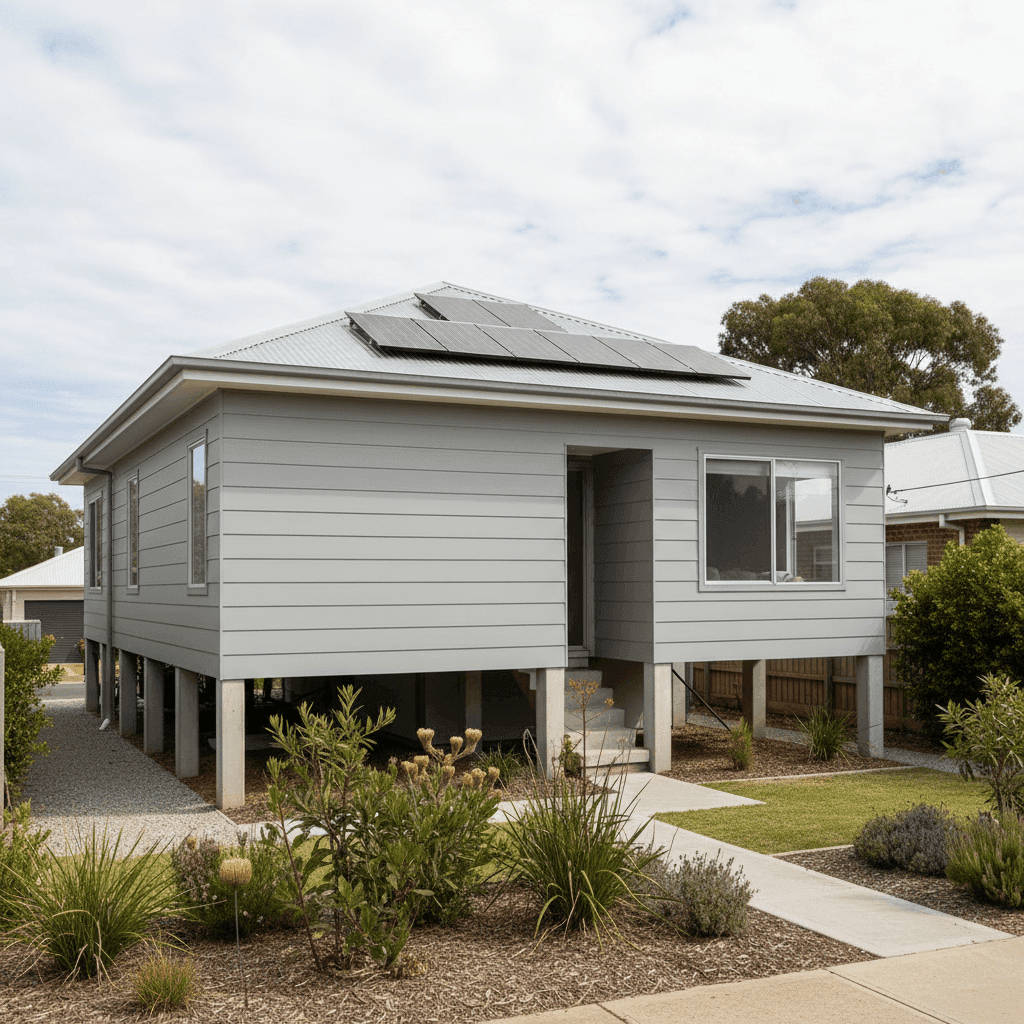
Ethelton is a quiet, established suburb in Port Adelaide Enfield — one of Adelaide's older residential pockets sitting just a few kilometres from the coast and the Port River. It's characterised by modest, character-filled homes, many of which were built in the mid-20th century. If you own a free standing home here, understanding what you should expect to pay for home and contents insurance is an important part of managing your household budget. This article breaks down a real quote for a 3-bedroom, 1-bathroom property in Ethelton and puts it into context with state and national data.
---
Is This Quote Fair?
The annual premium on this quote comes in at $2,480 per year (or $231/month) for combined home and contents cover, with a building sum insured of $640,000 and contents valued at $50,000. Both the building and contents excess are set at $1,000.
Based on our pricing analysis, this quote is rated Expensive — above average for the area. That doesn't necessarily mean it's wrong, but it does mean it's worth scrutinising before you accept it.
A premium can sit above average for several legitimate reasons — the age and construction style of the property, the sum insured, and specific features all play a role. That said, "above average" is always a signal to shop around. Even a modest saving of $300–$400 per year adds up to thousands of dollars over the life of a mortgage.
---
How Ethelton Compares
Unfortunately, there isn't enough suburb-level data to give a precise Ethelton-specific benchmark right now — but we can draw useful comparisons from South Australia's broader insurance data and national figures.
| Benchmark | Average Premium | Median Premium |
|---|---|---|
| South Australia | $1,933/yr | $1,787/yr |
| National | $2,965/yr | $2,716/yr |
This quote of $2,480/yr sits 28% above the SA average and 39% above the SA median — a meaningful gap. Compared to national figures, it's actually below the national average ($2,965) and national median ($2,716), which suggests that while this quote is pricey for South Australia, it wouldn't be out of place in higher-cost states like Queensland or New South Wales.
For South Australian homeowners, the state average is a more relevant yardstick, and against that measure, this premium warrants a closer look. You can explore Ethelton-specific insurance stats as more local data becomes available.
---
Property Features That Affect Your Premium
Several characteristics of this property are likely influencing the premium — some pushing it higher, others that could work in your favour.
Age and Construction (1950, Aluminium Cladding, Stumps)
Built in 1950, this home is over 70 years old. Older properties typically attract higher premiums because ageing materials — plumbing, wiring, roofing — carry a greater risk of failure or damage. Insurers price this risk into the policy.
Aluminium external walls are relatively low-maintenance and resistant to corrosion, which is a mild positive. However, homes on stump foundations (common in older SA and Victorian-era builds) can be more susceptible to subsidence, movement, and moisture-related issues — all factors that insurers weigh carefully.
Timber and Laminate Flooring
Timber floors, while beautiful, are more vulnerable to water damage than tiles or concrete. In the event of a burst pipe or flooding, timber flooring can be expensive to restore or replace, which can nudge premiums upward.
Steel/Colorbond Roof
This is actually a positive for insurance purposes. Colorbond roofing is durable, fire-resistant, and performs well in high-wind conditions. Compared to older terracotta or asbestos cement roofing common in homes of this era, a steel roof is a meaningful risk reducer.
Solar Panels
Solar panels add value to the property but also add complexity to an insurance claim — they can be damaged by hail, storms, or falling debris, and replacement costs are significant. Most insurers include them under building cover, but it's worth confirming your policy explicitly covers them and for what amount.
Ducted Climate Control
Ducted systems are expensive to repair or replace and are generally covered under building insurance. Their presence increases the overall replacement cost of the home, which may contribute to a higher sum insured and, in turn, a higher premium.
Sum Insured: $640,000
At 130 sqm, a building sum insured of $640,000 works out to roughly $4,923 per sqm — which is on the higher end for a standard-quality home. It's worth using a building cost calculator to verify this figure is accurate for your property. Over-insuring means you're paying more premium than necessary; under-insuring can leave you exposed at claim time.
---
Tips for Homeowners in Ethelton
1. Review Your Sum Insured
Given the above-average premium, the first thing to check is whether your building sum insured of $640,000 is accurate. Use an independent building replacement cost estimator (not the market value of your home) to make sure you're not paying for more cover than you need.
2. Shop Around — Seriously
A premium that's 28% above the SA average is a strong signal to compare. Use a comparison platform like CoverClub to get multiple quotes side by side. Insurers price risk differently, and you may find equivalent cover for significantly less.
3. Ask About Solar Panel Cover
With solar panels on the roof, make sure your policy explicitly covers them — including for storm damage, hail, and accidental breakage. Some policies treat them as an optional extra or have sublimits that may not reflect full replacement cost.
4. Consider Your Excess
Both excesses on this policy are set at $1,000. Opting for a higher voluntary excess (say, $1,500 or $2,000) can meaningfully reduce your annual premium. If you have a solid emergency fund and rarely make small claims, this trade-off often makes financial sense.
---
Compare Your Options with CoverClub
Whether you're renewing your existing policy or shopping for the first time, it pays to compare. CoverClub makes it easy to see how your quote stacks up and find better value cover for your Ethelton home. Get a quote today and see what you could be saving — it takes just a few minutes and could put hundreds of dollars back in your pocket each year.