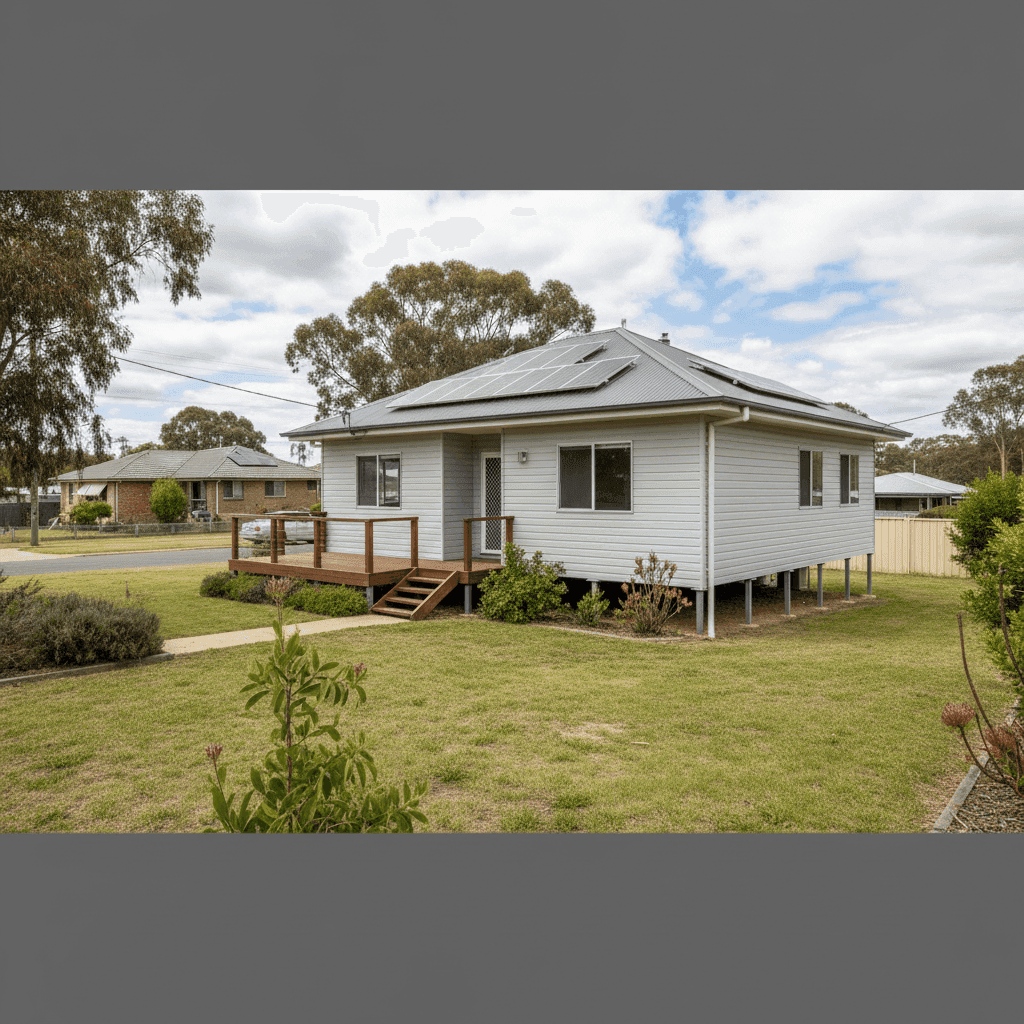
If you own a free standing home in Evansford, VIC 3371, you're likely curious about whether you're paying a fair price for home and contents insurance — or leaving money on the table. This article breaks down a real insurance quote for a 2-bedroom, 1-bathroom home in Evansford, compares it against Victorian and national benchmarks, and offers practical advice to help you make the most of your cover.
---
Is This Quote Fair?
The annual premium for this property came in at $1,755 per year (or $171/month), covering both building (sum insured: $475,000) and contents ($40,000). Our price rating for this quote is CHEAP — below average — which is great news for the homeowner.
To put that in perspective: the average home and contents premium across Victoria sits at $2,921 per year, with a state median of $2,694. Nationally, the average is $2,965, with a median of $2,716. This quote comes in well beneath every one of those benchmarks — saving the homeowner over $1,100 per year compared to the Victorian average alone.
For a property in the Hepburn LGA, where the average premium is even higher at $3,053 per year, this result is particularly impressive. Homeowners in this part of regional Victoria are often stung with elevated premiums due to a range of environmental and property-specific risk factors, so landing a quote this far below the local average is a genuine win.
That said, it's always worth checking the fine print. A lower premium can sometimes mean higher excesses, narrower cover, or exclusions that matter. In this case, the building excess is $2,000 and the contents excess is $1,000 — both on the higher end of the spectrum, which partly explains the competitive pricing. Make sure the excess levels suit your financial situation before committing.
---
How Evansford Compares
While there isn't enough suburb-level data to calculate a specific Evansford average at this stage, we can draw meaningful comparisons using LGA, state, and national figures:
| Benchmark | Annual Premium |
|---|---|
| This Quote | $1,755 |
| Hepburn LGA Average | $3,053 |
| VIC State Average | $2,921 |
| VIC State Median | $2,694 |
| National Average | $2,965 |
| National Median | $2,716 |
At 40–42% below the state and national averages, this quote stands out as exceptional value. Regional Victoria — and the Hepburn Shire in particular — tends to attract higher premiums than the state median, making this result even more noteworthy. As more data becomes available for Evansford specifically, it will be easier to benchmark quotes at a hyperlocal level.
---
Property Features That Affect Your Premium
Several characteristics of this property likely contribute to its competitive premium. Here's how each feature plays a role:
Hardiplank / Hardiflex External Walls
Fibre cement cladding such as Hardiplank and Hardiflex is generally well regarded by insurers. It's resistant to fire, rot, and termites — all meaningful risks in regional Victoria — and tends to attract more favourable pricing compared to weatherboard or older timber-clad homes.
Steel / Colorbond Roof
A Colorbond steel roof is one of the most insurer-friendly roofing materials available in Australia. It's durable, fire-resistant, and low-maintenance, which reduces the likelihood of weather-related claims. This is likely a positive factor in the premium calculation.
Stump Foundation (Elevated Less Than 1m)
The home sits on stumps, elevated by less than one metre. While elevated homes can face higher premiums in flood-prone or cyclone-risk areas, Evansford is not classified as a cyclone risk zone, and the modest elevation may actually help with drainage and underfloor ventilation. The impact on premium here is likely neutral to mildly positive.
Timber / Laminate Flooring
Timber and laminate floors are generally straightforward to insure but can be costly to replace if damaged by water or impact. Ensuring your contents and building sum insured adequately covers flooring replacement is worth double-checking.
Solar Panels
This property has solar panels installed. It's important to confirm with your insurer whether solar panels are covered under the building policy — most policies do include them, but coverage limits and accidental damage provisions can vary. Given the replacement cost of a typical solar system, this is worth verifying explicitly.
1995 Construction
Homes built in the mid-1990s are generally well-regarded by insurers — modern enough to meet contemporary building standards, but not so new that replacement costs are at a premium. This vintage sits in a sweet spot for pricing.
No Pool, No Ducted Climate Control
The absence of a swimming pool removes a meaningful liability and maintenance risk. Similarly, no ducted climate control system means fewer mechanical components that could fail and generate a claim. Both factors contribute to a cleaner risk profile.
---
Tips for Homeowners in Evansford
Whether you're renewing your policy or shopping for the first time, here are four practical steps to get the most out of your home insurance:
- Review your sum insured annually. Building costs in regional Victoria have risen significantly in recent years. At $475,000, your building sum insured should reflect the full cost of rebuilding — not the market value of your property. Use a building cost calculator or speak to a local builder to sense-check this figure each year.
- Confirm solar panel coverage. Ask your insurer specifically whether your solar panels are covered, under what circumstances, and up to what value. Some policies treat them as part of the building; others require a separate endorsement.
- Consider your excess carefully. The $2,000 building excess on this policy is relatively high. If you'd struggle to cover that out of pocket in the event of a claim, it may be worth paying a slightly higher premium in exchange for a lower excess. Run the numbers based on your own financial situation.
- Compare quotes at renewal. Even if you're happy with your current insurer, the home insurance market shifts constantly. Spending 10 minutes comparing quotes before your renewal date can save you hundreds — especially given how far below average this quote already sits.
---
Compare Home Insurance for Your Evansford Property
Whether this quote is yours or you're simply researching what to expect, the smartest move is to compare. CoverClub makes it easy to see how your premium stacks up and find competitive options tailored to your property. Get a quote today and see if you can do even better than the already impressive figure above.