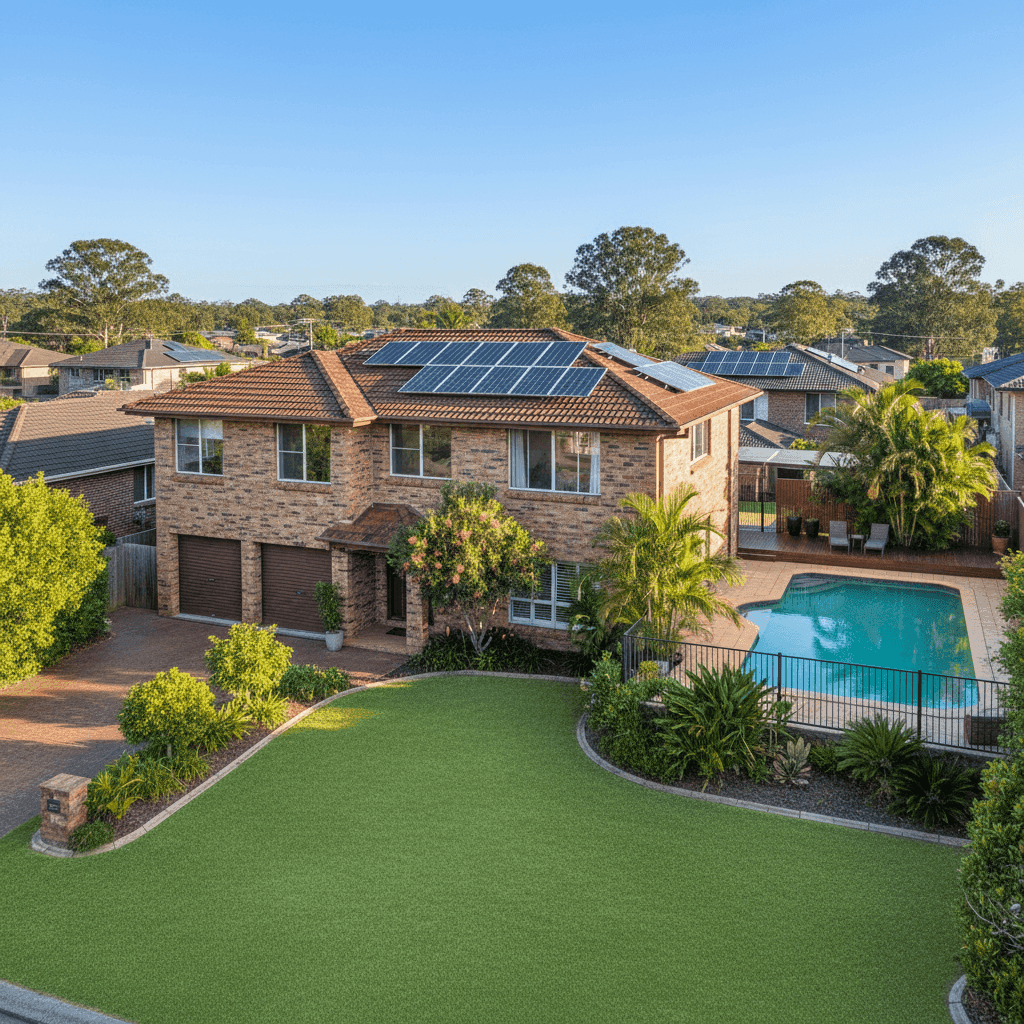
If you own a free standing home in Everton Park, QLD 4053, you've probably wondered whether your home insurance premium is reasonable — or whether you're quietly paying more than you need to. This article breaks down a real home and contents insurance quote for a four-bedroom, three-bathroom property in this popular north-western Brisbane suburb, and puts the numbers into context using suburb, state, and national benchmarks.
---
Is This Quote Fair?
The annual premium for this property comes in at $2,451 per year (or $239/month), covering both building (sum insured: $1,143,000) and contents ($249,000). Our pricing analysis rates this quote as Expensive — Above Average for the area.
To understand why, it helps to look at what other Everton Park homeowners are paying. Based on 88 quotes collected for the suburb, the suburb average sits at $1,810/yr and the median is $1,614/yr. This quote lands well above the 75th percentile of $2,140/yr — meaning it's pricier than at least three-quarters of comparable quotes in the area.
That said, "expensive" doesn't automatically mean "wrong." This property has a number of features — including a swimming pool, solar panels, ducted climate control, and above-average fittings — that all push the insured value (and therefore the premium) higher. The building sum insured of $1,143,000 is also substantial, reflecting the cost to fully rebuild a 244 sqm double brick home with quality finishes. If your sum insured is significantly higher than the suburb norm, a higher premium is to be expected.
The key question isn't just how much you're paying — it's whether the cover you're receiving justifies the cost. A cheaper policy with gaps in coverage could end up costing far more at claim time.
---
How Everton Park Compares
Putting this quote into a broader context reveals something interesting: Everton Park is actually a relatively affordable suburb when it comes to home insurance, at least compared to Queensland and national figures.
| Benchmark | Average Premium | Median Premium |
|---|---|---|
| Everton Park (suburb) | $1,810/yr | $1,614/yr |
| Moreton Bay LGA | $3,145/yr | — |
| Queensland (state) | $4,547/yr | $3,931/yr |
| Australia (national) | $2,965/yr | $2,716/yr |
The Queensland state average of $4,547/yr is dramatically higher than what Everton Park homeowners typically pay — a reflection of the significant flood, cyclone, and storm risk that affects many regional and coastal Queensland properties. Everton Park, being a non-cyclone-risk area in metropolitan Brisbane, benefits from a much lower risk profile.
Interestingly, even the national average of $2,965/yr exceeds this quote, which suggests that on a state and national scale, $2,451/yr is not unreasonable — particularly given the property's size, features, and high sum insured. The "expensive" rating is relative to the local suburb, where many homes may be smaller, older, or have fewer insurable features.
---
Property Features That Affect Your Premium
Several characteristics of this property have a direct bearing on what insurers charge. Here's how each one plays a role:
Double Brick Construction Double brick walls are generally viewed favourably by insurers. They're durable, fire-resistant, and less susceptible to storm damage than lightweight cladding. However, they can be more expensive to repair or rebuild — which contributes to a higher sum insured and, in turn, a higher premium.
Tiled Roof Terracotta or concrete tile roofs are a standard, well-regarded roofing material in Queensland. They perform well in heat and moderate weather events. Tiles are neither a red flag nor a discount trigger for most insurers.
Slab Foundation A concrete slab foundation is common in Queensland homes built from the 1970s onwards. It's generally considered stable and low-risk, with no underfloor space for moisture or pest issues.
Construction Year: 1975 At approximately 50 years old, this home sits in a bracket where insurers may apply slightly more scrutiny — particularly around plumbing, electrical systems, and roofing. That said, double brick homes from this era are often well-built and durable. Keeping up with maintenance and having recent renovations documented can help at claim time.
Swimming Pool A pool adds to your contents and building liability exposure. It increases the cost to rebuild or replace, and also introduces public liability considerations. Most policies cover the pool structure under building insurance, but it's worth confirming the specifics of your policy.
Solar Panels Solar panel systems are typically covered under building insurance, but only up to the limits specified in your policy. With a system on the roof, it's important to ensure your sum insured accounts for the replacement cost of the panels and inverter — particularly as system sizes and costs vary widely.
Ducted Climate Control Ducted air conditioning is a fixed asset and forms part of your building sum insured. It's a significant cost to replace if damaged, and its inclusion here is one reason the building sum insured is as high as it is.
Above-Average Fittings Above-average fittings — think stone benchtops, quality cabinetry, premium fixtures — increase the rebuild cost of a home considerably. Insurers account for this when calculating appropriate sums insured, and it's a key driver of the $1,143,000 building cover figure.
---
Tips for Homeowners in Everton Park
1. Review your sum insured annually Building costs in Brisbane have risen sharply in recent years. Make sure your sum insured reflects current rebuild costs — not what you paid for the property, and not a figure set years ago. Underinsurance is one of the most common and costly mistakes homeowners make.
2. Check what's included for your pool and solar Not all policies treat pools and solar panels the same way. Some have sub-limits or exclusions for accidental damage to panels. Read the Product Disclosure Statement (PDS) carefully, or ask your insurer directly.
3. Consider your excess strategically This policy carries a $3,000 building excess — which is on the higher side. A higher excess typically lowers your premium, but means more out-of-pocket at claim time. If you have the financial buffer to absorb a $3,000 expense, this can be a sensible trade-off. If not, it may be worth comparing policies with a lower excess.
4. Compare quotes before renewal Insurers often reserve their best rates for new customers. If you've been with the same provider for several years without shopping around, there's a good chance you could find equivalent or better cover at a lower price. Use CoverClub to compare quotes and see what other insurers are offering for your specific property.
---
Find a Better Deal with CoverClub
Whether this quote feels right or a little steep, it always pays to compare. CoverClub makes it easy to see how your premium stacks up against real data from your suburb and beyond. Get a home insurance quote today and find out if there's a better deal waiting for your Everton Park home.