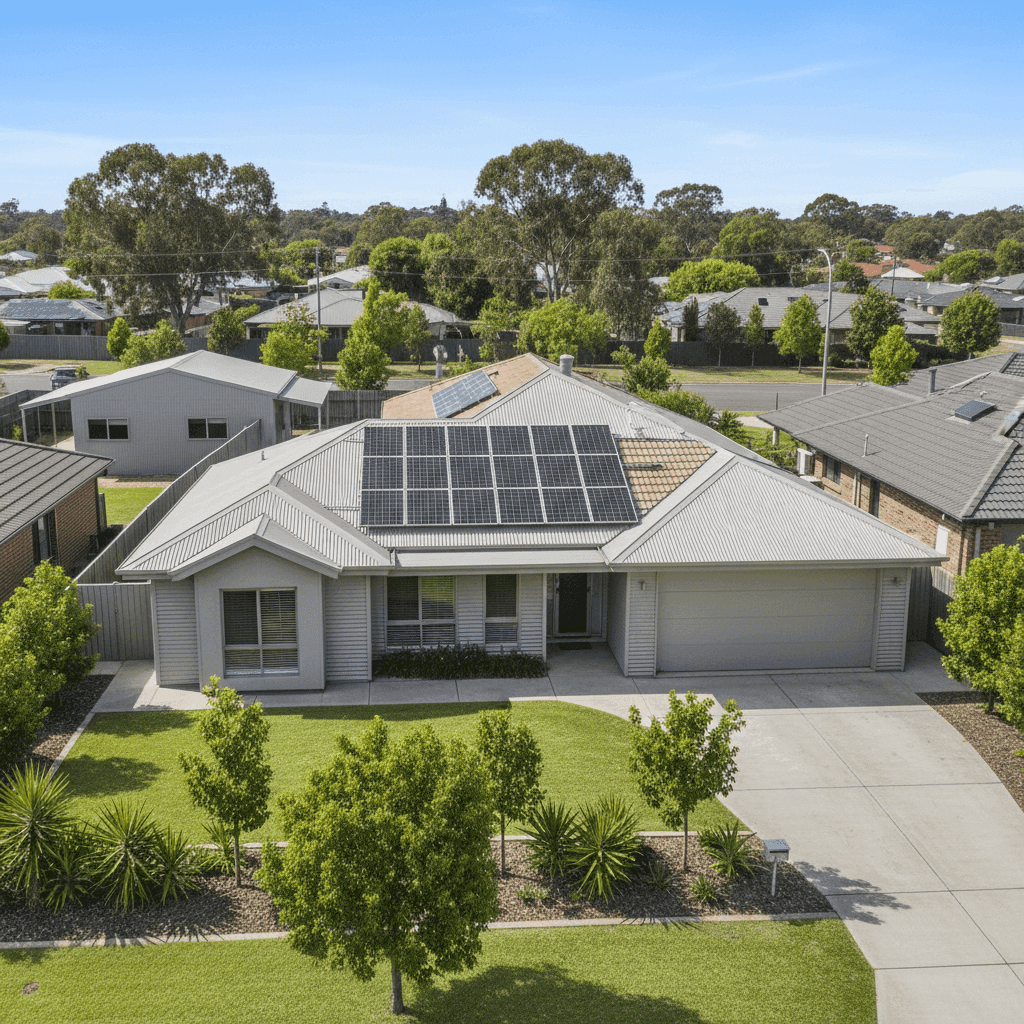
If you own a free standing home in Fairfield East, NSW 2165, you already know that finding the right building insurance can feel like navigating a maze. Premiums vary enormously depending on your property's characteristics, your insurer's risk appetite, and even the postcode you live in. This article breaks down a real building-only insurance quote for a five-bedroom, four-bathroom free standing home in Fairfield East — and puts the numbers in context so you can judge whether the price stacks up.
---
Is This Quote Fair?
The quote in question comes in at $5,739 per year (or $554 per month) for building-only cover, with a $500 building excess and a sum insured of $1,152,000. Our pricing analysis rates this quote as EXPENSIVE — above average for the area.
To understand why, it helps to look at the broader picture. The suburb average for Fairfield East sits at $7,140 per year, which might make $5,739 sound like a bargain at first glance. But averages can be skewed by outliers — and with only five quotes in the suburb sample, a single high-value property can pull that figure up significantly. The more telling number is the suburb median of $3,125 per year, which represents the midpoint of what Fairfield East homeowners are actually paying. Against that benchmark, this quote is nearly 84% above the median, which is a meaningful gap.
The 25th and 75th percentile range for the suburb runs from $2,932 to $3,690 per year, meaning the vast majority of comparable quotes fall well below this one. That's the clearest signal that this premium warrants a closer look.
---
How Fairfield East Compares to the Rest of NSW and Australia
Zooming out to a state level, the picture becomes even more nuanced. The NSW average building insurance premium is a striking $9,528 per year — heavily influenced by high-risk coastal and flood-prone areas across the state. The NSW median, however, is $3,770 per year, which is closer to what most Sydney suburban homeowners pay.
At the national level, the average premium is $5,347 per year and the median is $2,764 per year. So while this quote of $5,739 is slightly above the national average, it's more than double the national median — a sign that the property's specific features are pushing the premium higher than a typical Australian home.
Perhaps the most striking comparison is against the LGA (Cumberland) average of just $2,285 per year. This quote is more than 2.5 times that figure, which strongly suggests that the individual property's risk profile — rather than the general location — is the primary driver of cost.
| Benchmark | Premium |
|---|---|
| This Quote | $5,739/yr |
| Fairfield East Median | $3,125/yr |
| Fairfield East Average | $7,140/yr |
| NSW Median | $3,770/yr |
| NSW Average | $9,528/yr |
| National Median | $2,764/yr |
| National Average | $5,347/yr |
| Cumberland LGA Average | $2,285/yr |
---
Property Features That Affect Your Premium
Several characteristics of this property are likely contributing to the above-average premium. Understanding these factors can help you have a more informed conversation with your insurer — or make a stronger case when shopping around.
Age of Construction (1960)
Homes built in the 1960s are viewed with caution by insurers. Older properties may have outdated electrical wiring, plumbing systems, and structural elements that don't meet modern building codes. Repair and replacement costs are also typically higher, as materials and craftsmanship from that era can be difficult to source or replicate.
Aluminium External Walls
Aluminium cladding is a less common wall material in Australian suburban homes, and insurers may apply a loading for non-standard construction types. While aluminium itself is durable and low-maintenance, it can be more expensive to repair or replace after storm or impact damage, and some insurers treat it as a higher-risk material.
Pole (Stump) Foundation
A pole or stump foundation is common in older Australian homes and can be a flag for insurers, particularly when combined with the home's age. Stumps can deteriorate over time, and homes on poles may be more vulnerable to movement or damage in certain weather events. This foundation type can also complicate repair assessments.
Timber and Laminate Flooring
Timber flooring — especially in older homes — increases the cost of internal reinstatement. It's also more susceptible to water damage than concrete or tile alternatives, which can push up claims costs in the event of a burst pipe or flooding event.
Size and Sum Insured
At 334 square metres with five bedrooms and four bathrooms, this is a large property. The sum insured of $1,152,000 reflects the substantial rebuild cost, and premiums are naturally higher when there's more at stake. The presence of a granny flat also adds to the overall insurable value of the dwelling.
Solar Panels and Ducted Climate Control
Both solar panels and ducted air conditioning systems add value to the property and increase the cost of reinstatement. Solar panels are also exposed to hail and storm damage, which insurers factor into their risk calculations.
---
Tips for Homeowners in Fairfield East
If you're looking to get better value on your building insurance, here are four practical steps worth taking:
- Shop around with your property details ready. The gap between the cheapest and most expensive quotes in Fairfield East is significant. Having your construction details — wall type, foundation, roof material, and build year — on hand will help you get accurate quotes faster and avoid surprises at claim time.
- Consider increasing your excess. This quote carries a $500 building excess. Many insurers will offer a meaningfully lower premium if you're willing to increase your excess to $1,000 or $2,000. If you have savings to cover a larger out-of-pocket cost, this trade-off can make financial sense over time.
- Review your sum insured annually. Building costs in Western Sydney have risen sharply in recent years. Make sure your sum insured reflects the current cost to rebuild — not the figure you set three or four years ago. Being underinsured can be just as costly as overpaying on premiums.
- Ask about discounts for security and maintenance upgrades. Some insurers offer reduced premiums for homes with monitored alarm systems, deadbolts, or updated electrical and plumbing. Given the age of this property, demonstrating recent maintenance or upgrades could work in your favour at renewal time.
---
Compare Your Options at CoverClub
Whether you're renewing your policy or buying cover for the first time, it pays to compare. CoverClub makes it easy to see how your premium stacks up against other homeowners in Fairfield East and across NSW. Get a quote today and find out if you're getting a fair deal — or if there's a better option waiting for you.