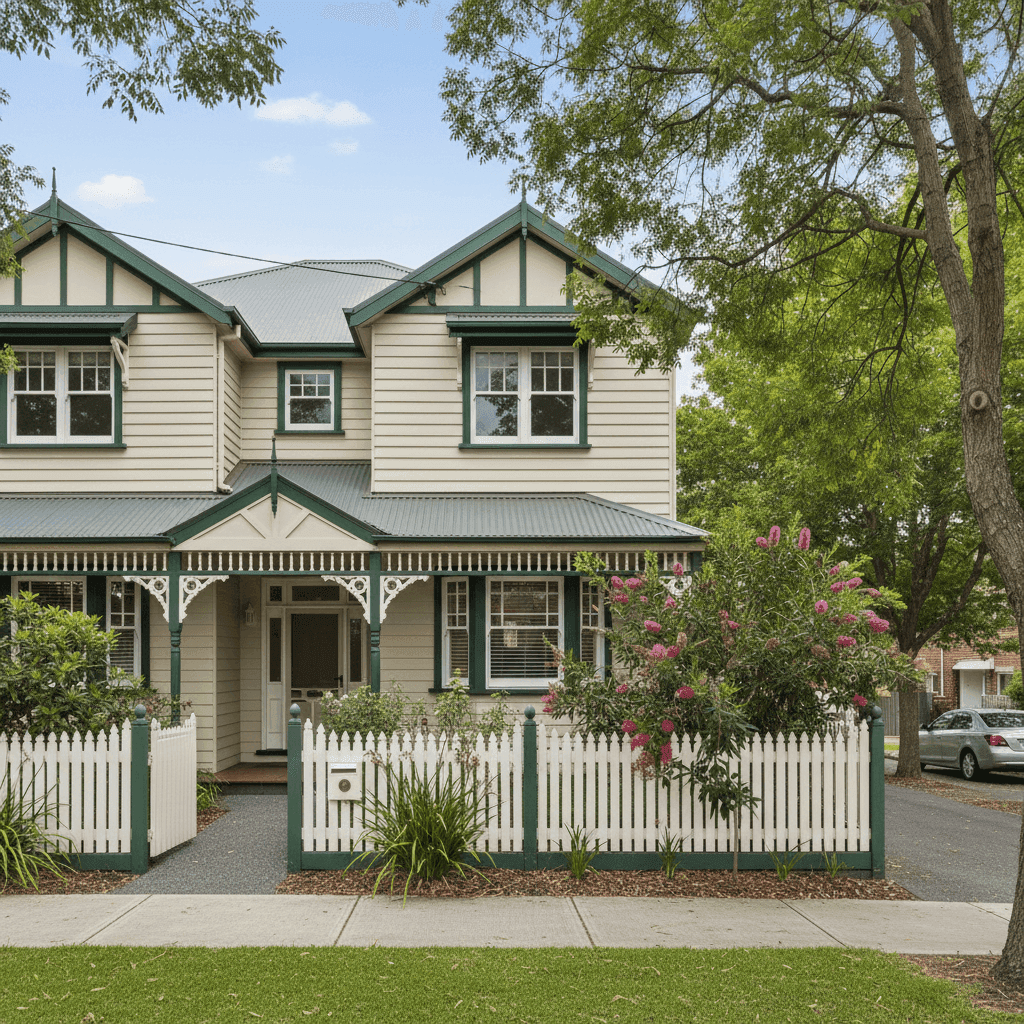
If you own a townhouse in Fairfield, NSW 2165, you're likely no stranger to the balancing act of protecting an older property without overpaying on insurance. This article breaks down a real building insurance quote for a three-bedroom, two-bathroom townhouse in Fairfield — examining whether the premium is competitive, what's driving the cost, and what local homeowners can do to get better value.
---
Is This Quote Fair?
The quote in question sits at $3,647 per year (or $350/month) for building-only cover, with a $1,000 building excess and a sum insured of $550,000. CoverClub has rated this quote as FAIR — Around Average, and when you dig into the data, that assessment holds up.
Compared to the Fairfield suburb average of $3,013/yr, this premium runs about 21% above the local mean. However, it falls comfortably below the suburb's 75th percentile of $3,705/yr — meaning roughly three-quarters of comparable quotes in the area come in cheaper, but a meaningful portion are actually more expensive. So while this isn't the sharpest price on the market, it's not out of step with what Fairfield homeowners with more complex properties are paying.
The suburb median of $2,532/yr tells a slightly different story — this quote is 44% above the midpoint. That gap is largely explained by the property's heritage listing and the age and construction type of the building, which we'll explore shortly.
---
How Fairfield Compares
To put this quote in proper context, it helps to look beyond the suburb boundary.
| Benchmark | Annual Premium |
|---|---|
| This Quote | $3,647 |
| Fairfield Suburb Average | $3,013 |
| Fairfield Suburb Median | $2,532 |
| NSW State Average | $3,801 |
| NSW State Median | $3,410 |
| National Average | $2,965 |
| National Median | $2,716 |
| Cumberland LGA Average | $1,792 |
A few things stand out here. First, this quote is actually below the NSW state average of $3,801/yr — which suggests that, from a statewide perspective, the pricing is quite reasonable. New South Wales tends to carry higher premiums than the national average, driven by storm, flood, and bushfire exposure across the state, so landing below the state mean is a positive sign.
Second, the Cumberland LGA average of just $1,792/yr is strikingly low compared to this quote. That figure likely reflects a broader mix of newer, lower-risk properties across the LGA, whereas this particular townhouse — with its heritage overlay, weatherboard construction, and age — sits firmly in a higher-risk bracket.
You can explore broader NSW insurance trends and national home insurance data to see how different regions and property types compare across the country.
---
Property Features That Affect Your Premium
Several characteristics of this townhouse are almost certainly influencing the premium, some significantly.
Heritage Listing
Perhaps the most impactful factor is the heritage overlay. Heritage-listed properties are subject to strict council controls on how they can be repaired or rebuilt — often requiring specialist tradespeople, heritage-approved materials, and council approvals that don't apply to standard homes. Insurers price this in, because the cost to reinstate a heritage property to its original standard can be substantially higher than a comparable modern build.
Construction Age — Built in 1865
A property constructed in 1865 is over 160 years old. While well-maintained older homes can be structurally sound, insurers factor in the likelihood of aged wiring, older plumbing, and materials that are no longer in production or require specialist sourcing. This adds complexity — and cost — to any significant claim.
Weatherboard Timber Walls
Weatherboard timber is a classic Australian construction material, particularly common in heritage homes. However, it carries a higher fire risk than brick or rendered masonry, and can be more susceptible to moisture damage and pest activity over time. These factors typically push premiums higher relative to brick-veneer or double-brick equivalents.
Stump Foundation
Homes on stump (or pier) foundations — common in older NSW and Queensland properties — can be more vulnerable to subsidence, movement, and termite ingress. Insurers assess this as an elevated risk compared to slab-on-ground construction.
Colorbond Steel Roof
On the positive side, a Colorbond steel roof is generally well-regarded by insurers. It's durable, fire-resistant, and low-maintenance compared to terracotta tiles or older corrugated iron. This likely provides a modest offset against some of the other risk factors.
Timber and Laminate Flooring
Timber flooring — particularly original hardwood in a heritage home — can be expensive to repair or replace after water or fire damage. This is worth keeping in mind when reviewing your sum insured.
---
Tips for Homeowners in Fairfield
1. Review Your Sum Insured Carefully
At $550,000, the building sum insured needs to reflect the true cost of rebuilding the property — not its market value. For a heritage home with specialist construction requirements, rebuild costs can be surprisingly high. Consider getting a professional building valuation to ensure you're neither underinsured nor paying premiums on an inflated figure.
2. Maintain Your Heritage Property Proactively
Regular maintenance of weatherboard cladding, roof flashings, and subfloor areas (particularly around stumps) can reduce the likelihood of claims and demonstrate to insurers that the property is well cared for. Some insurers offer better renewal terms to homeowners with a clean claims history.
3. Shop Around — Heritage Properties Vary Widely by Insurer
Not all insurers price heritage properties the same way. Some have specialist underwriting for older homes; others apply blanket loadings that may not reflect your property's actual condition. Using a comparison tool like CoverClub lets you see multiple quotes side by side without the legwork of calling each insurer individually.
4. Check What's Actually Covered
Building-only cover protects the structure but not your belongings. If you also want to protect furniture, appliances, and personal items, you'll need to add contents cover. For a heritage townhouse, it's also worth confirming that your policy explicitly covers heritage reinstatement — some standard policies may only cover "like-for-like modern equivalent," which could leave you significantly out of pocket.
---
Ready to Compare?
Whether you're reviewing your current policy or shopping for the first time, comparing quotes is the single most effective way to ensure you're getting fair value. Head to CoverClub to compare building insurance quotes for your Fairfield property — it only takes a few minutes, and you might be surprised by the difference between providers.
For more localised data, check out the Fairfield suburb insurance stats to see how premiums in your postcode stack up.