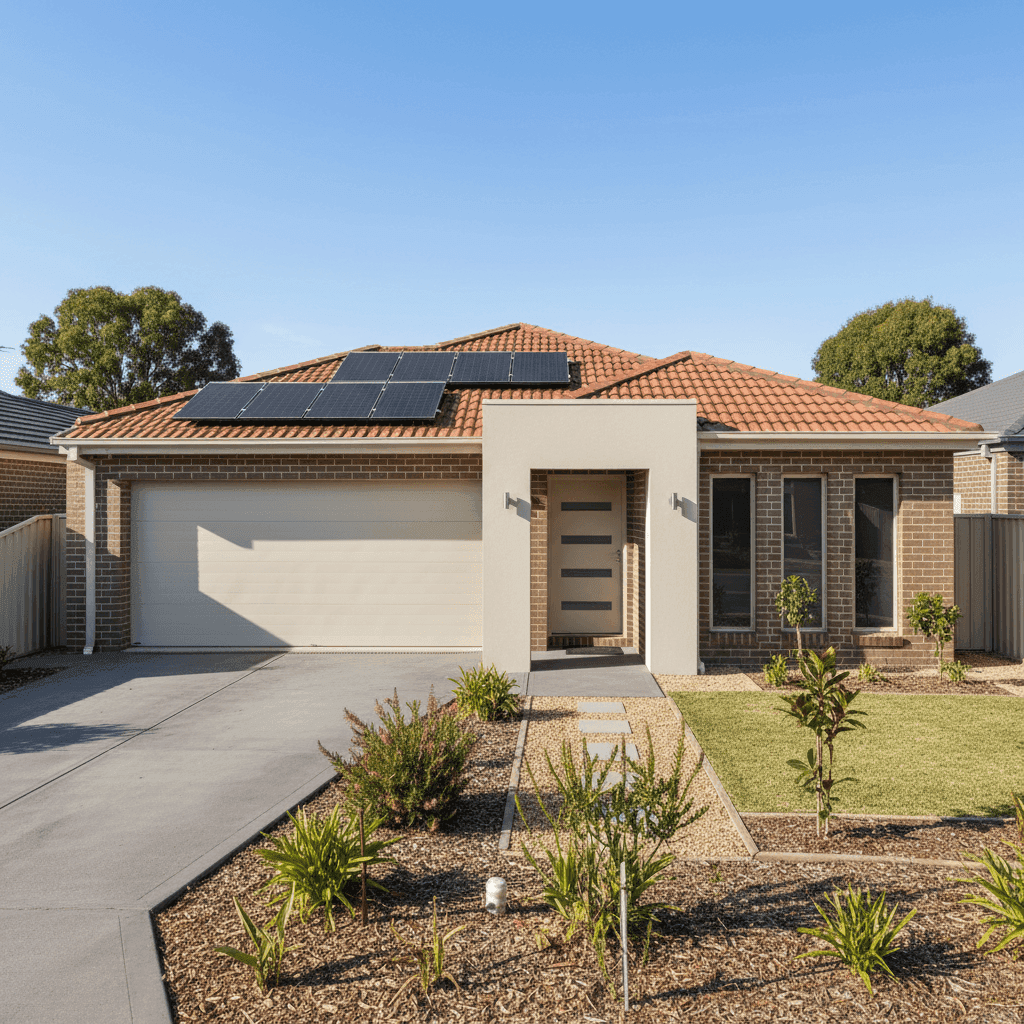
If you own a free standing home in Fairfield, NSW 2165, you've probably wondered whether you're paying a fair price for home insurance — or quietly overpaying year after year. This article breaks down a real home and contents insurance quote for a four-bedroom property in Fairfield, benchmarks it against local, state, and national data, and offers practical tips to help you get better value on your cover.
---
Is This Quote Fair?
The quote in question comes in at $1,999 per year (or $195/month) for combined home and contents cover, with a building sum insured of $1,029,000 and contents valued at $249,999. The building excess is $2,000 and the contents excess is $1,000.
Our pricing engine has rated this quote FAIR — Around Average.
What does that mean in practice? It means the premium sits within a reasonable range for this type of property in this area — not a standout bargain, but not an overpriced outlier either. Given that the suburb average for Fairfield sits at $3,013 per year and the median is $2,532 per year, a premium of $1,999 is actually tracking comfortably below the local average — which is a positive sign.
It's worth noting that "fair" doesn't mean you can't do better. Insurance pricing varies considerably between providers, and even a modest amount of comparison shopping can yield meaningful savings.
---
How Fairfield Compares
To put this quote in proper context, here's how Fairfield stacks up against broader benchmarks:
| Benchmark | Average Premium | Median Premium |
|---|---|---|
| Fairfield (2165) | $3,013/yr | $2,532/yr |
| Cumberland LGA | $1,792/yr | — |
| NSW | $3,801/yr | $3,410/yr |
| National | $2,965/yr | $2,716/yr |
(Based on 27 quotes sampled for the Fairfield suburb. View the full [Fairfield suburb stats](https://coverclub.com.au/stats/NSW/2165/fairfield) or [NSW state stats](https://coverclub.com.au/stats/NSW).)
A few things stand out here. First, Fairfield's suburb average of $3,013 is notably higher than the Cumberland LGA average of $1,792 — suggesting that premium variation within the same local government area can be significant. This is often driven by differences in property values, construction types, and claims history at a more granular level.
Second, NSW premiums as a whole are running well above the national average of $2,965 per year. This reflects a range of factors including higher property values in Greater Sydney, storm and flood exposure in parts of the state, and the concentration of older housing stock in some suburbs.
The quote of $1,999 sits below both the suburb and state averages — and even slightly below the national average — which is encouraging. However, the 25th percentile for Fairfield is $1,574 per year, meaning roughly a quarter of comparable quotes come in even cheaper. That's worth keeping in mind if you're motivated to push for a lower premium.
---
Property Features That Affect Your Premium
Insurance underwriters assess risk at a property level, and the features of this particular home play a meaningful role in how the premium is calculated.
Brick veneer construction with a tiled roof is generally viewed favourably by insurers. Brick veneer offers solid fire resistance and durability, while tiled roofs are considered low-maintenance and resilient compared to alternatives like Colorbond or corrugated iron in some risk scenarios. Together, these features typically attract more competitive premiums.
Slab foundation is the standard for homes of this era and is well-regarded by insurers. It avoids the subsidence and termite-related risks sometimes associated with older raised timber floors, and it pairs well with the tile flooring throughout — another material that's durable and straightforward to replace in the event of a claim.
Built in 2016, this is a relatively modern home. Newer builds benefit from compliance with contemporary building codes, which translates to better structural integrity and reduced likelihood of certain types of claims. Insurers often price newer properties more competitively as a result.
Solar panels are worth flagging. While they can add value and reduce energy costs, they also introduce an additional consideration for insurers — panels need to be covered against storm damage, hail, and electrical faults. It's important to confirm that your policy explicitly covers solar panels, both as part of the building structure and for any inverter or associated equipment.
Ducted climate control is a high-value fixed installation that should be accounted for in your building sum insured. At $1,029,000, the sum insured for this property appears substantial — but homeowners should periodically review this figure to ensure it reflects current rebuild costs, which have risen sharply across Australia in recent years due to construction inflation.
The property has no swimming pool, which removes one common source of liability exposure and can modestly reduce your premium compared to pool-equipped homes.
---
Tips for Homeowners in Fairfield
1. Review your building sum insured regularly Construction costs across NSW have increased significantly since 2020. A sum insured set a few years ago may no longer be sufficient to fully rebuild your home. Use an independent building cost calculator or speak with a quantity surveyor to make sure you're not underinsured — the consequences at claim time can be severe.
2. Confirm solar panel coverage in your policy Not all home insurance policies automatically cover solar panels, or they may apply sub-limits. Before renewing, check whether your inverter, panels, and associated wiring are fully covered under your building policy and at what limit.
3. Consider your excess strategically This quote carries a $2,000 building excess and a $1,000 contents excess. Opting for a higher excess is one of the most reliable ways to reduce your annual premium — but only makes sense if you have the savings to cover it comfortably in the event of a claim. If your emergency fund is solid, a higher excess could save you hundreds per year.
4. Shop around at renewal time Insurer loyalty rarely pays off in Australia. Premiums are recalculated annually, and many providers reserve their most competitive pricing for new customers. Even if your current quote looks reasonable, it's worth comparing quotes on CoverClub each year to ensure you're not drifting into overpaying territory.
---
Compare Your Own Quote
Whether you're reviewing an existing policy or shopping for cover for the first time, CoverClub makes it easy to see how your premium stacks up. Our platform aggregates real quote data from across Australia so you can benchmark your price against actual market rates — not just insurer marketing claims.
Get a home insurance quote and compare it instantly — it takes just a few minutes and could save you hundreds.