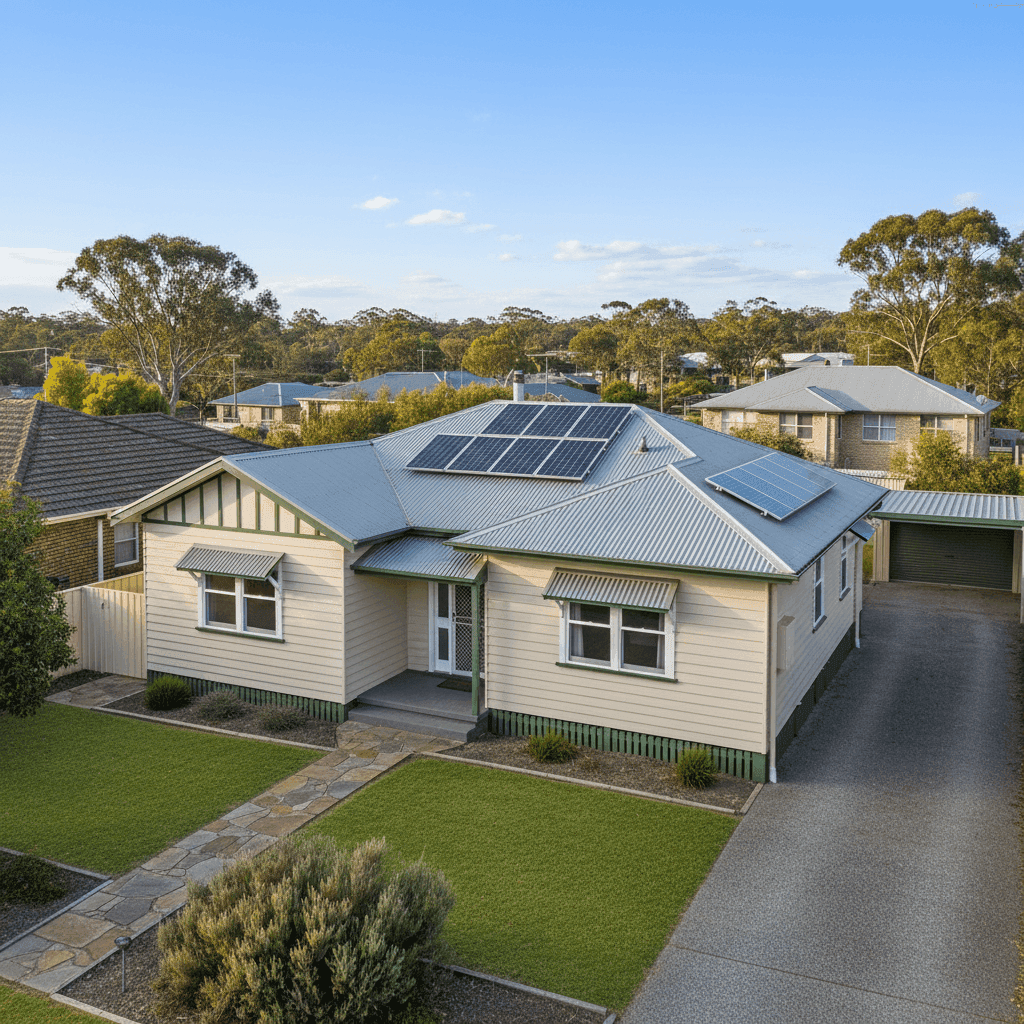
If you own a free standing home in Falls Creek, NSW 2540, you're likely paying close attention to the cost of home and contents insurance — and for good reason. Premiums in this part of New South Wales can vary significantly depending on your property's age, construction, and the level of cover you choose. This article breaks down a real insurance quote for a four-bedroom, two-bathroom weatherboard home in Falls Creek, compares it against local and national benchmarks, and offers practical advice to help you get the most out of your policy.
---
Is This Quote Fair?
The annual premium for this quote comes in at $3,634 per year (or $371 per month), covering both building (sum insured: $762,000) and contents ($20,000). Our independent price rating classifies this as Fair — Around Average.
That assessment holds up when you look at the numbers in context. The suburb median for Falls Creek sits at $3,843 per year, meaning this quote is comfortably below the midpoint for the area. It also falls below the suburb average of $4,645 per year — a figure that can be skewed upward by higher-risk or higher-value properties in the sample.
Compared to the broader NSW state average of $3,801 per year, this quote is slightly cheaper, and it sits above the national average of $2,965 per year — though that gap is largely explained by the higher property values and localised risk factors typical of coastal and semi-rural NSW.
In short: this isn't a bargain-basement premium, but it's not an outlier either. For a 214 sqm weatherboard home built in 1975 with a $762,000 building sum insured, paying $3,634 annually is a reasonable outcome in the current market.
---
How Falls Creek Compares
Understanding where your premium sits within the local market is one of the most useful tools available to homeowners. Here's how Falls Creek stacks up:
| Benchmark | Annual Premium |
|---|---|
| This Quote | $3,634 |
| Falls Creek Suburb Median | $3,843 |
| Falls Creek Suburb Average | $4,645 |
| Falls Creek 25th Percentile | $3,370 |
| Falls Creek 75th Percentile | $5,101 |
| NSW State Average | $3,801 |
| NSW State Median | $3,410 |
| National Average | $2,965 |
| National Median | $2,716 |
This quote sits between the 25th and 50th percentile for the Falls Creek suburb — meaning roughly half of comparable properties in the area are paying more. The wide spread between the 25th percentile ($3,370) and the 75th percentile ($5,101) suggests meaningful variation in local premiums, which is common in areas with mixed property ages, construction types, and risk profiles.
It's worth noting that the LGA average for this region comes in at $3,555 per year, slightly below this quote — but within a very close range. With only 13 quotes in the suburb sample, these figures should be treated as a useful guide rather than a definitive benchmark.
NSW premiums sit notably higher than the national average, reflecting elevated rebuild costs, storm and flood exposure across parts of the state, and the general cost of living in coastal and regional areas. Falls Creek is no exception to this broader trend.
---
Property Features That Affect Your Premium
Several characteristics of this property have a direct bearing on the insurance premium. Understanding them helps explain why you're paying what you are — and where there may be room to adjust.
Weatherboard timber walls are one of the most significant factors. Timber-framed and weatherboard homes are generally considered higher risk than brick veneer or full brick construction, as they are more susceptible to fire spread and can be costlier to repair or rebuild. Insurers typically price this in.
Construction year (1975) adds another layer of consideration. Homes built in the mid-1970s may have older electrical wiring, plumbing, and structural elements that don't meet current building codes. This can increase the likelihood of a claim and, consequently, the premium. That said, a well-maintained 50-year-old home can still attract competitive rates.
Steel/Colorbond roofing is generally viewed favourably by insurers — it's durable, fire-resistant, and performs well in harsh Australian weather conditions compared to older tile or fibrous cement roofing.
Solar panels are present on this property. While they can add value and reduce energy costs, they also represent an additional asset that may need to be covered and can complicate roof-related claims. It's worth confirming with your insurer whether solar panels are explicitly included in your building sum insured.
Slab foundation and timber/laminate flooring are fairly standard for homes of this era and don't typically attract significant premium loading in either direction.
The building excess of $3,000 is on the higher side, which will have contributed to keeping the premium lower. A higher excess means you absorb more cost in the event of a claim, so it's important to ensure that amount is genuinely manageable for your household budget.
---
Tips for Homeowners in Falls Creek
1. Review your building sum insured regularly With a sum insured of $762,000 for a 214 sqm home, it's essential to ensure this figure accurately reflects current rebuild costs — not market value. Construction costs have risen sharply in recent years, and being underinsured can leave you significantly out of pocket after a major event. Consider using a professional building estimator or your insurer's calculator annually.
2. Confirm solar panel coverage If your solar system isn't explicitly listed in your policy schedule, it may not be covered — or it may be subject to sub-limits. Ask your insurer directly how your panels are treated under both building and contents sections of the policy.
3. Consider whether your contents sum is adequate $20,000 in contents cover is relatively modest for a four-bedroom home. Take the time to do a proper home inventory — furniture, appliances, clothing, electronics, and valuables can add up quickly. Underinsuring your contents is a common and costly mistake.
4. Compare quotes before your renewal date The Falls Creek market shows a wide premium range, which means there's genuine competition worth exploiting. Don't simply accept your renewal notice — use a comparison tool to check whether you can secure equivalent cover at a lower price. Even saving $200–$300 per year adds up over time.
---
Ready to Compare?
Whether you're reviewing an existing policy or shopping for cover for the first time, comparing quotes is the single most effective way to ensure you're not overpaying. Get a home insurance quote at CoverClub and see how your premium stacks up against the market in Falls Creek and across NSW.