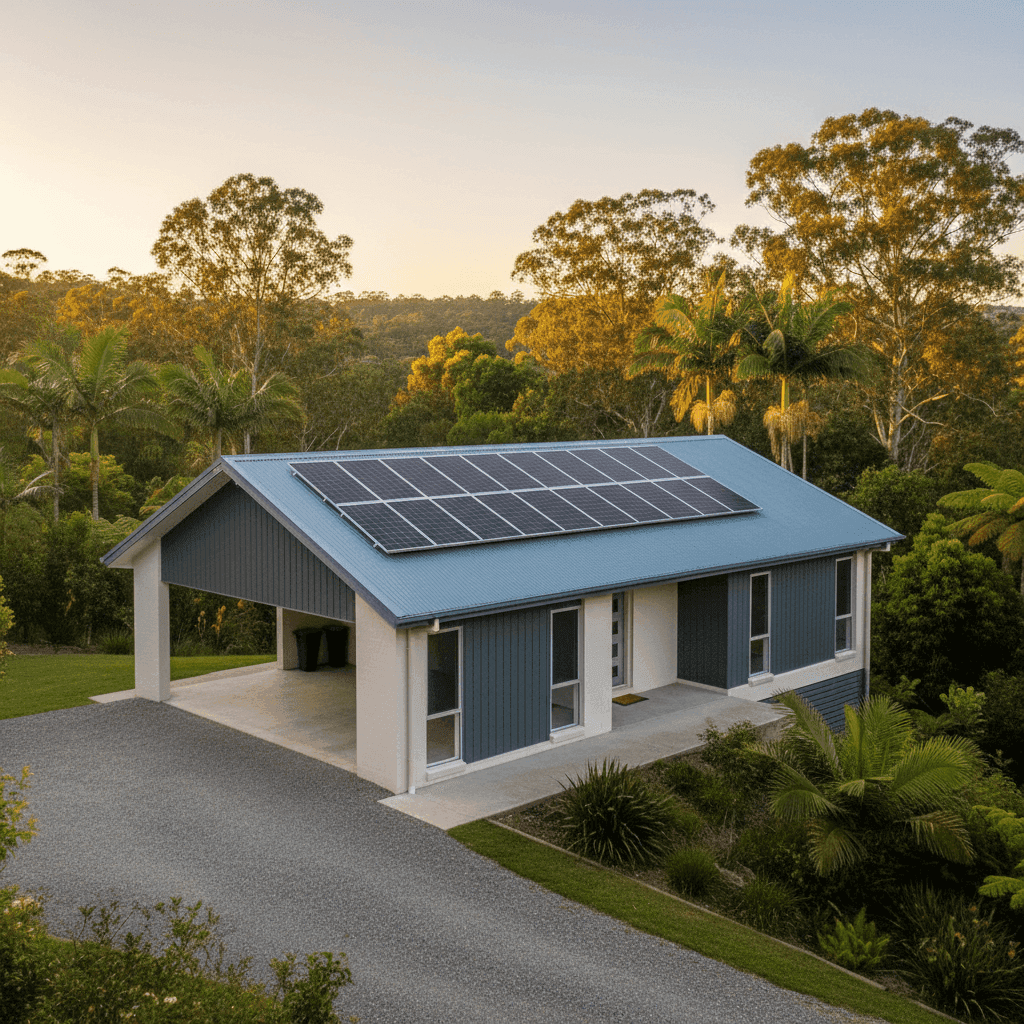
If you own a free standing home in Farrants Hill, NSW 2484, you've probably noticed that insurance premiums in this part of the Northern Rivers region can be anything but predictable. Nestled in the hinterland near the Queensland border, Farrants Hill sits in a lush, semi-rural setting that comes with its own unique risk profile. This article takes a close look at a real building insurance quote for a three-bedroom, two-bathroom home in the area — examining whether it represents good value and what factors are likely driving the price.
---
Is This Quote Fair?
The quote in question comes in at $2,984 per year (or around $295/month) for building-only cover on a free standing home with a sum insured of $614,000 and a building excess of $3,000. Our analysis rates this as CHEAP — below the average for comparable properties.
That's a meaningful result. In a region where insurance costs have been climbing steeply in recent years — largely due to flood and storm events across the Northern Rivers — landing a quote below the state and national benchmarks is genuinely good news for homeowners. It suggests the insurer is pricing this particular property favourably, likely reflecting characteristics of the home itself rather than the broader postcode risk.
It's worth noting that a higher excess ($3,000 for building) is part of the equation here. Opting for a higher excess is a common way to reduce your annual premium, so this trade-off should be factored into your overall assessment of value.
---
How Farrants Hill Compares
To put this quote in context, here's how it stacks up against available benchmarks:
| Benchmark | Annual Premium |
|---|---|
| This Quote | $2,984 |
| NSW State Average | $3,801 |
| NSW State Median | $3,410 |
| National Average | $2,965 |
| National Median | $2,716 |
| Kyogle LGA Average | $9,180 |
The most striking figure in this table is the Kyogle LGA average of $9,180 per year — more than three times the quote being analysed. The Kyogle local government area encompasses a wide range of properties, many of which carry significant flood, bushfire, and storm risk. Properties in lower-risk pockets of the LGA, like parts of Farrants Hill, can attract far more competitive premiums than the LGA average might suggest.
Compared to the NSW state average of $3,801, this quote is approximately $817 cheaper per year — a saving of around 21%. Against the national average of $2,965, it's essentially on par, sitting just $19 below. This indicates the quote is competitive not just locally but by national standards as well.
For suburb-specific data and more local comparisons, you can explore the Farrants Hill insurance stats page.
---
Property Features That Affect Your Premium
Several characteristics of this property are likely influencing the premium — some favourably, others less so.
Steel/Colorbond Roof
A Colorbond steel roof is generally viewed positively by insurers. It's durable, fire-resistant, and performs well in high-wind conditions. Compared to older tile or fibrous cement roofing, a steel roof can contribute to a lower premium, particularly in areas prone to storms or bushfire.
Slab Foundation
A concrete slab foundation is considered one of the more stable and low-risk foundation types. Unlike homes on stumps or piers, slab homes are less susceptible to certain structural issues and pest ingress, which insurers tend to reward with more competitive pricing.
Tile Flooring
Tiled floors are durable, water-resistant, and less prone to damage from minor flooding or moisture ingress compared to timber or carpet. This is a minor but positive factor in the overall risk assessment.
Solar Panels
This property has solar panels installed, which adds to the replacement cost of the building and is factored into the sum insured. Homeowners should ensure their policy explicitly covers solar panels as part of the building, including damage from storms or hail — not all policies treat them the same way.
Slightly Elevated (Less Than 1m)
The property is described as elevated by less than one metre. While this is a modest elevation, it can offer some marginal benefit in terms of water ingress during heavy rainfall events. It's not a significant flood mitigation measure, but it may be a small positive in the insurer's risk model.
Standard Fittings Quality
With standard fittings, the home is not in the premium or high-end category, which keeps the sum insured and therefore the premium more manageable than a comparable home with luxury finishes.
---
Tips for Homeowners in Farrants Hill
Living in the Northern Rivers hinterland is rewarding, but it pays to be proactive about your insurance strategy. Here are four practical tips:
- Review your sum insured annually. Building costs in regional NSW have risen significantly in recent years. A sum insured of $614,000 for a 235 sqm home may be appropriate today, but it's worth reassessing each year to ensure you're not underinsured — especially given the cost of labour and materials in regional areas.
- Confirm your solar panels are covered. Solar systems are a meaningful asset. Check the fine print of your policy to confirm they're included under building cover and that the replacement value is reflected in your sum insured. Some insurers treat them as a separate item.
- Consider your excess carefully. The $3,000 building excess on this policy is on the higher side. While it reduces the annual premium, it means you'd need to cover the first $3,000 of any claim out of pocket. If a major storm caused $4,000 in damage, you'd only receive $1,000 from the insurer. Make sure this trade-off aligns with your financial situation.
- Don't assume the LGA average applies to you. As this analysis shows, the Kyogle LGA average of $9,180 is dramatically higher than this quote. Premiums vary enormously within any LGA based on specific property characteristics and exact location. Always get multiple quotes rather than assuming you're stuck with high regional pricing.
---
Compare Your Options with CoverClub
Whether you're renewing your policy or shopping around for the first time, it's always worth seeing what else is on the market. A quote that looks competitive today might be beaten by another insurer who prices your specific property differently. At CoverClub, you can compare home insurance quotes tailored to your property in minutes — helping you make a confident, informed decision without the guesswork.