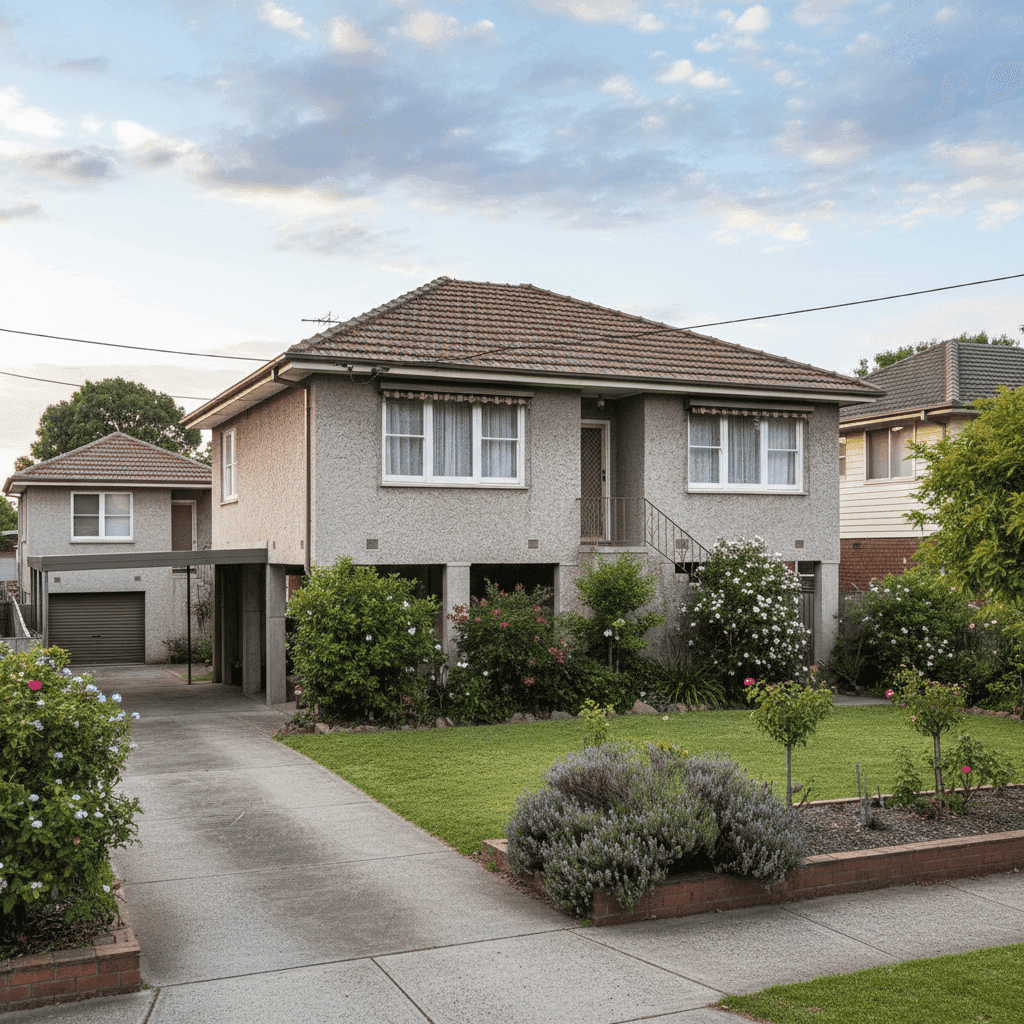
Fawkner is a well-established suburb in Melbourne's northern corridor, known for its mix of post-war housing stock and a strong sense of community. If you own a free standing home here, understanding what you should be paying for home and contents insurance — and why — can make a real difference to your budget. This article breaks down a recent insurance quote for a three-bedroom property in Fawkner (VIC 3060) and puts it in context against local, state, and national benchmarks.
---
Is This Quote Fair?
The quote in question comes in at $2,163 per year (or $207 per month) for combined home and contents cover, with a building sum insured of $700,000 and contents valued at $50,000. Both the building and contents excess are set at $1,000.
Our price rating for this quote is Expensive — above average for the Fawkner area.
To put that into perspective, the suburb average for Fawkner sits at $1,404 per year, with a median of $1,339. This quote is roughly 54% above the suburb average and about 61% above the median — a significant gap that's worth scrutinising before you simply accept the premium.
That said, "expensive" doesn't automatically mean "wrong." Several property-specific factors can legitimately push a premium higher, and we'll explore those below. But it does mean it's worth shopping around.
---
How Fawkner Compares
To understand whether this quote is genuinely out of step, it helps to zoom out and look at the broader picture.
| Benchmark | Annual Premium |
|---|---|
| Fawkner (suburb average) | $1,404 |
| Fawkner (suburb median) | $1,339 |
| Fawkner (25th percentile) | $1,030 |
| Fawkner (75th percentile) | $1,794 |
| Hume LGA average | $1,775 |
| Victoria average | $3,000 |
| Victoria median | $2,718 |
| National average | $5,347 |
| National median | $2,764 |
A few things stand out here. First, this quote of $2,163 actually sits below the Victorian state average of $3,000 and well below the national average of $5,347. So while it looks pricey compared to Fawkner's local benchmarks, it's not outrageous in a broader Australian context.
Second, the Hume LGA average of $1,775 gives a useful regional reference point — and this quote is about $388 above that figure. The Victorian state data shows considerable variation across the state, with some regional and coastal areas commanding far higher premiums due to flood, bushfire, or storm risk.
The Fawkner suburb sample size is 35 quotes, which is a reasonable dataset. With 75% of quotes coming in under $1,794, this premium is clearly sitting in the upper range for the area — reinforcing the "expensive" rating.
---
Property Features That Affect Your Premium
Insurance pricing isn't arbitrary. Insurers assess a range of property characteristics when calculating risk. Here's how the features of this particular home are likely influencing the quote:
Construction year (1968): Older homes built before modern building codes can be seen as higher risk by insurers. Electrical wiring, plumbing, and structural elements may be ageing, which can increase the likelihood of a claim.
Stump foundation: Homes on stumps are common in Victoria, but they can be more susceptible to movement, subsidence, and pest damage compared to slab foundations. Some insurers price this risk into the premium.
Concrete external walls: This is actually a positive factor. Concrete is highly durable, fire-resistant, and less prone to storm damage than timber weatherboard — which may help moderate the premium somewhat.
Tiled roof: Terracotta or concrete tiles are generally well-regarded by insurers for their longevity and fire resistance, though they can be more costly to repair than Colorbond if damaged by hail or impact.
Ducted climate control: The presence of a ducted heating and cooling system adds to the replacement value of the home's fixed fittings. This is a legitimate factor in a higher building sum insured.
Granny flat: This is a significant factor. A granny flat adds considerable replacement cost to the property, which is likely reflected in the $700,000 building sum insured. Ensuring the granny flat is explicitly covered under your policy is essential — not all standard policies include secondary dwellings automatically.
160 sqm building size: At 160 square metres, this is a modest-to-mid-sized home. The $700,000 sum insured works out to roughly $4,375 per square metre — which is on the higher end but may be justified when factoring in the granny flat's rebuild cost.
---
Tips for Homeowners in Fawkner
1. Check that your granny flat is covered Not all home insurance policies automatically extend cover to a secondary dwelling on the same property. Before renewing or switching, confirm in writing that your granny flat — including its structure and any contents — is included under your policy terms.
2. Review your building sum insured carefully A $700,000 sum insured is substantial. Make sure it reflects the actual cost to rebuild the home and granny flat from scratch (not the market value), including demolition, professional fees, and compliance with current building codes. Underinsurance is a common and costly mistake.
3. Compare quotes annually Premiums in Fawkner vary widely — from around $1,030 at the 25th percentile to $1,794 at the 75th. That's a $764 range, meaning loyal customers who don't shop around can end up significantly overpaying. Use a comparison tool like CoverClub to benchmark your renewal quote each year.
4. Ask about discounts for security and safety features Many insurers offer discounts for deadbolts, alarm systems, and smoke detectors. If your home has any of these — or if you're considering installing them — it's worth asking your insurer whether they affect your premium.
---
Compare Your Home Insurance Today
Whether you think your current quote is fair or you're simply curious about what else is out there, comparing is always worthwhile. CoverClub makes it easy to see how your premium stacks up against real quotes from Fawkner and across Victoria. Get a home insurance quote today and find out if you could be paying less — without sacrificing the cover you need.