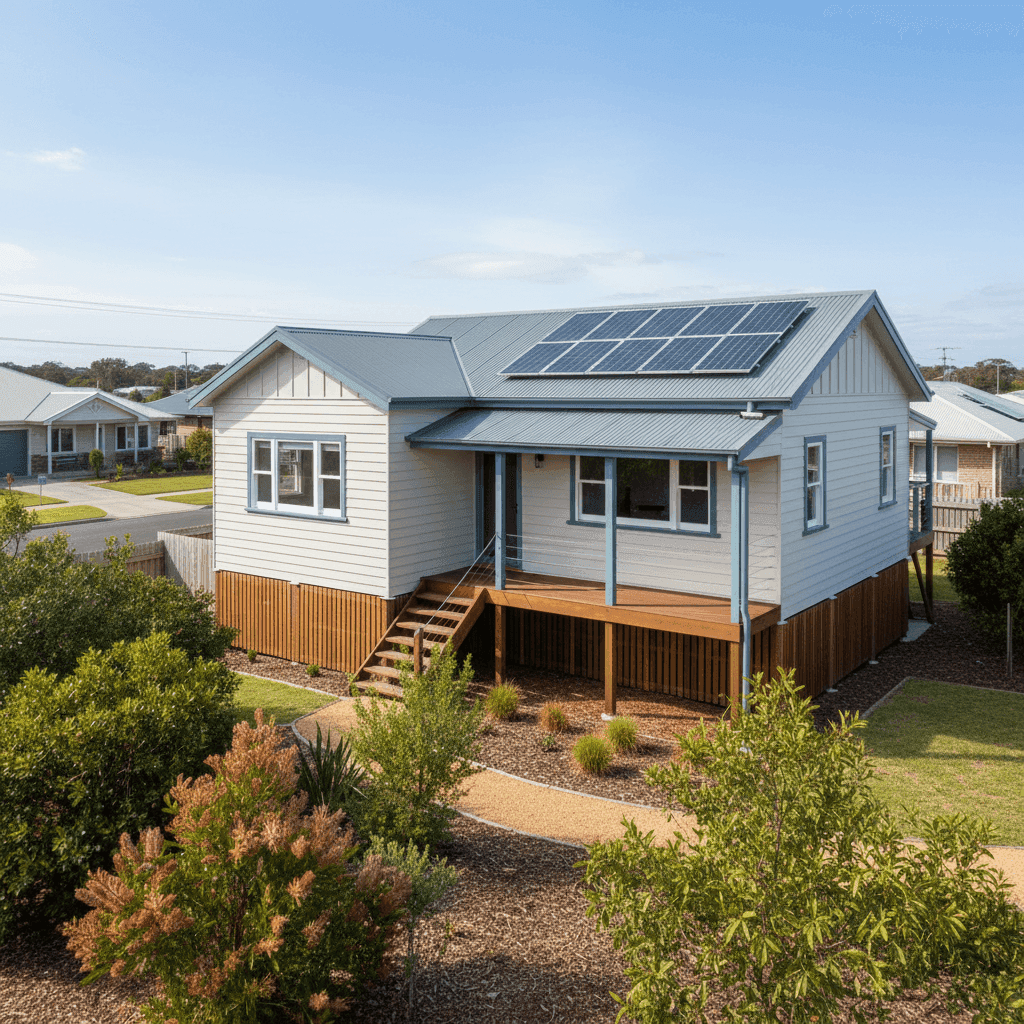
Fern Bay is a relaxed coastal suburb sitting on the shores of Port Stephens, just north of Newcastle. It's the kind of place where weatherboard homes line quiet streets and the pace of life is a little slower — but that doesn't mean home insurance should be an afterthought. For a two-bedroom free standing home in this area, understanding what you're paying and why can make a real difference to your budget and your peace of mind.
This article breaks down a recent home and contents insurance quote for a property in Fern Bay (postcode 2295), examines how it compares to local, state and national benchmarks, and offers practical tips for homeowners looking to get the best value cover.
---
Is This Quote Fair?
The quote in question comes in at $1,244 per year (or $123 per month) for combined home and contents cover, with a building sum insured of $400,000 and contents valued at $50,000. The building excess is set at $3,000 and the contents excess at $1,000.
Our price rating for this quote is CHEAP — below average — and the numbers back that up convincingly.
When you stack this premium against the Fern Bay suburb average of $3,514 per year, this quote is paying roughly 65% less than what most other homeowners in the same postcode are being quoted. Even the lowest quartile of quotes in the suburb sits at $3,162 per year — more than double this premium.
Put simply, this is an exceptionally competitive result for a Fern Bay property, and well worth a closer look at what's driving that outcome.
---
How Fern Bay Compares
To put this quote in proper context, it helps to zoom out and look at the broader insurance landscape.
| Benchmark | Annual Premium |
|---|---|
| This quote | $1,244 |
| Fern Bay suburb average | $3,514 |
| Fern Bay suburb median | $3,415 |
| Port Stephens LGA average | $3,116 |
| NSW average | $9,528 |
| NSW median | $3,770 |
| National average | $5,347 |
| National median | $2,764 |
A few things stand out here. First, the NSW state average of $9,528 is dramatically higher than the suburb average — this is largely driven by high-risk coastal and flood-prone areas across the state pulling the mean upward. The median of $3,770 is a more reliable indicator of what a typical NSW homeowner pays, and this quote still comes in well below that figure.
At the national level, the average premium of $5,347 reflects the enormous variation in risk across Australia — from cyclone-prone Far North Queensland to bushfire-affected regions of Victoria and South Australia. The national median of $2,764 is actually the closest benchmark to this quote, yet still more than double the price.
The Port Stephens LGA average of $3,116 per year is also instructive — it suggests that as a broader region, Port Stephens is considered relatively moderate in terms of insurance risk, which aligns with Fern Bay's position outside major flood or bushfire zones.
---
Property Features That Affect Your Premium
Several characteristics of this property are likely contributing to the favourable premium outcome.
Weatherboard timber construction is one of the more significant factors. Older weatherboard homes can attract higher premiums with some insurers due to perceived fire risk and the cost of like-for-like replacement. However, this property appears to have been assessed favourably — possibly reflecting its overall condition and the specifics of the insurer's underwriting model.
The 1965 construction year means this home is over 60 years old. Older homes can sometimes attract loading due to ageing wiring, plumbing, or structural concerns. The fact that this quote remains competitive suggests the property has been maintained well or the insurer has assessed the risk accordingly.
Stump foundations are common in older Australian homes, particularly in coastal and semi-rural areas. They can be a consideration for insurers, particularly where ground movement or termite activity is a concern, but they don't automatically result in higher premiums.
A steel Colorbond roof is generally viewed positively by insurers. Colorbond is durable, fire-resistant, and low-maintenance compared to older roofing materials like fibro or terracotta tiles — all factors that can work in your favour at renewal time.
Solar panels are present on this property. While they add value to the home, they can also introduce a small amount of additional risk (particularly around fire or storm damage). It's worth confirming with your insurer that the panels are explicitly covered under your policy, including for accidental damage and theft.
No pool and no ducted climate control keeps the risk profile clean. Both features can add complexity and cost to a policy, so their absence here is a minor but positive factor.
The 130 sqm building size is modest, which generally supports a lower rebuild cost estimate — though the $400,000 sum insured should be checked against a current building cost calculator to ensure it's adequate for full replacement, including demolition and professional fees.
---
Tips for Homeowners in Fern Bay
1. Verify your sum insured regularly Building costs have risen significantly across Australia in recent years. A sum insured of $400,000 for a 130 sqm weatherboard home may be appropriate today, but it's worth revisiting annually. Underinsurance is one of the most common — and costly — mistakes homeowners make. Use an independent building cost estimator to cross-check your figure each year.
2. Confirm solar panel coverage Solar panels are an increasingly common addition to Australian homes, but not all policies cover them as standard. Check whether your policy covers panels for storm damage, fire, hail, and theft — and whether there's a separate sub-limit that applies.
3. Review your excess settings This policy carries a $3,000 building excess, which is on the higher end. A higher excess typically reduces your premium, but it also means a larger out-of-pocket cost if you need to make a claim. Make sure the excess level is something you could comfortably cover in an emergency.
4. Compare at renewal, not just at sign-up Even if you're on a great rate now, insurers regularly adjust their pricing. It's worth running a comparison through CoverClub at each renewal to make sure your premium remains competitive — loyalty doesn't always pay in the insurance market.
---
Get Your Own Quote
Whether you're a Fern Bay local or considering a property in the area, it pays to compare. CoverClub makes it easy to see quotes from multiple insurers side by side, so you can find the right cover at the right price. Start your comparison today and see how your current premium stacks up against the market.
For more detailed suburb-level data, visit the Fern Bay insurance statistics page or explore NSW home insurance benchmarks to see how your area compares across the state.