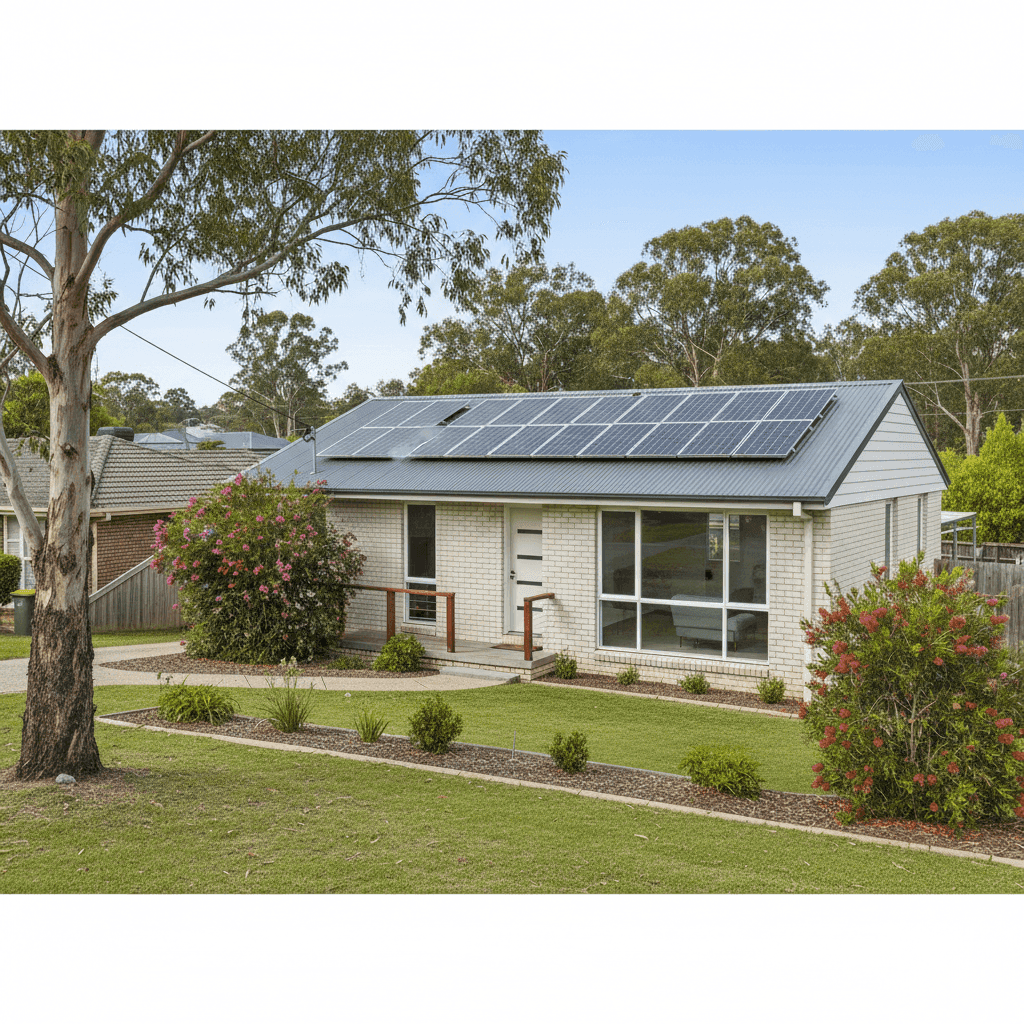
If you own a free standing home in Ferny Hills, QLD 4055, you're probably curious about what a fair home insurance premium actually looks like. Ferny Hills is a leafy, established suburb in the Moreton Bay region — known for its quiet streets, family-friendly atmosphere, and homes that largely date from the late 20th century. With insurance costs rising across Australia, understanding whether your quote is competitive has never been more important.
This article breaks down a real home and contents insurance quote for a 3-bedroom, 2-bathroom free standing home in Ferny Hills, examining how it stacks up against local, state, and national benchmarks.
---
Is This Quote Fair?
The annual premium for this property came in at $1,493 per year (or approximately $146 per month), covering both building (sum insured: $417,000) and contents ($50,000), each with a $2,000 excess.
Our price rating for this quote is CHEAP — below average — and the numbers back that up convincingly.
The suburb average for Ferny Hills sits at $3,135 per year, meaning this quote comes in at less than half the typical price paid by homeowners in the same postcode. Even compared to the suburb's 25th percentile — the cheapest quarter of quotes — at $2,754/yr, this premium is still dramatically lower.
Put simply: this is an exceptionally competitive result. Whether you're shopping for the first time or reviewing your renewal, a quote at this level is well worth locking in.
---
How Ferny Hills Compares
To put the numbers in full context, here's how the suburb, state, and nation compare:
| Benchmark | Average Premium | Median Premium |
|---|---|---|
| This Quote | $1,493/yr | — |
| Ferny Hills (4055) | $3,135/yr | $2,975/yr |
| Moreton Bay LGA | $3,145/yr | — |
| Queensland | $4,547/yr | $3,931/yr |
| National | $2,965/yr | $2,716/yr |
Queensland is one of the most expensive states in the country for home insurance, with an average premium of $4,547/yr — driven largely by cyclone-exposed regions in North Queensland and flood-prone areas in the south-east. Ferny Hills, while sitting in the greater Brisbane area, benefits from not being classified as a cyclone risk zone, which helps keep premiums more manageable.
Compared to the national average of $2,965/yr, Ferny Hills is broadly in line — though still slightly above the national median of $2,716/yr. This quote, however, sits well below all of these benchmarks, making it an outstanding outcome by any measure.
---
Property Features That Affect Your Premium
Several characteristics of this property likely contribute to its competitive premium. Understanding these factors can help you make smarter decisions when reviewing your own cover.
Brick Veneer Walls
Brick veneer is generally viewed favourably by insurers. It offers solid fire resistance and structural durability, which reduces the likelihood of major building claims. Compared to timber-framed weatherboard homes common in older Queensland suburbs, brick veneer typically attracts lower premiums.
Steel / Colorbond Roof
A Colorbond steel roof is another positive signal for insurers. It's lightweight, resistant to corrosion, and performs well in storm conditions — an important consideration in South-East Queensland, where severe thunderstorms and hail events are not uncommon. Older tile roofs, by contrast, can be more susceptible to damage and more expensive to repair.
Slab Foundation
A concrete slab foundation is generally considered low-risk compared to homes on stumps or piers, which can be more vulnerable to movement, termite ingress, and moisture issues. This likely contributes to a more favourable risk profile.
Solar Panels
This property has solar panels installed. While solar adds value to the home, it's worth confirming with your insurer that the panels are included in your building sum insured — particularly if they're a high-capacity system. Underinsurance is a common pitfall when building improvements aren't reflected in the sum insured.
1971 Construction
Homes built in the early 1970s can sometimes attract higher premiums due to ageing infrastructure — older wiring, plumbing, and roofing materials can increase claims risk. However, with a Colorbond roof and brick veneer construction, this home appears to have been well-maintained or updated, which likely offsets any age-related loading.
Standard Fittings
The standard fittings quality (as opposed to high-end or prestige finishes) helps keep the replacement cost — and therefore the sum insured — at a reasonable level, which flows through to a lower premium.
---
Tips for Homeowners in Ferny Hills
Whether you're reviewing an existing policy or shopping for new cover, here are four practical steps to make the most of your home insurance.
- Review your sum insured regularly. Building costs have risen sharply in recent years due to labour shortages and material inflation. A sum insured set a few years ago may no longer reflect the true cost of rebuilding your home. Use a building cost calculator or speak with a builder to get an updated estimate — and don't forget to factor in your solar panels.
- Check what's covered in storm and flood events. South-East Queensland is no stranger to severe weather. Make sure your policy clearly covers storm damage, and check whether flood cover is included or available as an add-on. These are two separate definitions under most policies, and the distinction matters.
- Consider your excess carefully. This policy carries a $2,000 excess on both building and contents. A higher excess generally means a lower premium, but make sure it's an amount you can genuinely afford to pay at claim time. If $2,000 feels tight, it may be worth adjusting.
- Compare quotes at renewal — every year. Insurance loyalty rarely pays off. Premiums can shift significantly from year to year, and the market is competitive. Even if you're happy with your current insurer, running a comparison at renewal takes only a few minutes and could save you hundreds of dollars.
---
Compare Your Own Quote
Wondering how your home insurance stacks up? CoverClub makes it easy to compare quotes from multiple insurers in minutes. Whether you're in Ferny Hills or anywhere else in Australia, you can get a personalised quote at CoverClub and see exactly where your premium sits relative to your suburb, state, and national benchmarks. Don't pay more than you need to — start comparing today.