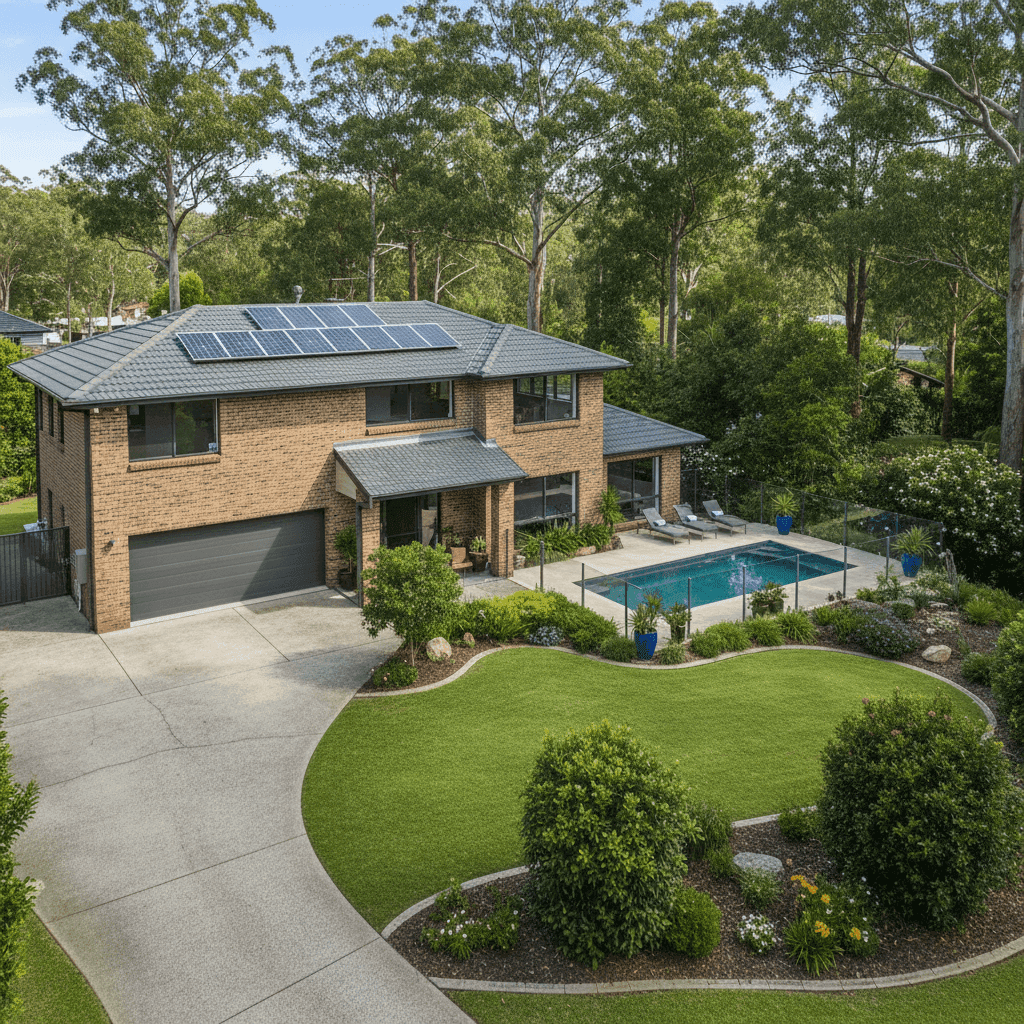
Fig Tree Pocket is one of Brisbane's most picturesque riverside suburbs — a leafy, low-density pocket of Queensland where large family homes sit on generous blocks surrounded by bushland. It's the kind of suburb that attracts families looking for space and serenity, but as with any property in Greater Brisbane, insuring your home here comes with its own set of considerations. This article breaks down a real home and contents insurance quote for a four-bedroom, free-standing home in Fig Tree Pocket (QLD 4069), and puts that number into context against suburb, state, and national benchmarks.
---
Is This Quote Fair?
The quote in question comes to $17,137 per year (or $1,642/month) for a combined home and contents policy. The building is insured for $784,000 with a $2,000 excess, while contents are covered for $55,000 with a $1,000 excess.
Our price rating for this quote is FAIR — Around Average, which means it sits in a reasonable range when measured against comparable properties in the area. It's not the cheapest policy you'll find, but it's not an outlier either.
To put that in perspective: the quote falls just below the suburb's 75th percentile of $18,685/yr, meaning roughly three-quarters of comparable quotes in Fig Tree Pocket come in at a similar level or lower. That's a meaningful signal that this premium is broadly in line with what the local market is producing for properties of this type and value.
That said, "fair" doesn't mean you can't do better. It simply means this quote is within a defensible range — and with the right comparison, there may be room to save.
---
How Fig Tree Pocket Compares
Fig Tree Pocket's insurance data tells an interesting story. Based on a sample of 31 quotes from the suburb, the numbers look like this:
| Benchmark | Premium |
|---|---|
| Fig Tree Pocket median | $7,029/yr |
| Fig Tree Pocket 75th percentile | $18,685/yr |
| Fig Tree Pocket average | $58,627/yr |
| QLD state median | $3,903/yr |
| QLD state average | $9,129/yr |
| National median | $2,764/yr |
| National average | $5,347/yr |
A few things stand out here. First, the suburb average of $58,627 is dramatically higher than the median of $7,029 — a classic sign that a small number of very high-value properties (or high-risk quotes) are pulling the mean upward. This makes the median a more reliable benchmark for most homeowners in the area.
At $17,137, this quote sits well above the suburb median and roughly double the QLD state average of $9,129. Compared to the national average of $5,347, it's more than three times higher. However, this isn't necessarily cause for alarm — the building sum insured of $784,000 is substantial, and the property's features (more on those below) naturally push the premium upward.
The LGA (Brisbane) average of $16,277/yr is actually the most comparable benchmark here, and this quote sits only slightly above it — reinforcing the "fair" rating.
---
Property Features That Affect Your Premium
Several characteristics of this property have a direct bearing on what insurers charge. Here's how each one plays into the final number:
Brick Veneer Walls & Tiled Roof Brick veneer construction with a tile roof is considered a solid, mid-range risk profile by most Australian insurers. It's more resilient than timber weatherboard but not quite as robust as full double-brick. Tiles are durable but can be more expensive to repair or replace than Colorbond steel, particularly on a larger home. Overall, this combination is standard for homes built in the 1980s across Brisbane and doesn't significantly inflate premiums.
Construction Year: 1985 At around 40 years old, this home sits in an age bracket that insurers watch carefully. Older homes can carry higher rebuild costs due to non-standard materials or the need to bring structures up to current building codes after a claim. The $784,000 building sum insured reflects this — it's a meaningful coverage level for a home of this size and vintage.
Building Size: 244 sqm At 244 square metres, this is a generously sized family home. Larger floor areas directly increase the estimated cost to rebuild, which flows through to a higher sum insured and, in turn, a higher premium.
Swimming Pool A pool adds liability exposure and increases the overall insurable value of the property. Most insurers factor pool ownership into their pricing, and it's important to confirm your policy explicitly covers pool-related structures and liability.
Solar Panels Solar panels are an increasingly common feature on Queensland homes, and insurers are still refining how they price this risk. Panels can be damaged by hail, storms, or falling debris, and their replacement cost can be significant. Confirming that your policy covers solar panels — both the panels themselves and any damage they might cause to the roof — is essential.
Slab Foundation & Tiled Flooring A concrete slab foundation is generally viewed favourably by insurers as it reduces the risk of subsidence and pest-related structural damage. Tiled flooring throughout is durable and relatively inexpensive to repair, which is a mild positive from an underwriting perspective.
No Cyclone Risk Fig Tree Pocket falls outside designated cyclone risk zones, which is a meaningful premium advantage compared to properties in North Queensland. This keeps the base risk profile more manageable.
---
Tips for Homeowners in Fig Tree Pocket
1. Review your building sum insured regularly With construction costs having risen sharply across Queensland in recent years, a sum insured set several years ago may no longer reflect the true cost to rebuild your home. Underinsurance is one of the most common — and costly — mistakes homeowners make. Use a quantity surveyor or your insurer's rebuild calculator to validate your coverage amount.
2. Check your pool and solar panel coverage explicitly Don't assume these features are automatically included in your policy. Ask your insurer directly whether pool structures, pumps, and solar panel systems are covered, and under what circumstances. Some policies treat these as optional add-ons.
3. Compare quotes before renewal A "fair" rating means you're not being gouged, but it doesn't mean you're getting the best deal available. The Brisbane insurance market is competitive, and getting a fresh quote through CoverClub at renewal time takes only a few minutes and could reveal meaningful savings.
4. Consider your excess settings This policy carries a $2,000 building excess and a $1,000 contents excess. Opting for a higher voluntary excess is one of the most reliable levers for reducing your annual premium — particularly if you're unlikely to make small claims. Conversely, if cash flow is a concern, a lower excess gives you more protection at claim time.
---
Compare Home Insurance in Fig Tree Pocket
Whether you're renewing an existing policy or insuring a new purchase, it pays to see what the broader market has to offer. CoverClub makes it easy to compare home and contents insurance quotes for properties across Fig Tree Pocket and Greater Brisbane. Start your comparison today and find out whether your current premium is truly competitive — or whether there's a better deal waiting for you.