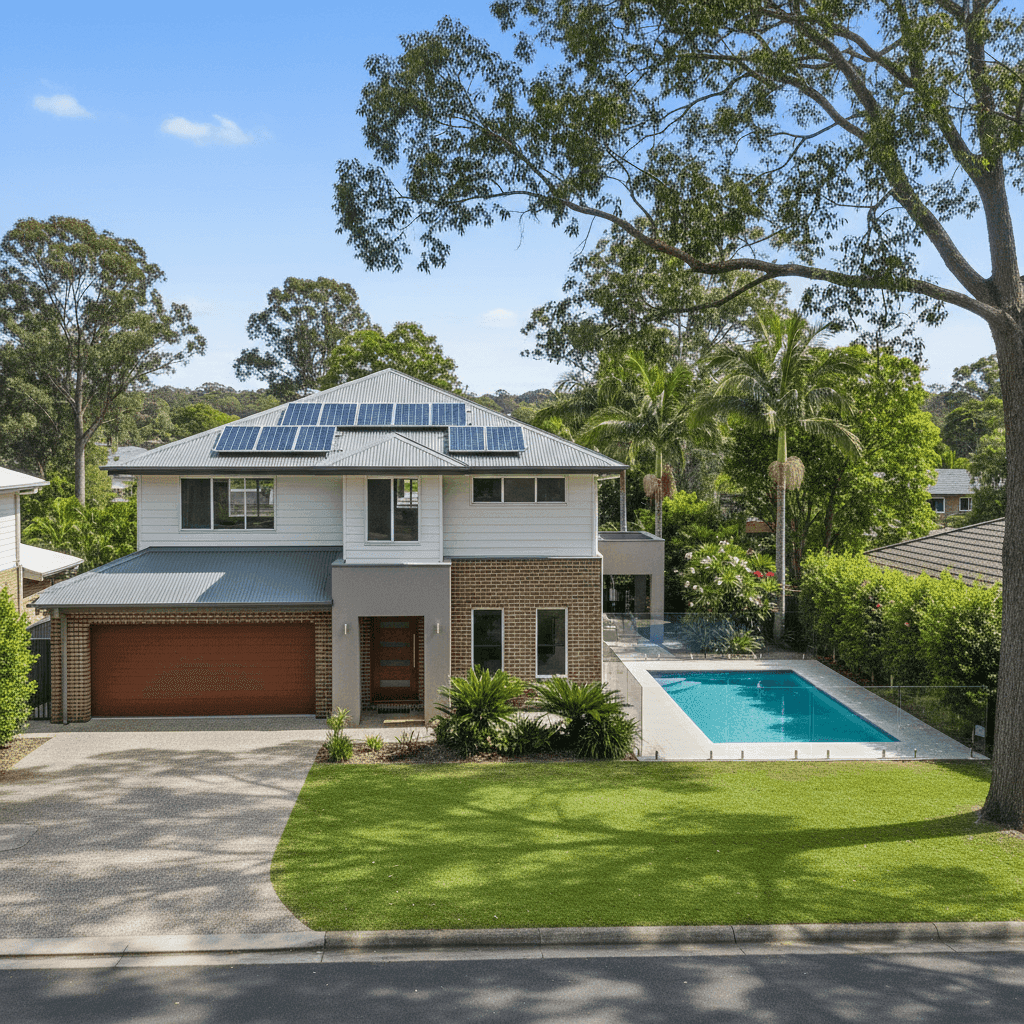
Fig Tree Pocket is one of Brisbane's most sought-after riverside suburbs — a leafy, family-friendly pocket of Queensland where large, well-appointed homes are the norm. So when a five-bedroom, three-bathroom free-standing home in postcode 4069 receives a home and contents insurance quote of $2,255 per year (or around $228 per month), it's worth taking a closer look at what that figure actually means in context.
This article breaks down how that premium stacks up against local, state, and national benchmarks — and what features of the property are likely influencing the price.
---
Is This Quote Fair?
The short answer: yes — and then some. This quote has been rated CHEAP, meaning it sits well below the average for the area.
To put that in perspective, the suburb average for Fig Tree Pocket sits at a striking $18,175 per year, with a median of $12,012. Even the 25th percentile — the cheapest quarter of quotes in the suburb — comes in at $8,375 per year. This quote, at $2,255, is dramatically lower than all of those benchmarks.
At the state level, the Queensland average is $4,547 per year, and the median is $3,931. This quote is roughly half the state median. Nationally, the average premium across Australia is $2,965, with a median of $2,716 — and this quote still comes in beneath both of those figures.
In other words, this is a genuinely competitive result for a sizeable home with a solid sum insured.
---
How Fig Tree Pocket Compares
The pricing landscape in Fig Tree Pocket is notably wide. With a 25th percentile of $8,375 and a 75th percentile of $21,401, there's an enormous spread between the cheapest and most expensive quotes in the suburb — a gap of over $13,000. This kind of variance is common in areas where property values and sizes vary significantly, and where individual risk factors (like flood zones, proximity to bushland, or high rebuild costs) can push premiums dramatically higher for some homeowners.
| Benchmark | Premium |
|---|---|
| This Quote | $2,255/yr |
| Suburb 25th Percentile | $8,375/yr |
| Suburb Median | $12,012/yr |
| Suburb Average | $18,175/yr |
| LGA (Brisbane) Average | $4,485/yr |
| QLD State Average | $4,547/yr |
| National Average | $2,965/yr |
The fact that this quote sits below even the national average — despite being for a large, well-featured home in a premium Brisbane suburb — suggests that either the insurer has assessed the property's risk profile favourably, or that the specific characteristics of this home work in its favour. Likely both.
It's worth noting that the suburb sample is based on 58 quotes, which provides a reasonable but not enormous dataset. Premiums in Fig Tree Pocket can vary widely depending on flood risk mapping, proximity to the Brisbane River, and individual insurer risk appetites.
---
Property Features That Affect Your Premium
Several characteristics of this property are likely contributing to its competitive premium:
Construction Quality
Built in 2015, this is a relatively modern home — and insurers tend to reward that. Newer builds are constructed to more recent building codes, which means better structural resilience, improved fire ratings, and lower likelihood of hidden defects. The brick veneer external walls offer solid protection against fire and impact, while the steel/Colorbond roof is highly regarded by insurers for its durability, resistance to ember attack, and low maintenance profile.
Foundation and Flooring
A concrete slab foundation is generally viewed favourably by insurers — it's stable, resistant to termite damage, and less susceptible to movement than older stumped or timber-framed foundations. Tiled flooring throughout also tends to be seen as lower risk than carpet or timber, as it's more resistant to water damage and easier to remediate after an event.
Pool, Solar, and Climate Control
The property includes a swimming pool, solar panels, and ducted climate control — all of which can influence premiums. Pools add liability exposure and can increase contents or liability-related costs. Solar panels represent a significant asset that may need to be factored into the building sum insured. Ducted air conditioning systems, if they're part of the building, are typically included in the building sum insured rather than contents.
Sum Insured and Contents
The building is insured for $1,159,000 — a substantial figure reflecting the size (315 sqm) and quality of the home. The contents are insured for $50,000, which is on the lower end for a five-bedroom home, and may be a factor in keeping the overall premium down. Homeowners should ensure their contents sum insured genuinely reflects the value of their belongings.
No Cyclone Risk
Fig Tree Pocket falls outside designated cyclone risk areas, which is a meaningful premium advantage for Queensland homeowners. Cyclone loading can add significantly to premiums in northern parts of the state, so this property avoids that cost entirely.
---
Tips for Homeowners in Fig Tree Pocket
1. Review your contents sum insured carefully At $50,000, the contents cover on this policy may not fully reflect the value of furnishings, appliances, clothing, and valuables in a five-bedroom home. Underinsurance is one of the most common issues Australian homeowners face at claim time — take the time to do a proper stocktake.
2. Understand your flood risk Parts of Fig Tree Pocket sit close to the Brisbane River and have been affected by flooding historically — most notably in 2011 and 2022. Check whether your policy includes flood cover and whether your specific property is in a mapped flood zone. Some insurers exclude or heavily load premiums for flood-prone properties.
3. Factor in your pool and solar panels Make sure your building sum insured accounts for the full replacement cost of your pool infrastructure and solar panel system. These are often overlooked when homeowners calculate rebuild costs, and being underinsured on the building can leave you significantly out of pocket after a major event.
4. Compare at renewal time Even with a competitive quote like this one, premiums can shift significantly at renewal. Insurers adjust their risk models, and loyalty doesn't always pay — shopping around annually is one of the simplest ways to ensure you're not overpaying.
---
Get a Quote for Your Fig Tree Pocket Home
Whether you've just received a renewal notice or you're insuring a property for the first time, it pays to compare. CoverClub makes it easy to see how your premium stacks up against real data from your suburb and across Queensland. Get a home insurance quote today and find out if you're getting a fair deal — or if there's a better option waiting for you.