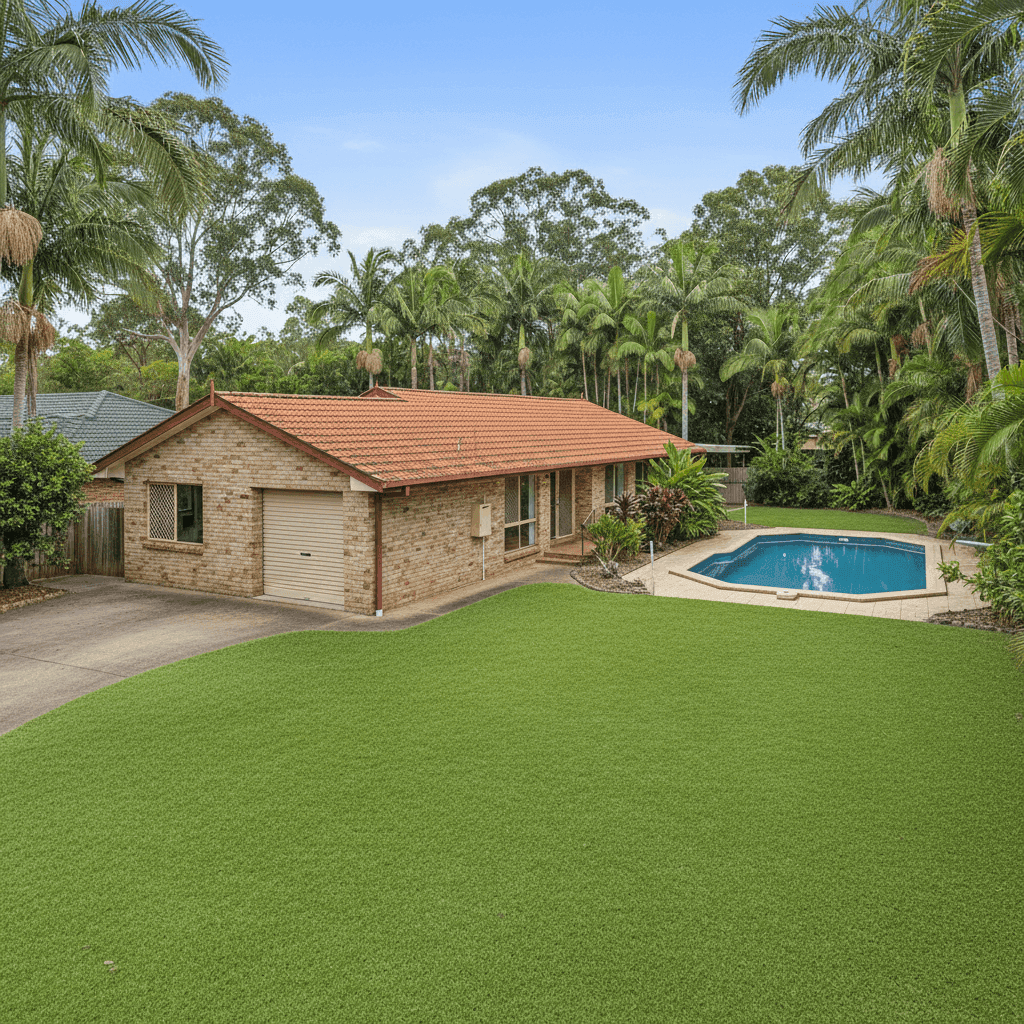
Fig Tree Pocket is one of Brisbane's most leafy and sought-after riverside suburbs, and it's no surprise that homeowners here take their property protection seriously. This article analyses a building-only insurance quote for a four-bedroom, two-bathroom free-standing home in Fig Tree Pocket (QLD 4069) — breaking down whether the premium is fair, how it stacks up against local and national benchmarks, and what property features are likely driving the cost.
---
Is This Quote Fair?
The quoted annual premium for this property is $1,731 per year (or approximately $166 per month), covering building only with a sum insured of $618,000 and a building excess of $5,000.
Based on CoverClub's pricing data, this quote is rated CHEAP — below average for the area. That's genuinely good news for the homeowner. At well under half the suburb median of $7,029 per year, this premium sits in highly competitive territory. Even measured against the national median of $2,764 per year, this quote comes in meaningfully lower — a strong result for a substantial brick veneer home on a slab foundation.
A below-average rating doesn't mean the cover is inferior; it simply reflects that this particular combination of insurer, property profile, and sum insured has produced a competitive price. It's worth noting, however, that the $5,000 building excess is on the higher side. A higher excess is one way insurers reduce the upfront premium, so homeowners should weigh up whether they're comfortable covering the first $5,000 of any building claim out of pocket.
---
How Fig Tree Pocket Compares
The pricing landscape in Fig Tree Pocket is notably wide, which tells an interesting story about the suburb's risk profile. You can explore the full data on the Fig Tree Pocket insurance stats page.
| Benchmark | Premium |
|---|---|
| This quote | $1,731/yr |
| Suburb 25th percentile | $4,273/yr |
| Suburb median | $7,029/yr |
| Suburb 75th percentile | $18,685/yr |
| Suburb average | $58,627/yr |
| LGA (Brisbane) average | $16,277/yr |
| QLD state median | $3,903/yr |
| QLD state average | $9,129/yr |
| National median | $2,764/yr |
| National average | $5,347/yr |
The enormous gap between the suburb median ($7,029) and the suburb average ($58,627) — based on a sample of 31 quotes — signals that a small number of very high-risk or high-value properties are pulling the average upward significantly. This is common in riverside suburbs like Fig Tree Pocket, where flood-prone or high-value waterfront properties can attract eye-watering premiums that skew the data.
For context, the Queensland state average of $9,129 per year reflects the broader impact of cyclone, storm, and flood risk across the state. Compared to the national average of $5,347 per year, Queensland homeowners generally pay more — making this quote even more impressive by comparison.
---
Property Features That Affect Your Premium
Several characteristics of this property likely contribute to its competitive premium:
Brick Veneer Construction Brick veneer is generally viewed favourably by insurers. It offers solid fire resistance and structural durability compared to timber or weatherboard exteriors, which can translate into lower rebuild risk and, in turn, lower premiums.
Tiled Roof Terracotta or concrete tiles are among the more resilient roofing materials available. They perform well in hail and wind events (outside of cyclone zones), and insurers typically price tiled roofs more favourably than metal or Colorbond in certain risk scenarios.
Slab Foundation A concrete slab foundation is a stable, low-maintenance base that reduces the risk of subsidence or structural movement — both of which can be costly to remediate. This is a positive factor from an underwriting perspective.
No Cyclone Risk Fig Tree Pocket falls outside designated cyclone risk zones, which removes one of the most significant premium loading factors for Queensland properties. Homeowners in far north Queensland can pay dramatically more due to cyclone risk, so this is a meaningful advantage.
Swimming Pool The presence of a pool adds a modest liability and maintenance consideration, though for building-only cover, the primary impact is on the sum insured and the cost of potential pool infrastructure damage. It's worth confirming your policy explicitly covers the pool and associated equipment.
Ducted Climate Control Ducted air conditioning systems are a valuable fixed asset that should be reflected in the sum insured. At 214 sqm with ducted climate control, the $618,000 sum insured appears reasonable for a 1983-built home of this specification — though it's always wise to verify this against a current quantity surveyor's estimate.
Construction Year (1983) Homes built in the early 1980s predate some modern building codes, which can occasionally flag concerns around wiring, plumbing, or asbestos-containing materials. That said, a well-maintained brick veneer home of this era can still attract competitive premiums, particularly if there's evidence of renovation or upgrades.
---
Tips for Homeowners in Fig Tree Pocket
1. Review your sum insured regularly Construction costs have risen sharply in recent years. A sum insured set several years ago may no longer reflect the true cost of rebuilding your home to current standards. Consider commissioning a building replacement cost assessment to make sure you're not underinsured.
2. Understand your flood and storm exposure While Fig Tree Pocket is not a cyclone risk area, parts of the suburb are adjacent to Moggill Creek and the Brisbane River. Check whether your policy includes flood cover as standard or as an optional add-on — and verify exactly how your insurer defines "flood" versus "storm surge" or "rainwater runoff."
3. Consider whether your excess is right for you This quote carries a $5,000 building excess. If you'd prefer greater peace of mind for smaller claims, it may be worth requesting quotes with a lower excess — though this will likely increase the annual premium. Balancing excess against premium is a personal financial decision worth thinking through carefully.
4. Compare at renewal, every year A below-average premium today doesn't guarantee the same result at renewal. Insurers adjust their pricing models regularly, and loyalty doesn't always pay. Use a comparison tool like CoverClub to benchmark your renewal quote before automatically accepting it.
---
Ready to Compare Your Own Quote?
Whether you're a first-time buyer or a long-term Fig Tree Pocket resident, it pays to know where your premium sits relative to the market. CoverClub makes it easy to compare building and contents insurance quotes in minutes. Enter your address at CoverClub to see how your current premium stacks up — and find out if you could be paying less.