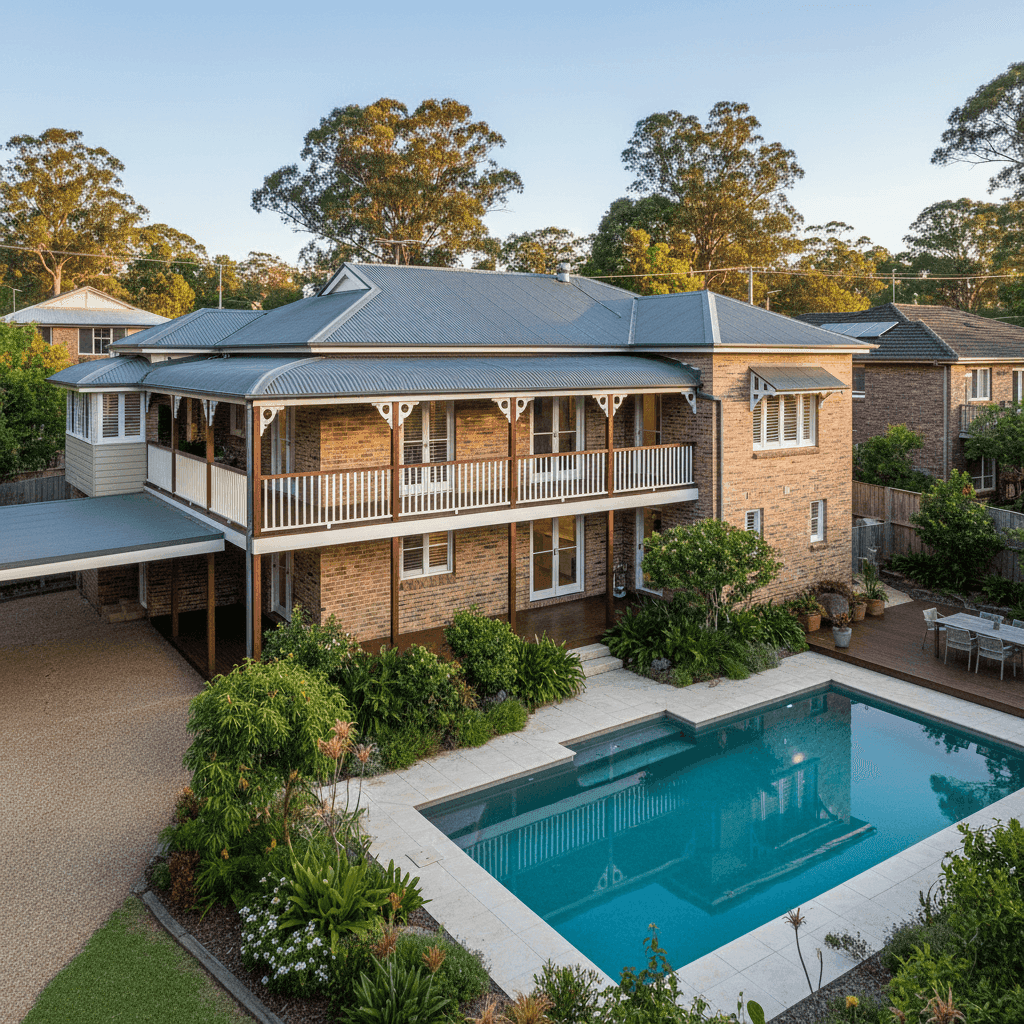
Fig Tree Pocket is one of Brisbane's most sought-after riverside suburbs — a leafy, semi-rural enclave in the western corridor of the city where large family homes sit comfortably among native bushland. For owners of a substantial free standing home in this postcode, understanding what drives your insurance premium is just as important as knowing whether you're getting a fair deal. This article breaks down a real home and contents insurance quote for a five-bedroom property in Fig Tree Pocket (QLD 4069) and puts it in context against suburb, state, and national benchmarks.
---
Is This Quote Fair?
The quoted annual premium for this property is $11,685 per year (or $1,120 per month), covering both building and contents with a sum insured of $1,700,000 on the building and $100,000 on contents. Both the building and contents excess sit at $2,000.
Our price rating for this quote is FAIR — Around Average, which means it's broadly in line with what other homeowners in similar circumstances are paying. It's neither a standout bargain nor an obvious overpayment.
To put that in perspective: the suburb median premium for Fig Tree Pocket is $7,029 per year, while the 75th percentile sits at $18,685. This quote lands comfortably between those two markers — meaning roughly half of Fig Tree Pocket homeowners are paying less, but a significant portion are paying considerably more. Given the property's size (315 sqm), elevated construction, pool, and high building sum insured, a premium above the suburb median is entirely expected.
It's also worth noting that the suburb average premium is a striking $58,627 per year — an outlier figure that's likely skewed upward by a small number of very high-value or high-risk properties in the sample of 31 quotes. The median is a far more reliable benchmark here, and this quote compares favourably against it.
---
How Fig Tree Pocket Compares
Zooming out to a broader view reveals just how variable home insurance costs can be across different geographies.
| Benchmark | Average Premium | Median Premium |
|---|---|---|
| Fig Tree Pocket (4069) | $58,627/yr | $7,029/yr |
| Brisbane LGA | $16,277/yr | — |
| Queensland | $9,129/yr | $3,903/yr |
| National | $5,347/yr | $2,764/yr |
You can explore the full Queensland insurance statistics or national home insurance data on CoverClub for deeper context.
A few things stand out here. Queensland premiums are notably higher than the national average — the state median of $3,903 is already 41% above the national median of $2,764. This reflects the elevated risk profile of Queensland properties generally, driven by storm, flood, and weather-related claims that are more frequent in this state than in southern counterparts.
At $11,685, this quote sits above both the Queensland and national averages, but that's largely attributable to the property itself rather than any pricing anomaly. A 315 sqm home with a $1.7 million building sum insured is a premium asset, and the insurance cost reflects that.
---
Property Features That Affect Your Premium
Several characteristics of this property have a meaningful influence on what insurers charge. Here's how they play out:
Brick veneer construction and Colorbond roof Brick veneer walls are generally viewed favourably by insurers — they're durable, fire-resistant, and relatively low-maintenance. The steel/Colorbond roof is similarly well-regarded for its resilience in storm conditions, which is particularly relevant in South East Queensland. Together, these materials can help moderate premiums compared to timber-framed or fibrous cement alternatives.
Elevated on stumps The property is elevated by at least one metre on a stump foundation — a classic Queensland construction style. This elevation can be a double-edged sword for insurers. On the positive side, it provides meaningful protection against surface-level flooding and storm water inundation. On the other hand, elevated homes can be more expensive to repair after storm or wind events, and the sub-floor space introduces additional risk factors. Overall, the flood-mitigation benefit tends to be viewed positively in Brisbane's western suburbs, where low-lying areas along Moggill Creek and the Brisbane River have a history of inundation.
Timber and laminate flooring These flooring types are susceptible to water damage and can be costly to replace — a factor insurers price into their calculations, particularly in flood-adjacent areas.
Swimming pool A pool adds liability exposure and increases the overall replacement cost of the property, both of which nudge premiums upward. Pools also require specific coverage considerations under most home insurance policies.
Ducted climate control Ducted air conditioning systems are a significant fixed asset and add to the overall building replacement value. Their inclusion in the sum insured is appropriate and contributes to the higher building coverage figure.
No cyclone risk Fig Tree Pocket falls outside designated cyclone risk zones, which is a meaningful premium relief factor compared to properties in North Queensland or coastal Far North QLD. This helps keep the quote more manageable than it might otherwise be for a property of this size.
---
Tips for Homeowners in Fig Tree Pocket
1. Review your building sum insured regularly With a sum insured of $1,700,000, it's essential to ensure this figure accurately reflects the current cost to rebuild — not the market value of the property. Construction costs have risen sharply in recent years, and underinsurance is a genuine risk. Consider using a quantity surveyor or an online building calculator to validate your figure annually.
2. Check your flood cover inclusions carefully Despite the property's elevated position, Fig Tree Pocket is in proximity to the Brisbane River and Moggill Creek catchments. Not all home insurance policies include flood cover as standard — some treat it as an optional add-on. Make sure your policy explicitly covers riverine flooding, not just storm water damage.
3. Compare quotes before renewal A "fair" rating means you're not being overcharged, but it doesn't mean you can't do better. The insurance market is competitive, and premiums can vary significantly between providers for identical coverage. Run a comparison at CoverClub before your renewal date to ensure you're getting genuine value.
4. Ask about discounts for security and safety features Many insurers offer premium reductions for properties with monitored alarm systems, deadbolts, or smoke detectors. If your home has these features and they weren't captured in your original quote, it's worth contacting your insurer to see if a discount applies.
---
Ready to Compare?
Whether you're renewing your existing policy or shopping for the first time, comparing quotes is the single most effective way to ensure you're not overpaying. CoverClub makes it easy to see how your premium stacks up against real data from your suburb, your state, and across Australia. Get a home insurance quote today and find out where you really stand.