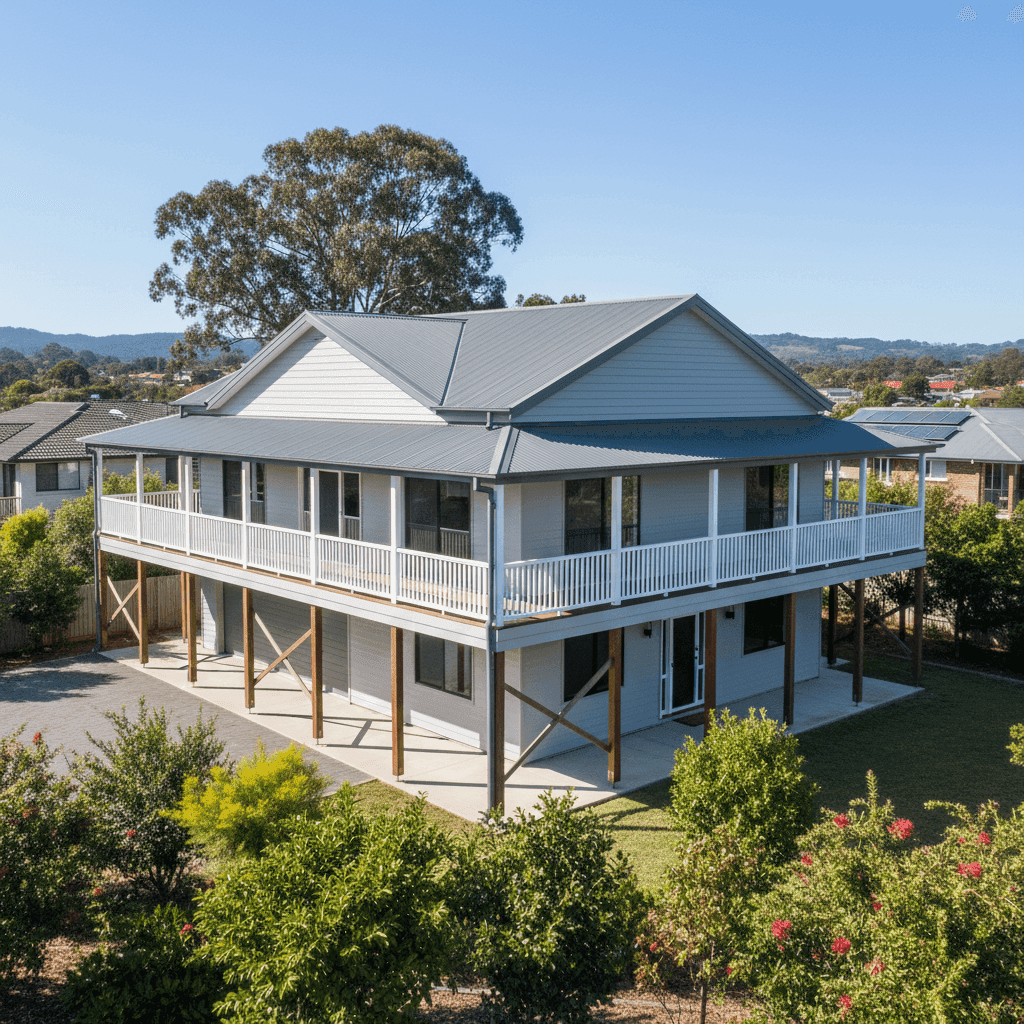
If you own a free standing home in Figtree, NSW 2525, you've probably noticed that home insurance premiums can vary wildly — and working out whether you're getting a fair deal isn't always straightforward. This article breaks down a real home and contents insurance quote for a five-bedroom property in the suburb, compares it against local, state, and national benchmarks, and offers practical tips to help you manage your costs.
---
Is This Quote Fair?
The quote in question comes in at $5,710 per year (or $547/month) for combined home and contents cover, with a building sum insured of $999,000 and contents valued at $150,000. Both the building and contents excess are set at $1,000.
Our price rating for this quote is Expensive — above average for the area.
To put that in context, the median annual premium across Figtree sits at just $2,474/yr, meaning this quote is more than double what the typical homeowner in the suburb is paying. Even the 75th percentile — the upper end of what most locals pay — sits at $3,281/yr, still well below this figure.
That said, it's worth noting that this is a large, elevated home with a high building sum insured ($999,000) and a meaningful contents value ($150,000). These factors alone will push any premium above the suburb median, which likely reflects smaller or less valuable properties. The quote isn't necessarily unfair for what's being covered — but it does warrant scrutiny and comparison shopping.
---
How Figtree Compares
Understanding where Figtree sits relative to broader benchmarks helps put any individual quote into perspective. Here's a snapshot based on data from CoverClub's Figtree suburb stats:
| Benchmark | Annual Premium |
|---|---|
| This Quote | $5,710 |
| Figtree Suburb Median | $2,474 |
| Figtree Suburb Average | $35,657 |
| Figtree 25th Percentile | $1,773 |
| Figtree 75th Percentile | $3,281 |
| Wollongong LGA Average | $2,751 |
| NSW State Median | $3,770 |
| NSW State Average | $9,528 |
| National Average | $5,347 |
| National Median | $2,764 |
A few things stand out here. First, the suburb average of $35,657 is extraordinarily high — almost certainly skewed by a small number of very expensive outliers in the 40-quote sample. The median of $2,474 is a far more reliable indicator of what most Figtree homeowners are paying.
Second, at $5,710, this quote actually sits close to the national average of $5,347, and is meaningfully below the NSW state average of $9,528. You can explore broader NSW insurance pricing trends and national home insurance data for further context.
The Wollongong LGA average of $2,751 is also notably lower than this quote, reinforcing that there may be room to negotiate or find a more competitive offer — particularly given the property's relatively modern construction.
---
Property Features That Affect Your Premium
Several characteristics of this particular home will influence how insurers assess and price the risk:
Size and Sum Insured
At 367 square metres with five bedrooms and three bathrooms, this is a large family home. A building sum insured of $999,000 is substantial and reflects the cost to fully rebuild a property of this size and quality. Higher replacement values naturally attract higher premiums.
Construction Materials
The home features Hardiplank/Hardiflex external walls — a fibre cement cladding product that is generally well regarded by insurers for its fire resistance and durability. The steel/Colorbond roof is similarly viewed favourably, as it performs well in both fire and storm conditions. These materials can work in your favour at renewal time.
Elevated Foundation
The property is elevated by at least one metre on stumps, which is a significant rating factor. While elevation can reduce flood risk in some circumstances, stumped homes can be more exposed to storm and wind damage, and the elevated structure may increase rebuilding complexity and cost. Insurers typically price this risk into the premium.
Flooring
Timber and laminate flooring throughout a home of this size adds meaningful replacement value to the contents and building sum insured. This is worth keeping in mind when reviewing your contents coverage.
Ducted Climate Control
The presence of ducted climate control adds to the insured value of the property's fixtures and fittings. While listed as standard quality fittings, ducted systems are expensive to repair or replace and are factored into building valuations.
No Pool or Solar Panels
The absence of a swimming pool and solar panels removes two common sources of additional premium loading — a modest but positive factor in keeping costs contained.
---
Tips for Homeowners in Figtree
1. Compare Multiple Quotes — Every Year
Insurers reprice risk constantly, and loyalty doesn't always pay. A quote that was competitive two years ago may no longer be. Use a comparison platform like CoverClub to run multiple quotes at once and ensure you're not overpaying.
2. Review Your Building Sum Insured Carefully
With a $999,000 sum insured, it's important to make sure this figure accurately reflects the rebuild cost — not the market value — of your home. Overinsuring wastes money; underinsuring can leave you significantly out of pocket after a major claim. Consider using a professional building cost estimator or asking your insurer how they've calculated the figure.
3. Ask About Excess Adjustments
Both the building and contents excess on this policy are set at $1,000. In many cases, increasing your excess — say, to $2,000 or $2,500 — can meaningfully reduce your annual premium. If you have the financial buffer to absorb a higher out-of-pocket cost in a claim scenario, this is often a worthwhile trade-off.
4. Check Your Contents Coverage Reflects Reality
A $150,000 contents value is significant. It's worth doing a proper home inventory every year or two to ensure this figure is accurate. Overclaiming is a red flag for insurers; underclaiming means you'll be out of pocket when it matters most.
---
Ready to Find a Better Deal?
Whether this quote is right for your situation or not, the best way to know for certain is to compare. At CoverClub, we make it easy to benchmark your home insurance against real market data and find competitive quotes tailored to your property. Get a quote today and see how much you could save.