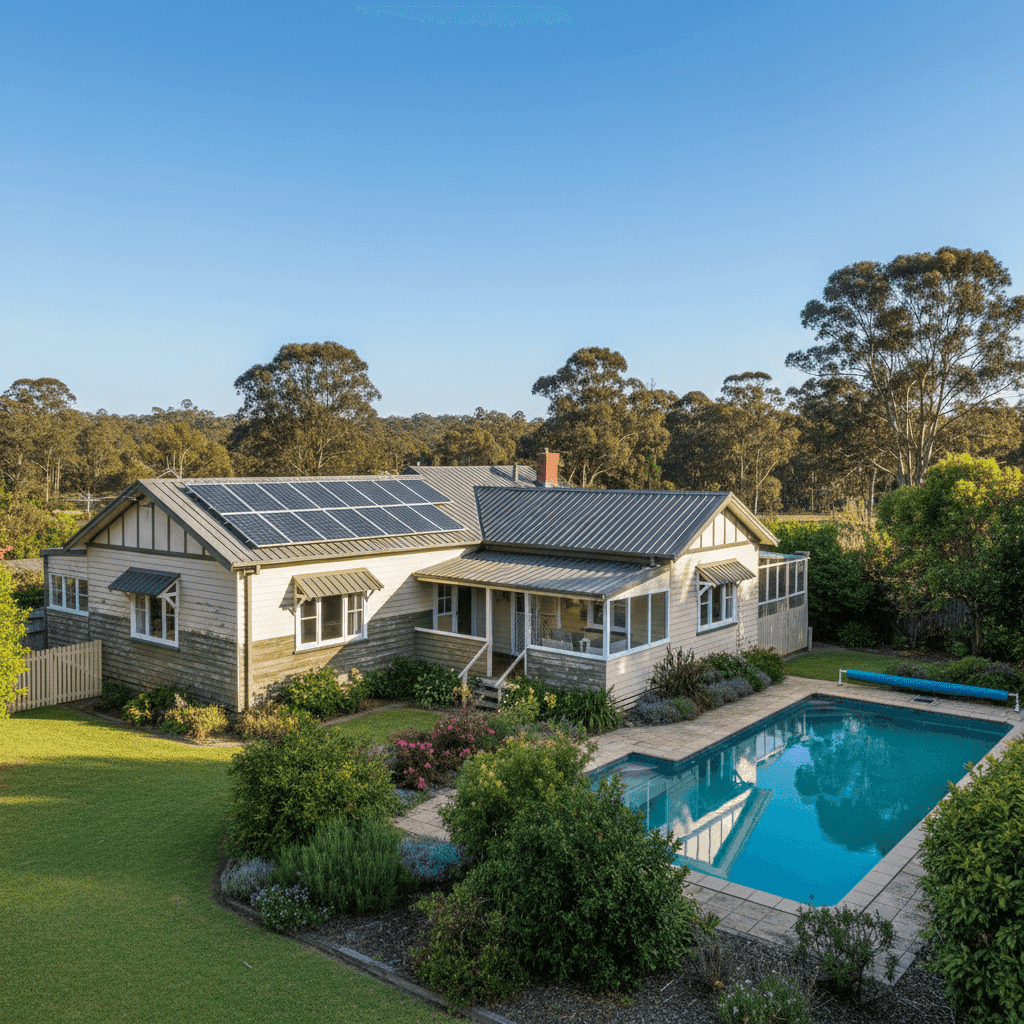
Figtree is a well-established suburb in the Wollongong local government area, sitting about 5 kilometres south-west of Wollongong's CBD. It's a popular choice for families thanks to its leafy streets, good schools, and easy access to the Princes Motorway. If you own a free-standing home here — particularly an older weatherboard property — understanding what drives your home insurance premium is essential to making sure you're getting genuine value for money.
This article breaks down a real home and contents insurance quote for a four-bedroom, three-bathroom free-standing home in Figtree, compares it against local, state, and national benchmarks, and offers practical tips for homeowners looking to manage their insurance costs.
---
Is This Quote Fair?
The annual premium for this property comes in at $3,506 per year (or $343 per month), covering both building and contents. The building is insured for $1,191,000 and contents for $100,000, with a $2,000 building excess and a $1,000 contents excess.
CoverClub's pricing analysis rates this quote as Fair — Around Average. That's a reasonable outcome given the property's profile, but "average" doesn't necessarily mean "the best available." It means the premium sits within a competitive range for this type of property in this location — not suspiciously cheap, and not alarmingly expensive.
The "fair" rating is particularly meaningful when you consider the property's characteristics: a 1960s weatherboard home on stumps with a pool, solar panels, and ducted climate control is a more complex risk than a modern brick veneer on a slab. Insurers price these features carefully, and a premium in this range reflects that complexity.
---
How Figtree Compares
To put this quote in proper context, here's how the $3,506 annual premium stacks up against available data:
| Benchmark | Premium |
|---|---|
| This quote | $3,506/yr |
| Figtree suburb average | $3,080/yr |
| Figtree suburb median | $2,106/yr |
| Figtree 25th percentile | $1,394/yr |
| Figtree 75th percentile | $4,313/yr |
| NSW average | $3,801/yr |
| NSW median | $3,410/yr |
| National average | $2,965/yr |
| National median | $2,716/yr |
| Wollongong LGA average | $2,530/yr |
You can explore the full breakdown of Figtree insurance statistics, NSW-wide data, and national benchmarks on CoverClub.
A few things stand out from this comparison:
- Above the suburb median, but within the upper half of the range. The Figtree median sits at $2,106/yr — significantly lower than this quote. However, the median captures all property types, including smaller, simpler homes. A large, older weatherboard home with a pool and solar is naturally going to sit higher in the distribution. At $3,506, this quote is comfortably below the suburb's 75th percentile of $4,313.
- Below the NSW state average. Despite being above the suburb median, this quote is actually $295 cheaper than the NSW average of $3,801. That's a modest but welcome saving compared to many other parts of the state.
- Above the national average. NSW tends to run hotter than the national average on home insurance costs, largely due to higher property values, storm exposure, and bushfire risk in many areas. At $3,506 versus the national average of $2,965, this quote is broadly in line with what NSW homeowners typically pay.
- Above the Wollongong LGA average. The LGA average of $2,530 is pulled down by smaller and newer properties across the broader Wollongong area. For a property of this size and age, exceeding the LGA average is expected.
Based on 62 quotes sampled in the Figtree area, this premium sits in a well-populated part of the distribution — not an outlier in either direction.
---
Property Features That Affect Your Premium
Several characteristics of this property have a meaningful impact on how insurers price the risk:
Age and Construction (1960s Weatherboard on Stumps)
Older homes built in the 1960s often used construction methods and materials that are more expensive to repair or replace today. Weatherboard timber cladding is susceptible to moisture, rot, and fire, which generally attracts higher premiums than brick or rendered masonry. The stump foundation also adds complexity — stumps can shift, deteriorate, or require specialist work if damaged. These factors combine to push premiums upward relative to modern construction.
Building Size and Sum Insured
At 235 square metres with a building sum insured of $1,191,000, this is a substantial property. The high sum insured reflects above-average fittings quality, which means finishes, fixtures, and inclusions are more expensive to replace. Insurers price building cover proportionally to rebuild cost, so a premium finish throughout the home will be reflected in the premium.
Swimming Pool
A pool adds liability exposure and increases the overall replacement value of the property. Most insurers factor pool ownership into both the building sum insured and the risk assessment.
Solar Panels
Solar systems are increasingly common in Australian homes, but they do add to the insurable value of the property. Panels can be damaged by hail, storms, or fire, and replacement costs have risen alongside system sizes and battery storage adoption.
Ducted Climate Control
Ducted air conditioning systems are expensive to install and repair. Their inclusion in the property's fittings reinforces the above-average quality rating and contributes to the overall sum insured.
No Cyclone Risk
Figtree is not in a designated cyclone risk zone, which is a meaningful saving compared to properties in northern Queensland or parts of Western Australia. This keeps the premium more moderate than it might otherwise be for a home of this age and construction type.
---
Tips for Homeowners in Figtree
1. Review your sum insured regularly. Building costs have risen sharply in recent years. If your home was last valued several years ago, there's a real risk of being underinsured. Use a quantity surveyor or an online rebuild cost calculator to verify your sum insured reflects current construction costs — especially important for an older weatherboard home where labour and materials can be costly.
2. Consider a higher excess to reduce your premium. This policy carries a $2,000 building excess and $1,000 contents excess. If you have the financial buffer to absorb a larger out-of-pocket cost in the event of a claim, opting for a higher voluntary excess can meaningfully reduce your annual premium. Just make sure the saving is worth the additional risk exposure.
3. Maintain your weatherboard cladding and stumps. Insurers can reduce or deny claims if damage is attributed to poor maintenance. Regularly inspect and repaint weatherboard cladding to prevent moisture ingress, and have your stumps assessed periodically by a licensed builder or pest inspector. Proactive maintenance protects both your home and your claim entitlements.
4. Shop around at renewal time. A "fair" rating means this quote is competitive — but it doesn't mean it's the cheapest available for equivalent cover. Insurance markets shift constantly, and loyalty doesn't always pay. Comparing quotes annually through a platform like CoverClub ensures you're not quietly drifting into an overpriced policy.
---
Compare Your Own Quote
Whether you're renewing an existing policy or insuring a new purchase, it pays to see how your premium stacks up against the market. CoverClub aggregates real quote data from across Australia so you can make an informed decision — not just accept the first number that lands in your inbox.
Get a home insurance quote for your Figtree property and see where you sit in the distribution. A few minutes of comparison could save you hundreds of dollars a year.