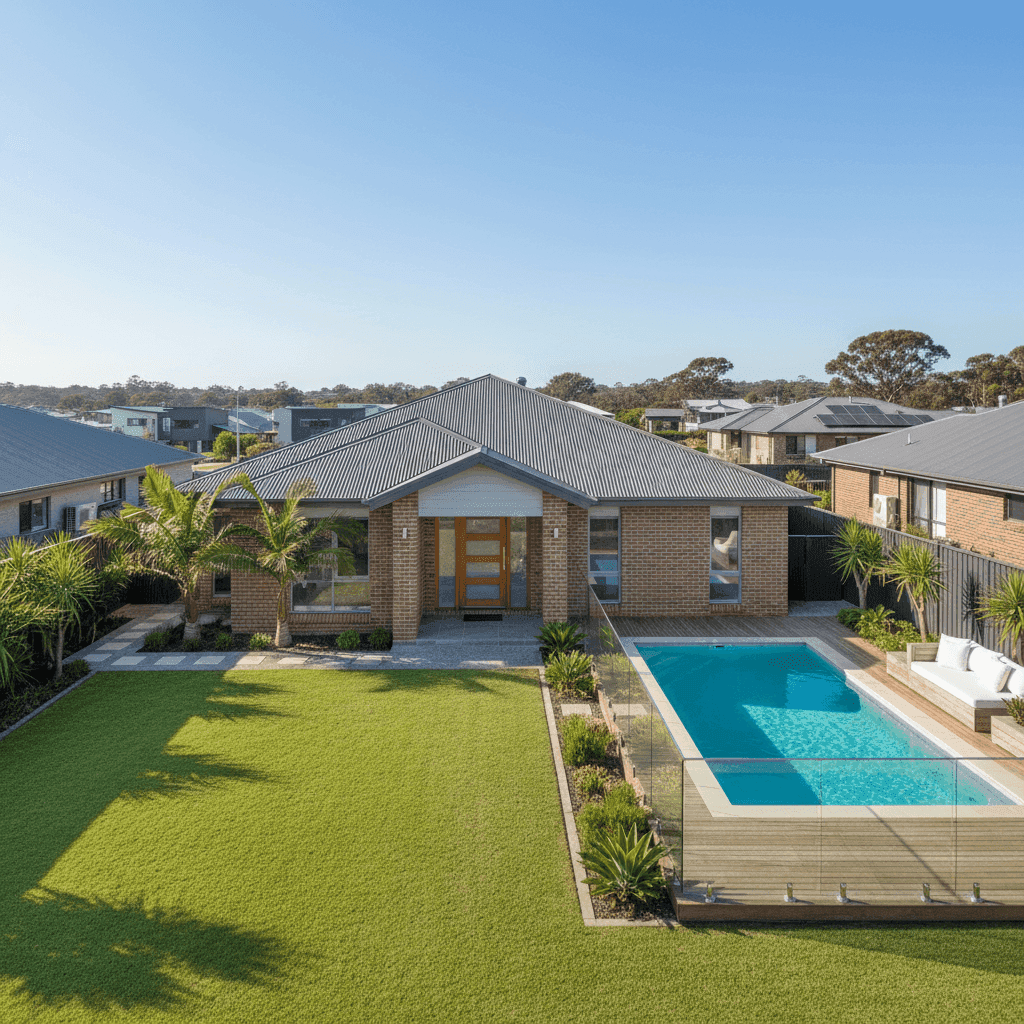
Fingal Bay is one of the Port Stephens region's most sought-after coastal pockets — a relaxed beachside suburb that attracts families, retirees, and holiday home owners alike. With that lifestyle appeal comes real estate value, and with real estate value comes the very important question: what should you be paying to protect it?
This article breaks down a recent home and contents insurance quote for a five-bedroom, free-standing brick veneer home in Fingal Bay (NSW 2315), comparing it against local, state, and national benchmarks to help you understand whether the price stacks up.
---
Is This Quote Fair?
The annual premium for this property came in at $4,208 per year (or $420 per month), covering a building sum insured of $974,000 and contents valued at $50,000. Our pricing analysis rates this quote as Fair — Around Average.
That "fair" rating reflects a premium that sits meaningfully above the suburb median but well within the upper range of what Fingal Bay homeowners are paying. It's not a bargain, but it's not an outlier either. Given the size of the dwelling (286 sqm), the relatively high building sum insured, and the presence of a pool — all of which add complexity to the risk profile — the figure is broadly defensible.
The building excess of $3,000 is on the higher end and worth noting. A higher excess typically brings the premium down, so if you're comparing this quote to others with a lower excess, you'd need to adjust for that difference before drawing conclusions.
---
How Fingal Bay Compares
To put this quote in context, here's how the $4,208 annual premium measures up across different benchmarks:
| Benchmark | Average Premium | Median Premium |
|---|---|---|
| Fingal Bay (NSW 2315) | $3,521/yr | $3,359/yr |
| Port Stephens LGA | $3,863/yr | — |
| NSW | $3,801/yr | $3,410/yr |
| National | $2,965/yr | $2,716/yr |
Based on 34 quotes collected for Fingal Bay, the suburb's 25th percentile sits at $2,037/yr and the 75th percentile reaches $4,501/yr. This quote lands between the 75th percentile and the median — closer to the upper half of the market, but still comfortably below the most expensive policies being written in the area.
Compared to NSW-wide insurance data, this quote is roughly 11% above the state average and about 23% above the state median. Against national figures, it's notably higher — around 42% above the national average — though that gap largely reflects the premium coastal location and the size of the home rather than any pricing anomaly.
In short: Fingal Bay homeowners generally pay more than the national average, and this quote is consistent with that pattern.
---
Property Features That Affect Your Premium
Several characteristics of this property have a direct bearing on what insurers charge. Understanding them helps you have more informed conversations when shopping around.
Size and sum insured At 286 sqm with five bedrooms and three bathrooms, this is a substantial home. The $974,000 building sum insured reflects the cost to rebuild — not the market value — and at this level, even small percentage-based pricing differences translate to meaningful dollar amounts in the premium.
Brick veneer construction Brick veneer walls are generally viewed favourably by insurers. They offer solid fire resistance and durability compared to weatherboard or lightweight cladding, which can help moderate premiums. The Colorbond steel roof is similarly well-regarded — it's lightweight, resistant to corrosion, and performs well in coastal environments where salt air can accelerate wear on other materials.
Slab foundation A concrete slab foundation is standard for homes of this era and is generally considered low-risk from an insurer's perspective. It reduces exposure to certain subsidence and pest-related claims compared to raised timber stumps.
Timber and laminate flooring Flooring type can influence contents and building claims, particularly in water damage scenarios. Timber and laminate floors can be costly to repair or replace after a flood or burst pipe, which may be factored into the overall risk assessment.
Swimming pool A pool adds both value and liability to a property. From an insurance standpoint, it increases the replacement cost of the home and introduces additional risk considerations — particularly around public liability if the property is ever rented or used by guests.
Ducted climate control Ducted air conditioning systems are expensive to repair or replace and are typically included in the building sum insured. Their presence contributes to a higher rebuild cost, which flows through to the premium.
Coastal location Fingal Bay's proximity to the ocean is a lifestyle asset, but it does mean insurers account for elevated exposure to wind, storm surge, and salt-air corrosion. This is a key reason why premiums in coastal NSW suburbs tend to run higher than inland or metropolitan areas.
---
Tips for Homeowners in Fingal Bay
1. Review your building sum insured regularly Construction costs have risen sharply in recent years. If your sum insured hasn't been updated to reflect current rebuild costs, you could be underinsured — which means a shortfall at claim time. Use an independent building cost estimator or ask your insurer how they calculate replacement value.
2. Consider your excess carefully This quote carries a $3,000 building excess. Opting for a higher excess is a legitimate way to reduce your premium, but make sure it's an amount you could genuinely afford to pay out of pocket in an emergency. If $3,000 would be a stretch, it may be worth paying a slightly higher premium for a lower excess.
3. Check what's included for your pool and outdoor areas Not all policies treat pools, decking, and outdoor structures the same way. Some include them automatically in the building cover; others require specific endorsements. Given this property has a pool, it's worth confirming exactly what's covered — and for how much — before assuming you're fully protected.
4. Compare quotes annually The insurance market shifts from year to year, and loyalty doesn't always pay. Even if your current insurer has served you well, running a comparison at renewal time is a straightforward way to ensure you're not overpaying. A "fair" rating today doesn't mean there isn't a better deal available.
---
Ready to Compare?
Whether you're reviewing an existing policy or buying cover for the first time, comparing quotes is the single most effective way to make sure you're getting value. CoverClub makes it easy to see what other homeowners in Fingal Bay are paying and find a policy that suits your property and budget.