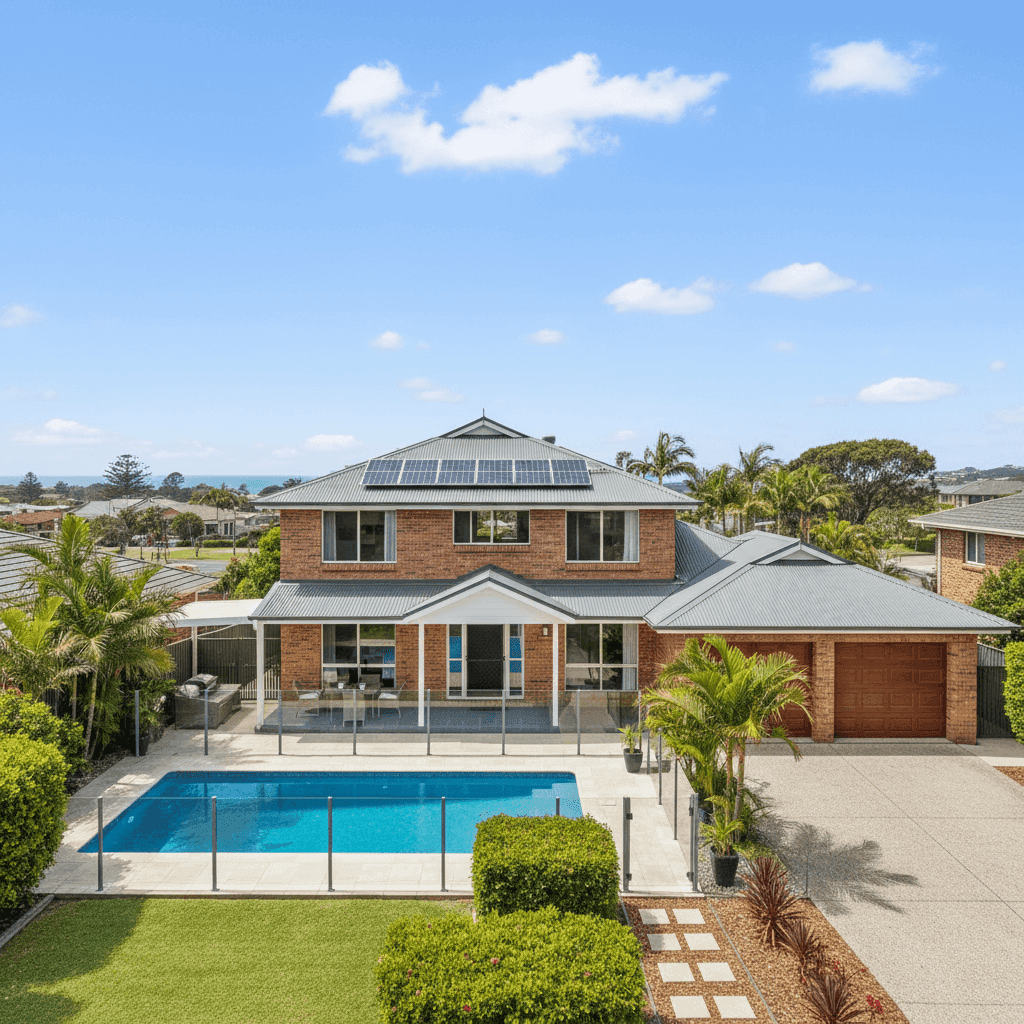
Fingal Bay is one of the Port Stephens region's most sought-after coastal addresses — a relaxed seaside suburb where five-bedroom homes with pools and solar panels are far from unusual. But when a home insurance quote lands in your inbox, it can be hard to know whether you're looking at a fair deal or leaving money on the table. This article breaks down a recent Home and Contents insurance quote for a free-standing home in Fingal Bay, NSW 2315, and puts the numbers in context so you can make a more informed decision.
---
Is This Quote Fair?
The quote in question comes in at $6,451 per year (or $618 per month), covering a building sum insured of $1,593,000 and contents valued at $249,000, each with a $5,000 excess.
Our price rating for this quote is Expensive (Above Average) — and the data backs that up. Based on 32 quotes collected for Fingal Bay (NSW 2315), the suburb average sits at $2,846 per year, with a median of $2,655. At $6,451, this quote is more than 2.2 times the suburb average — a significant gap that warrants a closer look.
That said, context matters. The high building sum insured ($1,593,000) and premium contents value ($249,000) are well above what a typical Fingal Bay property might be insured for, which naturally pushes the premium higher. The property also includes a pool, solar panels, and ducted climate control — all features that add to the insurer's risk exposure and replacement cost calculations.
So while the premium is elevated relative to local benchmarks, it's not entirely out of step with what you'd expect for a well-appointed, high-value coastal home.
---
How Fingal Bay Compares
Understanding where your premium sits within the broader market is one of the most useful things you can do as a homeowner. Here's how this quote stacks up:
| Benchmark | Annual Premium |
|---|---|
| This Quote | $6,451 |
| Fingal Bay Suburb Average | $2,846 |
| Fingal Bay Suburb Median | $2,655 |
| Fingal Bay 25th Percentile | $2,199 |
| Fingal Bay 75th Percentile | $3,242 |
| Port Stephens LGA Average | $3,116 |
| NSW State Average | $9,528 |
| NSW State Median | $3,770 |
| National Average | $5,347 |
| National Median | $2,764 |
A few things stand out here. First, this quote actually sits below the NSW state average of $9,528 — a figure skewed heavily upward by high-risk and high-value properties across the state. Second, it's above the national average of $5,347 but within a range that reflects the property's coastal location and premium specifications.
For a deeper dive into how Fingal Bay premiums trend over time, visit the Fingal Bay insurance stats page. You can also explore NSW-wide insurance data or national benchmarks to see how your area compares on a broader scale.
---
Property Features That Affect Your Premium
Several characteristics of this property have a direct bearing on the premium quoted. Understanding them can help you have a more productive conversation with your insurer — or identify areas where adjustments might be possible.
High sum insured At $1,593,000, the building sum insured is the single biggest driver of the premium. This figure represents the estimated cost to rebuild the home from scratch, including labour, materials, and associated costs. For a 139 sqm brick veneer home with top-of-the-range fittings, this is a plausible rebuild estimate — but it's worth verifying with an independent quantity surveyor to ensure you're not over-insured.
Top-of-the-range fittings The quality of internal fittings — think stone benchtops, premium appliances, custom cabinetry, and high-end fixtures — significantly increases both the rebuild cost and the contents value. Insurers price this risk accordingly.
Swimming pool Pools add liability exposure and increase the cost of a full property rebuild or reinstatement. They're a common feature in coastal NSW homes but do contribute to a higher base premium.
Solar panels A solar panel system adds replacement value to the property and introduces additional risk (e.g., storm damage, electrical faults). Most home insurance policies cover solar panels as part of the building, but it's worth confirming this with your insurer.
Brick veneer construction with Colorbond roof Brick veneer is generally viewed favourably by insurers — it's durable and fire-resistant. A steel/Colorbond roof is similarly robust and performs well in coastal conditions. These features may actually help moderate the premium compared to, say, a weatherboard home with a tile roof.
Slab foundation and tile flooring A concrete slab foundation is low-risk from an insurer's perspective, and tiled flooring is durable and easy to reinstate. Neither of these features is likely to be pushing the premium up.
Coastal location Fingal Bay's proximity to the ocean means insurers factor in risks like storm surge, coastal erosion, and high winds. While this property is not in a designated cyclone risk area, coastal exposure is still a pricing consideration for NSW insurers.
---
Tips for Homeowners in Fingal Bay
1. Review your sum insured regularly Building costs have risen sharply in recent years, but so has the risk of over-insurance. If your sum insured hasn't been reviewed recently, consider commissioning a professional building replacement cost assessment. Being over-insured means you're paying a higher premium than necessary.
2. Compare multiple quotes before renewing Loyalty doesn't always pay in insurance. Insurers often offer better rates to new customers, and premiums can vary dramatically between providers for the same property. Use a comparison platform like CoverClub to see what else is available before your renewal date.
3. Consider your excess strategically This policy carries a $5,000 excess on both building and contents. A higher excess generally reduces your annual premium. If you have the financial buffer to cover a larger out-of-pocket cost in the event of a claim, opting for a higher excess can be a smart way to bring your premium down.
4. Bundle your building and contents cover This quote already combines home and contents insurance, which typically attracts a discount compared to purchasing them separately. If you haven't already bundled, it's worth asking your insurer what the combined rate looks like.
---
Ready to Compare?
A quote is only as useful as the alternatives you compare it against. Whether you're renewing your existing policy or insuring a new property in Fingal Bay, CoverClub makes it easy to see how your premium stacks up and find a better deal. Enter your address to get started — it only takes a few minutes.