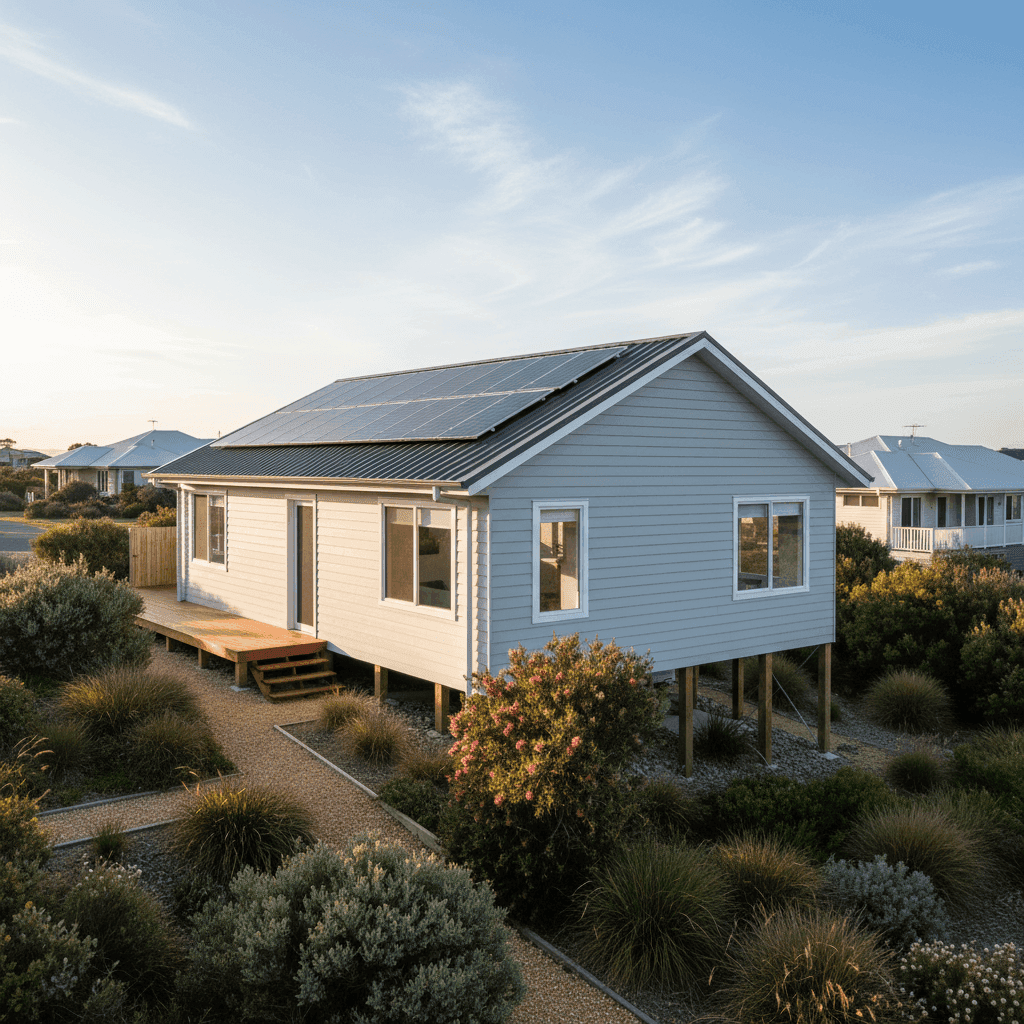
Fingal is a quiet coastal locality on the tip of the Mornington Peninsula — a place known for its rugged surf beaches, sea breezes, and relaxed lifestyle. It's also an area where home insurance premiums can vary quite significantly, depending on your property's characteristics and the insurer you choose. In this article, we analyse a recent home and contents insurance quote for a four-bedroom, free-standing home in Fingal (VIC 3939) and unpack what's driving the cost.
---
Is This Quote Fair?
The quote in question comes in at $3,978 per year (or $389/month), covering a building sum insured of $1,250,000 and contents valued at $101,000, each with a $1,000 excess.
Based on our pricing data, this quote is rated Expensive — above average for the area. It sits comfortably above the suburb's average premium of $2,765/yr and its median of $2,804/yr. In fact, it's higher than the 75th percentile for Fingal, which sits at $3,159/yr — meaning this quote is pricier than at least three-quarters of comparable quotes in the suburb.
That said, context matters. The building sum insured of $1,250,000 is on the higher end, and a 235 sqm home built in 2014 with quality fittings, solar panels, and ducted climate control will naturally attract a higher replacement cost estimate than a more modest dwelling. The insurer is pricing for what it would cost to fully rebuild — not just the land value.
Still, a premium this far above the local median is worth scrutinising. There may be room to save by comparing alternatives.
---
How Fingal Compares
Understanding where Fingal sits in the broader insurance landscape helps put this quote in perspective. Here's a snapshot:
| Benchmark | Annual Premium |
|---|---|
| This Quote | $3,978 |
| Fingal (3939) Average | $2,765 |
| Fingal (3939) Median | $2,804 |
| Fingal 25th Percentile | $2,258 |
| Fingal 75th Percentile | $3,159 |
| VIC State Average | $3,000 |
| VIC State Median | $2,718 |
| Mornington Peninsula LGA Average | $2,652 |
| National Average | $5,347 |
| National Median | $2,764 |
(Based on 26 quotes sampled for the Fingal suburb.)
A few things stand out here. First, this quote exceeds both the Fingal suburb average and the Victorian state average of $3,000/yr. It also sits above the Mornington Peninsula LGA average of $2,652/yr by a notable margin.
Interestingly, the national average is considerably higher at $5,347/yr — largely skewed by high-risk areas in Queensland and Western Australia prone to cyclones and flooding. Victoria, and Fingal in particular, tends to benefit from a lower risk profile on that front. So while $3,978 might seem reasonable against a national lens, locally it's at the expensive end of the spectrum.
---
Property Features That Affect Your Premium
Several characteristics of this property directly influence the premium calculation. Here's how each one plays a role:
Hardiplank/Hardiflex Cladding Fibre cement cladding like Hardiplank is generally viewed favourably by insurers. It's fire-resistant, durable, and less susceptible to rot and termite damage compared to traditional timber weatherboards. This should, in theory, work in the homeowner's favour when it comes to pricing.
Steel/Colorbond Roof Colorbond roofing is a popular choice across coastal Victoria and is well-regarded by insurers for its durability, wind resistance, and longevity. It's unlikely to be adding risk to this premium.
Stump Foundation Homes on stumps (also known as pier foundations) can be a mixed bag for insurers. While they allow for good ventilation and are common in older Victorian homes, they can be more vulnerable to movement, subsidence, and pest damage over time. This may contribute slightly to the premium.
Timber/Laminate Flooring Timber and laminate floors can be more costly to repair or replace following water damage or flooding events compared to tile or concrete. This is a factor insurers weigh when calculating contents and building risk.
Solar Panels Solar panels add value to the property but also increase the cost to rebuild or repair. Insurers need to account for the replacement cost of the panels themselves, as well as any associated electrical work — so their presence can nudge premiums upward.
Ducted Climate Control Ducted systems are expensive to install and replace. Including this in the building sum insured increases the overall replacement value, which flows through to a higher premium.
Construction Year: 2014 A home built in 2014 is relatively modern and would have been constructed to current building codes, including bushfire and wind-load standards where applicable. This is generally a positive signal for insurers.
High Building Sum Insured: $1,250,000 This is arguably the single biggest driver of the premium. A $1.25 million building sum insured is substantial — even for a 235 sqm home on the Mornington Peninsula. It's worth reviewing whether this figure accurately reflects your home's rebuild cost (not its market value), as over-insuring can mean unnecessarily high premiums.
---
Tips for Homeowners in Fingal
If you're a homeowner in Fingal looking to get better value on your insurance, here are some practical steps worth considering:
- Review your sum insured carefully. The building sum insured should reflect the cost to fully rebuild your home — not its market or land value. Use a building cost calculator or speak with a quantity surveyor to ensure you're not over-insured. Even a modest reduction in sum insured can meaningfully lower your premium.
- Compare multiple quotes. With only 26 quotes in our Fingal sample, the spread between the cheapest and most expensive is significant. The gap between the 25th percentile ($2,258/yr) and this quote ($3,978/yr) is over $1,700 annually — that's real money. Shopping around is the most effective way to find a better deal.
- Consider a higher excess. Both the building and contents excess on this policy sit at $1,000. Opting for a higher excess (say, $2,000 or $2,500) in exchange for a lower annual premium can make financial sense if you're unlikely to make small claims.
- Bundle strategically, but verify the savings. Many insurers offer discounts for combining home and contents cover under one policy. However, it's still worth getting separate quotes to ensure the bundle is genuinely cheaper — sometimes splitting policies across providers works out better.
---
Ready to Find a Better Deal?
Whether you're renewing your current policy or shopping for the first time, comparing quotes is the fastest way to know if you're getting fair value. At CoverClub, we make it easy to see how your premium stacks up against real data from your suburb and state.
Get a home insurance quote today and find out if you could be paying less for the same level of cover.