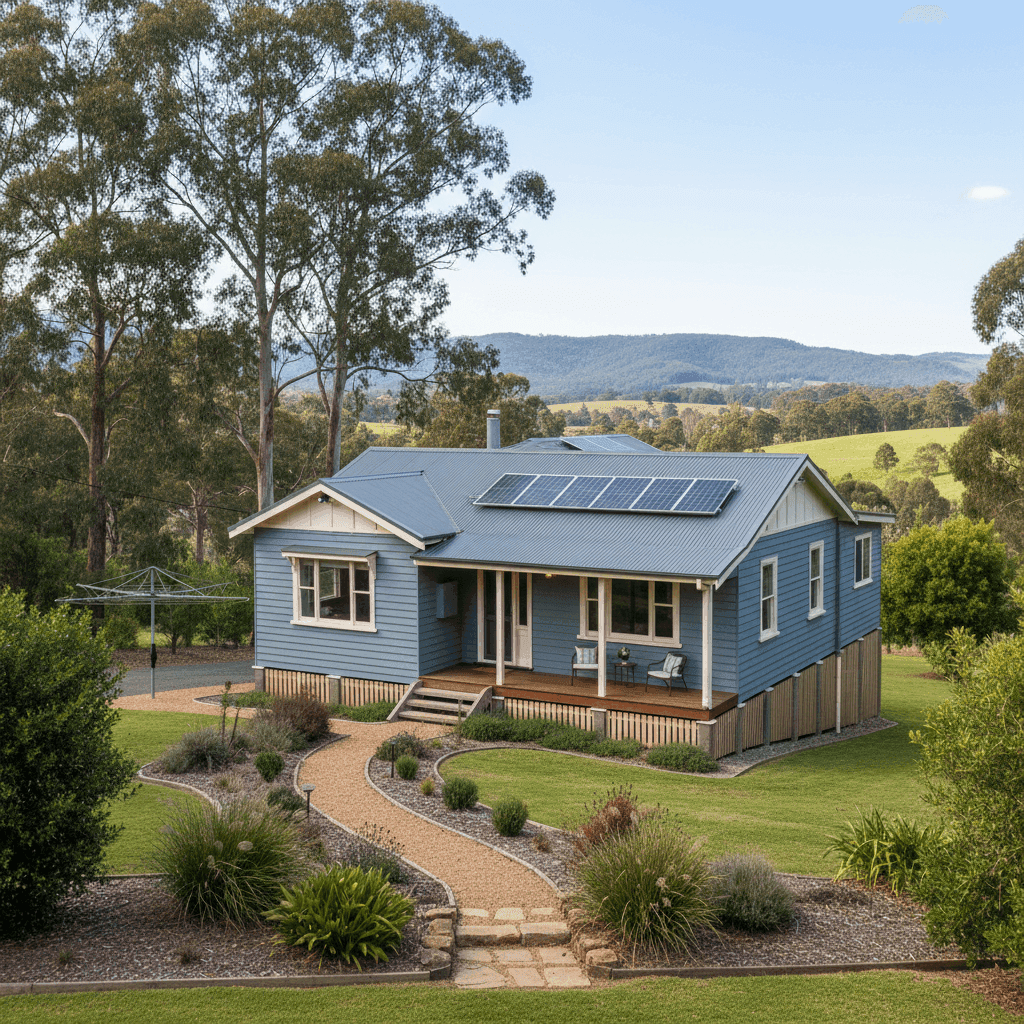
If you own a free standing home in Fish Creek, VIC 3959, you've likely noticed that home insurance doesn't come cheap in this part of South Gippsland. This article breaks down a real home and contents insurance quote for a 3-bedroom, 1-bathroom weatherboard property in the area — and helps you understand whether what you're paying stacks up against local, state, and national benchmarks.
---
Is This Quote Fair?
The quote in question comes to $4,311 per year (or $413/month) for combined home and contents cover, with a building sum insured of $515,000 and contents valued at $50,000. The building excess sits at $2,000 and the contents excess at $1,000.
Our price rating for this quote is EXPENSIVE — above average for the Fish Creek area.
To put that in perspective: the average home and contents premium across Fish Creek suburbs sits at $2,096/year, with a median of just $1,788/year. This quote is more than double the local median, which is a significant gap worth investigating.
That said, it's important to note that this quote isn't wildly out of step with broader Victorian pricing. The VIC state average sits at $3,000/year, and this quote exceeds that by roughly 44%. At a national level, the Australian average is $5,347/year — meaning this quote actually falls below the national average, which provides some useful context.
The bottom line: while this premium isn't the most expensive we've seen nationally, it's meaningfully above what most Fish Creek homeowners are paying, and there's a reasonable case to shop around.
---
How Fish Creek Compares
Here's a snapshot of how premiums in Fish Creek stack up across different benchmarks:
| Benchmark | Average Premium | Median Premium |
|---|---|---|
| Fish Creek (suburb) | $2,096/yr | $1,788/yr |
| South Gippsland LGA | $2,250/yr | — |
| Victoria (state) | $3,000/yr | $2,718/yr |
| Australia (national) | $5,347/yr | $2,764/yr |
A few things stand out from this data. First, Fish Creek premiums are notably lower than the Victorian state average — suggesting that, broadly speaking, insurers view this area as relatively manageable in terms of risk compared to other parts of the state. Second, the wide spread between the suburb's 25th percentile ($1,056/yr) and 75th percentile ($2,942/yr) tells us there's enormous variation in what homeowners here are paying — likely driven by differences in property age, construction type, sum insured, and individual risk factors.
You can explore the full pricing data for this postcode at CoverClub's Fish Creek stats page.
It's also worth noting that our suburb sample size is 24 quotes — a reasonable dataset, though not enormous. As more quotes are collected, these averages will become even more precise.
---
Property Features That Affect Your Premium
Several characteristics of this particular property are likely pushing the premium above the local average. Here's what matters most:
Weatherboard Timber Construction
Weatherboard wood external walls are one of the most significant premium drivers for older Australian homes. Timber is considered a higher fire risk than brick veneer or full brick, and it's also more susceptible to rot, pest damage, and general deterioration. Insurers price this risk accordingly.
Age of the Property (Built 1950)
A home built in 1950 is now over 70 years old. Older properties carry higher risks of electrical faults, plumbing failures, and structural issues — all of which translate to a higher likelihood of claims. Replacement costs for heritage-era homes can also be harder to estimate accurately, which can lead to either under- or over-insurance.
Stump Foundation
Homes on stumps (also known as pier foundations) are common in regional Victoria and older housing stock. While stumps can be practical in certain terrain, they introduce unique risks — particularly around subsidence, pest access (termites love the space beneath a raised floor), and moisture. Insurers factor this into their risk assessments.
Solar Panels
This property has solar panels installed, which adds value to the building sum insured and can increase the cost to rebuild or repair. Solar panels are generally covered under building insurance, but their presence does contribute to a higher insured value.
Building Sum Insured of $515,000
At 130 sqm, a sum insured of $515,000 works out to roughly $3,960 per sqm — which is on the higher end for a regional property, though not unreasonable given construction costs in recent years. A higher sum insured directly increases your premium, so it's worth periodically reviewing whether your insured value reflects current rebuild costs accurately.
Elevated Foundation (Less Than 1m)
The property is slightly elevated, which can actually reduce flood risk in some scenarios — but the stump-based elevation also means the underfloor space needs to be factored into the overall rebuild cost.
---
Tips for Homeowners in Fish Creek
If you're looking to manage your home insurance costs without sacrificing meaningful cover, here are four practical steps worth considering:
- Review your sum insured regularly. Building costs have fluctuated significantly in recent years. Use a building cost calculator to check whether $515,000 is still the right figure — over-insuring pushes up your premium unnecessarily, while under-insuring leaves you exposed at claim time.
- Consider a higher excess. This quote carries a $2,000 building excess and $1,000 contents excess. If you can comfortably absorb a higher out-of-pocket cost in the event of a claim, opting for a higher excess is one of the most direct ways to reduce your annual premium.
- Maintain your weatherboard cladding. Insurers reward well-maintained properties. Keeping your timber walls painted, sealed, and free of rot or pest damage not only protects the home but can support a smoother claims process — and some insurers may offer better rates for properties with documented maintenance histories.
- Compare quotes annually. The home insurance market is competitive, and loyalty doesn't always pay. Premiums can shift significantly from year to year, and different insurers assess risk differently. Running a comparison at renewal time is one of the simplest ways to ensure you're not overpaying.
---
Find a Better Deal with CoverClub
Whether you're renewing your policy or insuring a new purchase, CoverClub makes it easy to compare home and contents insurance quotes from multiple providers in minutes. Our data shows there's real variation in what Fish Creek homeowners are paying — and the right quote for your property could be significantly lower than the market average.
Get a home insurance quote today and see how much you could save.