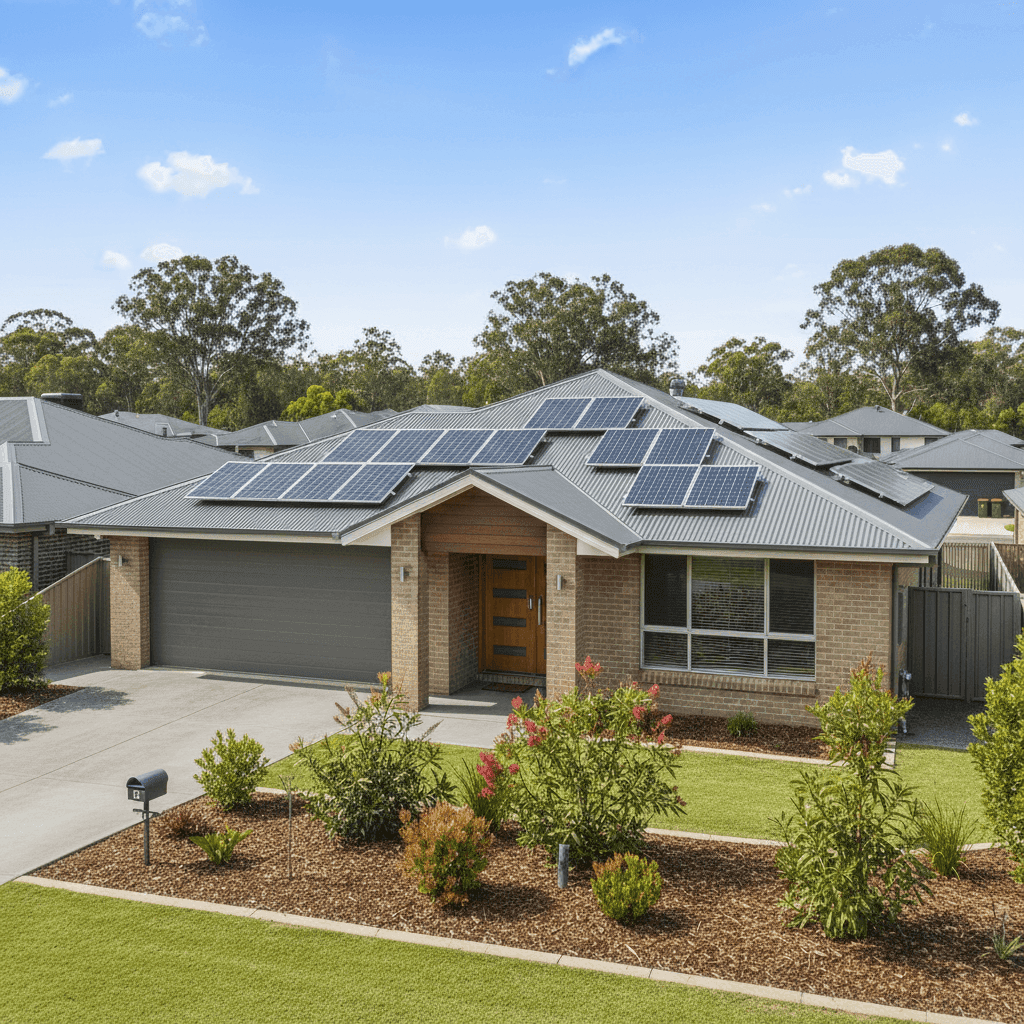
If you own a four-bedroom free standing home in Fitzgibbon, QLD 4018, you're likely keeping a close eye on what you're paying for home and contents insurance — especially as premiums across Queensland have climbed sharply in recent years. This article breaks down a real insurance quote for a property in this suburb, benchmarks it against local, state and national data, and offers practical guidance on how to make the most of your cover.
---
Is This Quote Fair?
The quote in question comes in at $1,730 per year (or $174/month) for combined home and contents insurance. This covers a building sum insured of $618,000 and $50,000 in contents, with a building excess of $3,000 and a contents excess of $1,000.
Our price rating for this quote is FAIR — Around Average, and the data backs that up. According to suburb-level statistics for Fitzgibbon (QLD 4018), based on a sample of 75 quotes:
- Suburb average premium: $1,935/yr
- Suburb median premium: $1,710/yr
- 25th percentile: $1,122/yr
- 75th percentile: $2,489/yr
At $1,730, this quote sits just above the suburb median of $1,710 — meaning roughly half of comparable properties in Fitzgibbon are paying less, and half are paying more. It's comfortably within the middle band of the market, and well below the 75th percentile of $2,489. That said, there's clearly room to do better: the cheapest quartile of quotes in the area comes in under $1,122, which suggests that with the right insurer and policy structure, savings are achievable.
---
How Fitzgibbon Compares
One of the more striking findings here is just how reasonable Fitzgibbon's premiums are relative to the broader Queensland market.
According to QLD state insurance data, the average home insurance premium across Queensland is $9,129 per year, with a state median of $3,903. Those figures are heavily skewed by high-risk regions — particularly cyclone-prone areas in Far North Queensland, where premiums can reach eye-watering levels.
Fitzgibbon, sitting in Brisbane's northern suburbs, benefits from a comparatively benign risk profile. It is not classified as a cyclone risk area, which is one of the single biggest factors driving premiums up elsewhere in the state.
Zooming out further, national insurance benchmarks show an average premium of $5,347/yr and a national median of $2,764/yr. Again, this quote at $1,730 sits well below both figures — a reflection of Fitzgibbon's lower relative risk compared to coastal or regional Queensland.
It's also worth noting that the LGA average for Brisbane is $16,277/yr — a figure that, while dramatic, is almost certainly distorted by a small number of very high-value or high-risk properties in the dataset. Don't let that number alarm you; it's not representative of a typical Fitzgibbon home.
| Benchmark | Premium |
|---|---|
| This quote | $1,730/yr |
| Fitzgibbon suburb median | $1,710/yr |
| Fitzgibbon suburb average | $1,935/yr |
| QLD state median | $3,903/yr |
| National median | $2,764/yr |
---
Property Features That Affect Your Premium
Every property has a unique risk profile, and insurers weigh up a range of factors when calculating your premium. Here's how this particular home's characteristics come into play:
Brick veneer construction is generally viewed favourably by insurers. It offers solid fire resistance and structural durability, which can contribute to more competitive premiums compared to timber-framed or weatherboard homes.
Steel/Colorbond roofing is another positive. Colorbond is lightweight, highly durable, and performs well in storms and hail events — all of which matter to insurers assessing weather-related risk. It's also less susceptible to the kind of damage that can make tile roofs expensive to repair.
Concrete slab foundation provides excellent stability and is associated with lower subsidence risk, which is relevant for insurers assessing structural claims.
Tile flooring throughout the home is generally seen as a low-maintenance, durable option that doesn't add significant risk from a claims perspective.
Solar panels are worth flagging. While they can add value to a property, they also represent an additional asset that needs to be covered. Some insurers include solar panels under building cover automatically; others may treat them differently. It's worth confirming with your insurer exactly how your panels are covered — particularly for storm or hail damage.
No pool and no ducted climate control simplifies the risk profile slightly. Pools introduce liability considerations, and ducted systems can be expensive to repair or replace — so the absence of both keeps things straightforward.
The property was built in 2006, placing it in a relatively modern bracket. Homes built after the 1990s generally benefit from more stringent building codes, which can translate to better structural resilience and, in some cases, lower premiums.
---
Tips for Homeowners in Fitzgibbon
1. Review your building sum insured regularly A sum insured of $618,000 for a 214 sqm home in Fitzgibbon is worth validating against current construction costs. Building costs have risen significantly in recent years, and being underinsured can leave you seriously out of pocket if you ever need to make a major claim. Use a building cost calculator or speak with a quantity surveyor to sense-check your figure.
2. Consider raising your excess to reduce your premium This quote carries a $3,000 building excess and $1,000 contents excess. If you have the financial buffer to absorb a higher out-of-pocket cost in the event of a claim, opting for a higher voluntary excess can meaningfully reduce your annual premium. Just make sure the savings justify the additional risk you're taking on.
3. Confirm your solar panels are fully covered With solar panels on the roof, it's essential to check whether they're included in your building sum insured and what events are covered. Storm damage, hail and electrical faults are the most common causes of solar panel claims — make sure your policy addresses all three.
4. Shop around at renewal time A "fair" rating means this quote is reasonable — but it doesn't mean it's the best available. Insurers price risk differently, and the gap between the 25th and 75th percentile in Fitzgibbon ($1,122 to $2,489) shows there's significant variation in the market. Comparing quotes annually is one of the simplest ways to avoid paying more than you need to.
---
Compare Home Insurance Quotes for Your Fitzgibbon Property
Whether you're reviewing an existing policy or shopping for cover for the first time, comparing quotes is the smartest move you can make. CoverClub makes it easy to see how your premium stacks up and find a policy that suits your property and budget. Get a home insurance quote today and see what the market has to offer for your Fitzgibbon home.