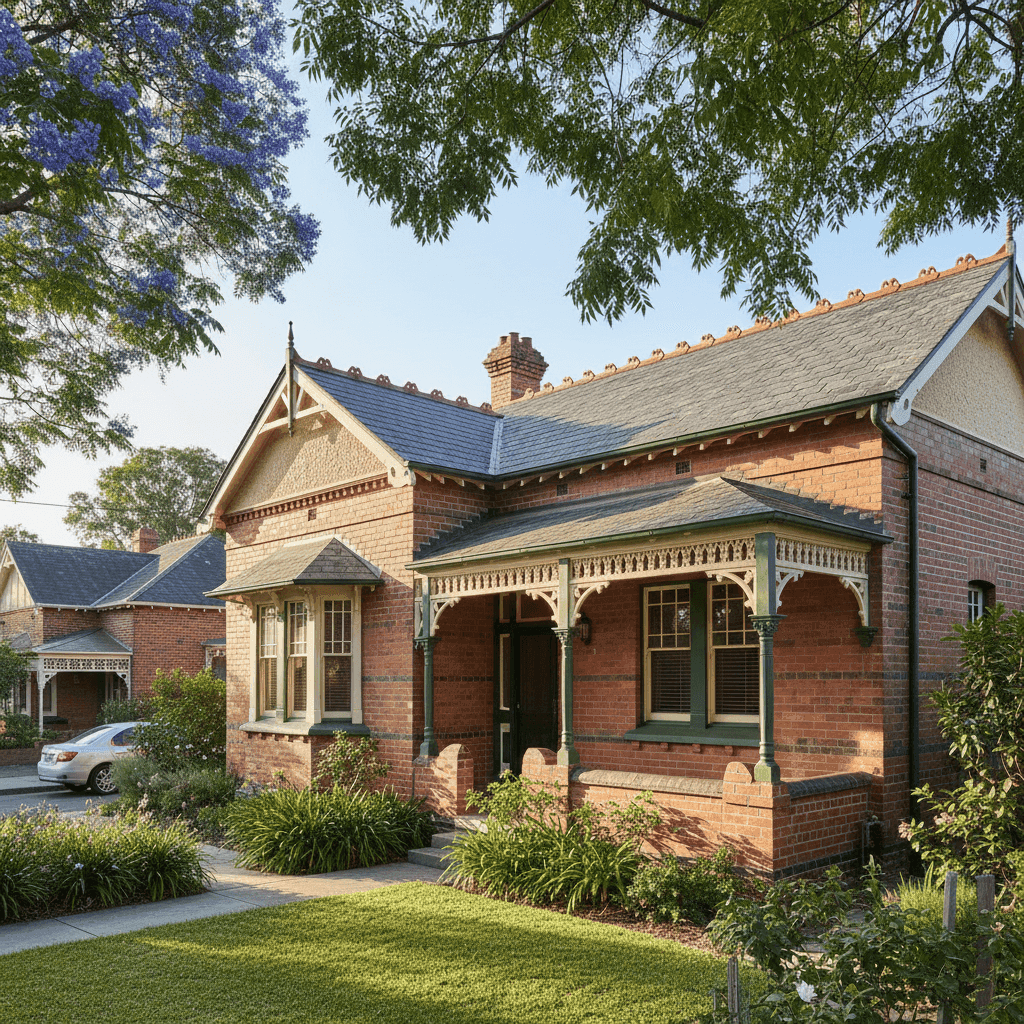
Five Dock is one of Sydney's most characterful inner-west suburbs — a leafy, well-established pocket of Canada Bay where Federation-era architecture lines the streets and double-brick homes have stood for well over a century. It's precisely this kind of property that makes home insurance both fascinating and complex to price. This article breaks down a real building insurance quote for a four-bedroom, two-bathroom free-standing home in Five Dock (postcode 2046), unpacks what's driving the premium, and helps you understand whether the figure stacks up.
---
Is This Quote Fair?
The quote in question comes in at $5,187 per year (or $497/month) for building-only cover on a home with a sum insured of $1,700,000 and a $1,000 excess. Our price rating for this quote is Expensive — Above Average.
To put that in context: the suburb average for Five Dock sits at just $1,213/year, with a median of $948/year. Even the 75th percentile — meaning 75% of quotes in the area are cheaper — is only $1,666/year. This quote sits well above that upper band.
That said, "expensive" doesn't automatically mean "wrong." This property carries a number of characteristics that genuinely attract higher premiums, and the $1.7 million sum insured alone places it in a different category to the typical Five Dock home. When you factor in heritage listing, a slate roof, stump foundations, and elevated construction, insurers are pricing for a rebuild that is far more complex — and costly — than a standard brick-veneer home.
In short: the premium is high, but there are legitimate reasons for it. The question worth asking is whether you've shopped around enough to confirm this is the best available rate for a property of this specification.
---
How Five Dock Compares
Understanding where this quote sits relative to broader benchmarks helps paint a clearer picture.
| Benchmark | Premium |
|---|---|
| This quote | $5,187/yr |
| Five Dock suburb average | $1,213/yr |
| Five Dock suburb median | $948/yr |
| LGA (Canada Bay) average | $2,042/yr |
| NSW state average | $9,528/yr |
| NSW state median | $3,770/yr |
| National average | $5,347/yr |
| National median | $2,764/yr |
A few things stand out here. First, this quote is significantly above the Five Dock suburb average — but that local sample of 15 quotes likely skews toward more modest homes and lower sums insured. Second, this quote is actually below the NSW state average of $9,528/year, which is heavily influenced by high-risk regional properties and flood-affected areas. Third, compared to the national average of $5,347/year, this quote is modestly cheaper — which is a reasonable outcome for an inner-Sydney suburb that isn't exposed to cyclone or significant flood risk.
The Canada Bay LGA average of $2,042/year is a more locally relevant comparison, and this quote is roughly 2.5 times that figure — again, reflective of the premium property characteristics at play.
---
Property Features That Affect Your Premium
Several aspects of this home are likely pushing the premium upward. Here's what insurers are paying close attention to:
Heritage Listing
Perhaps the single biggest cost driver. Heritage-listed properties must be restored using period-appropriate materials and methods following any damage. That means lime mortar instead of cement, custom joinery, specialist tradespeople, and council approvals at every step. Insurers factor in these elevated rebuild costs when setting the sum insured and the premium.
Slate Roof
Slate is a premium roofing material that's beautiful and long-lasting — but also expensive to repair and replace. Matching heritage slate, sourcing skilled slaters, and navigating council requirements for a listed property makes roof damage claims particularly costly. This is one of the more significant risk factors for older Sydney homes.
Double Brick Construction
Interestingly, double brick is generally viewed favourably by insurers for its durability and fire resistance. However, on a heritage home, brick repairs must be done using matching materials and techniques, which can be costly. It's a double-edged sword — structurally sound, but expensive to restore authentically.
Stump Foundations and Elevation
The home is elevated by at least one metre on stump foundations — a common feature of older Sydney homes and Queensland-style architecture. Elevation can actually reduce flood risk, which is a positive. However, stumps require periodic inspection and maintenance, and access beneath the home adds complexity to certain types of repairs.
Timber and Laminate Flooring
Timber floors add significant value to a home and are costly to repair or replace, particularly in a heritage context where matching original boards may be required. This contributes to the higher sum insured.
Above-Average Fittings Quality
The home features above-average internal fittings — think quality fixtures, premium cabinetry, and finishes that go beyond builder's standard. These are reflected in the $1.7 million sum insured and contribute to a higher premium.
Ducted Climate Control
Ducted air conditioning systems are a meaningful inclusion in a building-only policy. These systems are expensive to replace and add to the overall insured value of the structure.
Building Size
At 244 square metres, this is a generous footprint for an inner-west Sydney home. Larger homes cost more to rebuild, and that's directly reflected in both the sum insured and the premium.
---
Tips for Homeowners in Five Dock
If you own a heritage or character home in Five Dock, here are four practical steps to help you manage your insurance costs without compromising on cover.
1. Get a professional building valuation With a $1.7 million sum insured, it's worth investing in an independent quantity surveyor's report to confirm your rebuild cost is accurate. Being over-insured means you're paying more than necessary; being under-insured can leave you exposed at claim time. A professional valuation gives you confidence in both directions.
2. Shop the market — especially for heritage properties Not all insurers price heritage homes the same way. Some specialist underwriters have more appetite for listed properties and may offer more competitive rates. Use a comparison platform like CoverClub to see multiple quotes side by side without having to ring around individually.
3. Ask about heritage-specific policy features Standard building policies may not fully cover the cost of like-for-like heritage restoration. Look for policies that explicitly cover matching materials, specialist labour, and council compliance costs. A cheaper premium that doesn't include these features could cost you dearly after a major claim.
4. Review your excess settings A $1,000 excess is fairly standard, but increasing your excess can reduce your annual premium. If your financial position allows you to absorb a larger out-of-pocket cost in the event of a claim, a higher excess — say $2,500 or $5,000 — could meaningfully reduce what you pay each year.
---
Compare Your Quote with CoverClub
Whether you're renewing your policy or shopping for the first time, it pays to compare. CoverClub makes it easy to benchmark your premium against real data from properties like yours — and to get fresh quotes from multiple insurers in minutes. Start your comparison at CoverClub and find out if there's a better deal waiting for your Five Dock home.