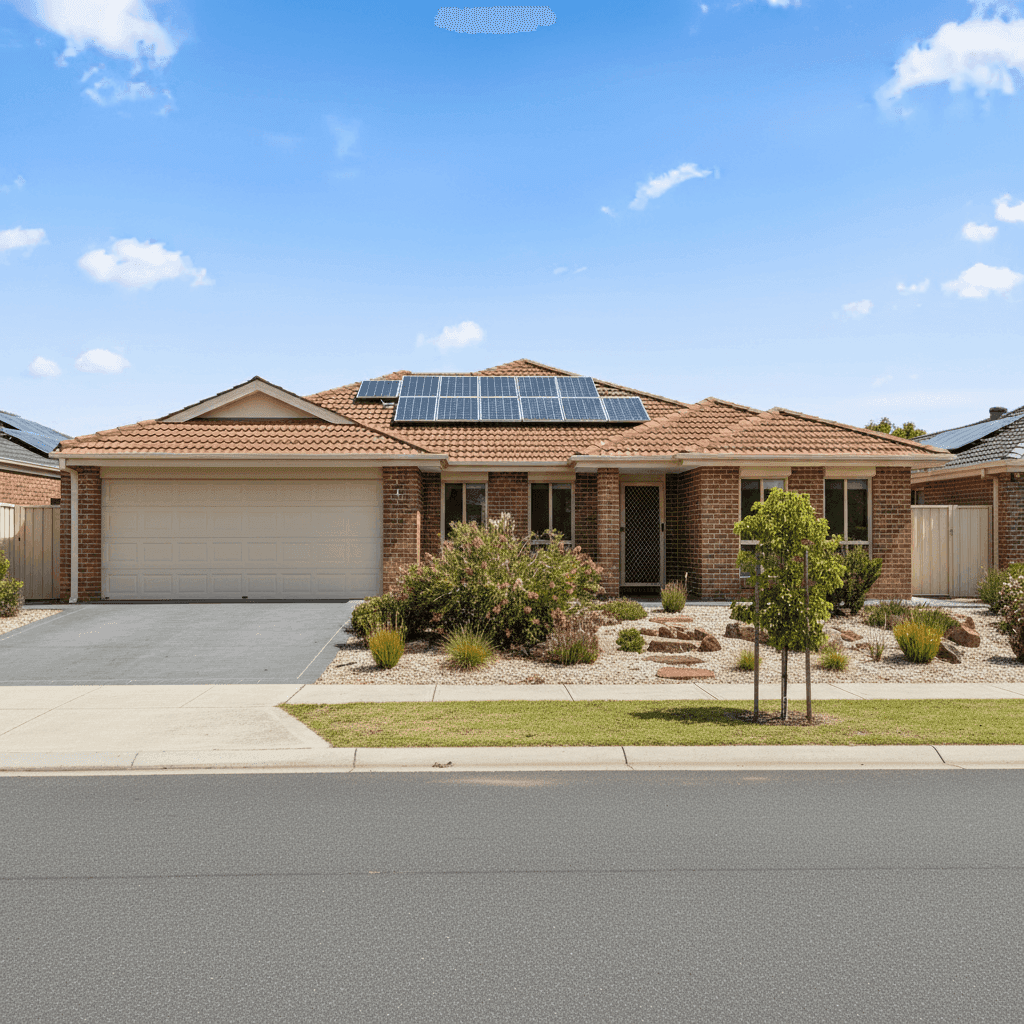
If you own a free standing home in Flagstaff Hill, SA 5159, you've probably wondered whether your home insurance premium is reasonable — or whether you're quietly paying more than you should be. This article breaks down a real home and contents insurance quote for a four-bedroom, three-bathroom brick veneer property in Flagstaff Hill, and puts it in context against suburb, state, and national benchmarks.
---
Is This Quote Fair?
The quote in question comes to $2,259 per year (or $216 per month) for combined home and contents cover. The building is insured for $772,000, with contents covered to $240,000, and both the building and contents excess are set at $500.
Our pricing engine rates this quote as FAIR — Around Average.
That assessment holds up when you look at the numbers. Based on 37 quotes collected for Flagstaff Hill, the suburb average sits at $1,954 per year and the median at $1,932. At $2,259, this quote lands in the upper half of the local range — above the median but comfortably below the 75th percentile of $2,314. In other words, roughly a quarter of homeowners in the suburb are paying more than this quote.
It's worth noting that the sum insured here ($772,000 for the building alone) is on the higher end for a 214 sqm home, which will naturally push the premium upward. A lower rebuild estimate would reduce the premium, but underinsurance is a serious risk — so it's important to get that figure right rather than simply minimise it to save on premiums.
---
How Flagstaff Hill Compares
Flagstaff Hill sits in a relatively favourable position when it comes to home insurance costs. Here's how the suburb stacks up:
| Benchmark | Annual Premium |
|---|---|
| This Quote | $2,259 |
| Flagstaff Hill Suburb Average | $1,954 |
| Flagstaff Hill Suburb Median | $1,932 |
| Flagstaff Hill 25th Percentile | $1,628 |
| Flagstaff Hill 75th Percentile | $2,314 |
| LGA (Onkaparinga) Average | $1,431 |
| SA State Average | $2,433 |
| SA State Median | $1,679 |
| National Average | $5,347 |
| National Median | $2,764 |
A few things stand out here. First, the SA state average of $2,433 is actually higher than this quote, meaning homeowners across South Australia are typically paying more. Second, the national average of $5,347 is more than double this quote — a reflection of the high-risk, high-cost markets in Queensland and northern Australia that drag the national figure upward significantly.
The Onkaparinga LGA average of $1,431 is notably lower than the Flagstaff Hill suburb average, suggesting that some parts of the broader council area enjoy cheaper premiums — likely areas with lower property values or different risk profiles. Flagstaff Hill, being a more established and higher-value suburb, tends to attract higher rebuild costs and therefore higher premiums.
Overall, a $2,259 premium for the level of cover on offer here is a reasonable outcome — not a bargain, but certainly not excessive.
---
Property Features That Affect Your Premium
Several characteristics of this property influence how insurers price the risk:
Brick Veneer Construction Brick veneer is one of the most common wall types in South Australian suburbia, and insurers generally view it favourably. It's durable, fire-resistant, and relatively straightforward to repair or rebuild — all of which can help moderate your premium compared to timber-framed or clad alternatives.
Tiled Roof A tiled roof is another positive signal for underwriters. Tiles are long-lasting and perform well in moderate weather conditions, though they can be vulnerable to hail damage. Flagstaff Hill is not classified as a cyclone risk area, which removes one significant pricing factor from the equation.
Concrete Slab Foundation Slab foundations are generally considered low-risk by insurers, particularly in areas without significant flood or subsidence history. Combined with tile flooring throughout, this property has a profile that minimises some of the more expensive claims scenarios.
Solar Panels This property has solar panels installed, which adds some complexity to the insurance picture. Solar panels represent additional replacement value and can be a source of claims (hail damage, for instance). It's worth confirming with your insurer that your solar system is explicitly covered under your building policy — not all policies include it automatically, and some require it to be listed separately.
Ducted Climate Control Ducted air conditioning systems are a meaningful asset and should be factored into your contents or building sum insured depending on how the system is installed. Fixed ducted systems are typically treated as part of the building, but it's worth clarifying this with your insurer to avoid a gap in cover.
Standard Fittings With standard-quality fittings throughout, this home doesn't attract the premium loading that high-end or custom finishes can bring. That's a quiet advantage — luxury kitchens and bathrooms can significantly increase rebuild costs and, in turn, premiums.
---
Tips for Homeowners in Flagstaff Hill
1. Review your sum insured annually Building costs have risen substantially in recent years. A rebuild estimate that was accurate in 2021 may be meaningfully understated today. Use a building cost calculator or speak to a quantity surveyor to ensure your $772,000 figure still reflects current construction costs in the Adelaide Hills fringe area.
2. Confirm your solar panels are covered As mentioned above, don't assume your solar system is automatically included. Check your policy wording carefully, and if in doubt, call your insurer. A damaged or destroyed solar array can represent a $10,000–$30,000+ claim, so it's not worth leaving to chance.
3. Compare quotes before renewal Loyalty rarely pays in the insurance market. Insurers regularly offer better pricing to new customers than they extend to existing ones. Running a comparison through CoverClub before your renewal date takes only a few minutes and could reveal meaningfully cheaper options for equivalent cover.
4. Consider your excess level Both the building and contents excess on this policy are set at $500 — a fairly standard starting point. Opting for a higher voluntary excess (say, $1,000 or $2,500) can reduce your annual premium noticeably. If you have a solid emergency fund and are unlikely to make small claims, this trade-off often makes financial sense.
---
Compare Your Own Quote
Whether you're renewing soon or just curious about what the market looks like, it pays to have a benchmark. CoverClub makes it easy to see how your current premium stacks up against real quotes from across Flagstaff Hill and South Australia. Get a home insurance quote today and find out whether your insurer is giving you a fair deal — or whether it's time to switch.
For more suburb-level data, visit the Flagstaff Hill insurance stats page or explore the full South Australia overview.