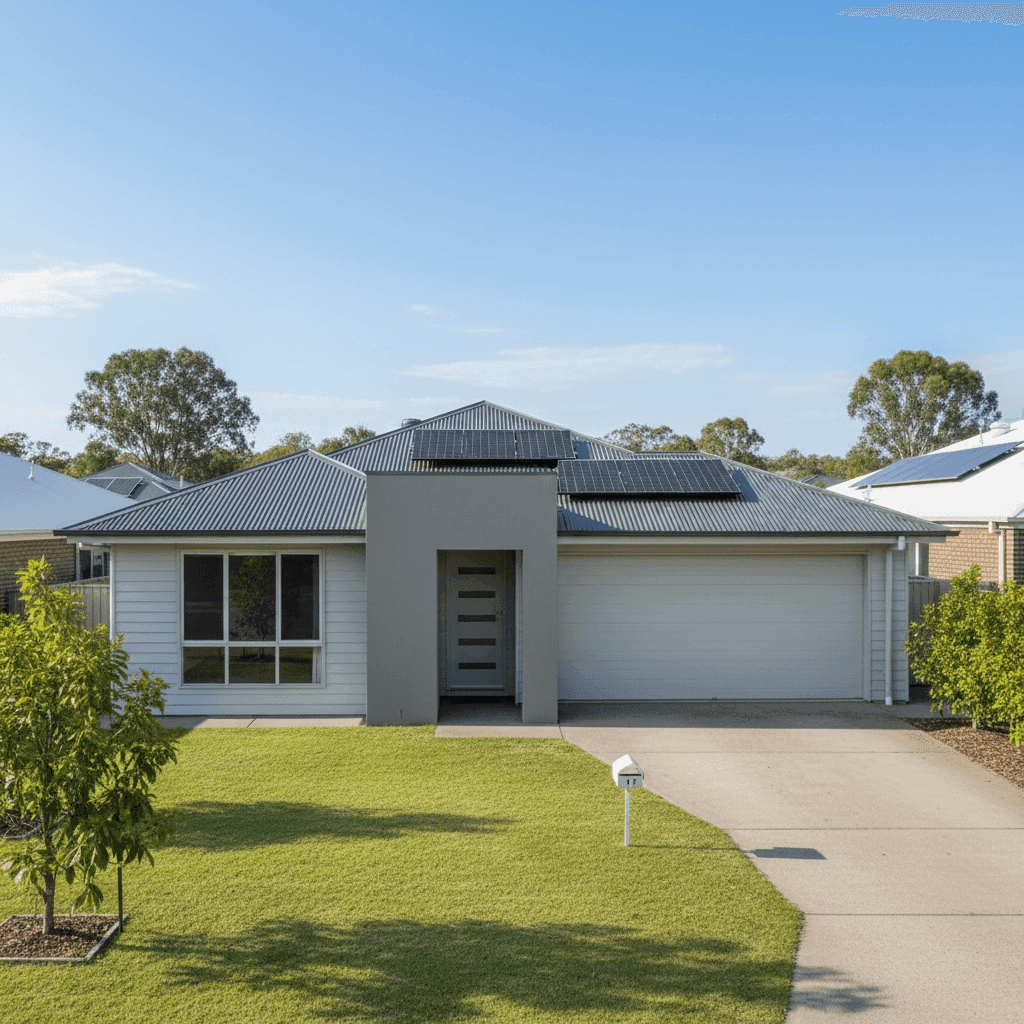
If you own a free standing home in Flagstone, QLD 4124, you're part of one of South-East Queensland's fastest-growing residential corridors. Nestled in the City of Ipswich, Flagstone is a master-planned community attracting families with its modern housing stock and suburban amenity. But with growth comes the question every homeowner eventually faces: am I paying the right amount for home insurance?
This article breaks down a real home insurance quote for a four-bedroom, two-bathroom free standing home in Flagstone — and puts it in context with suburb, state, and national data so you can judge for yourself.
---
Is This Quote Fair?
The quote in question comes in at $1,935 per year (or roughly $185 per month) for combined Home and Contents cover, with a building sum insured of $764,000 and contents valued at $50,000. Both the building and contents excess are set at $1,000.
Our pricing analysis rates this quote as CHEAP — below average for the area. That's genuinely good news for the homeowner. In a state where insurance premiums have been climbing steeply due to flood, storm, and extreme weather events, landing a below-average premium on a well-appointed property is a meaningful win.
It's worth noting that a $1,000 excess is a reasonable middle ground — high enough to keep the premium down, but not so high that minor claims become entirely out-of-pocket exercises. For a property of this value, it's a sensible balance.
---
How Flagstone Compares
To understand just how competitive this quote is, let's look at the broader picture.
| Benchmark | Annual Premium |
|---|---|
| This Quote | $1,935 |
| QLD State Average | $9,129 |
| QLD State Median | $3,903 |
| National Average | $5,347 |
| National Median | $2,764 |
| Ipswich LGA Average | $8,901 |
The numbers are striking. This quote sits 79% below the Queensland state average and 64% below the Ipswich LGA average — a region where premiums are heavily influenced by flood-prone suburbs along the Bremer River corridor. Even compared to the national median of $2,764, this quote comes in comfortably lower.
It's important to understand why Ipswich LGA averages are so elevated. Many suburbs within the Ipswich council area carry significant flood risk, which pushes average premiums up dramatically. Flagstone, as a newer master-planned development, benefits from modern drainage infrastructure and land that was selected and engineered with contemporary risk standards in mind. This is reflected clearly in the premium.
You can explore more data for this postcode at the Flagstone suburb stats page, or compare across the state on the Queensland insurance stats page. For a broader view, the national home insurance stats offer useful context on where Australian premiums are heading.
---
Property Features That Affect Your Premium
Several characteristics of this particular property work in the homeowner's favour when it comes to pricing.
Modern Construction (2026 Build)
A brand-new home built to current Australian Standards is one of the strongest premium-reducing factors available. Modern building codes mandate improved structural resilience, better fire ratings, and enhanced weather resistance — all of which reduce the likelihood of a major claim. Insurers reward this with lower premiums.
Hardiplank / Hardiflex External Walls
Fibre cement cladding such as Hardiplank and Hardiflex is well-regarded by insurers. It's non-combustible, resistant to moisture and rot, and highly durable in Queensland's subtropical climate. Compared to weatherboard or older brick veneer, it presents a lower risk profile.
Steel / Colorbond Roof
Colorbond steel roofing is a popular choice across Queensland for good reason — it's lightweight, wind-resistant, and performs well in both heat and heavy rain. Insurers generally view it favourably compared to terracotta or concrete tiles, which can crack under hail or become dislodged in high winds.
Concrete Slab Foundation
A slab-on-ground foundation is structurally sound and eliminates the underfloor cavity that can be a vulnerability in older homes. It also means no subfloor dampness risk — a factor some insurers consider when pricing contents cover.
Solar Panels
The property includes solar panels, which do add a modest element of risk (primarily fire risk at the inverter and potential roof penetration points). However, modern solar installations on new homes are generally well-managed and the impact on premium is typically minor. It's worth ensuring your policy explicitly covers solar panels as part of the building sum insured.
Ducted Climate Control
Ducted air conditioning is a significant inclusion in the contents or fixtures valuation. It's already factored into the above-average fittings quality rating for this property. Make sure your sum insured accounts for the full replacement cost of this system.
Above-Average Fittings Quality
Above-average fittings — think stone benchtops, quality appliances, premium tapware — increase rebuild costs. The $764,000 building sum insured appears to appropriately reflect this, which is essential. Underinsurance remains one of the most common and costly mistakes Australian homeowners make.
---
Tips for Homeowners in Flagstone
1. Review Your Building Sum Insured Annually
Construction costs in South-East Queensland have risen significantly in recent years. Even on a brand-new home, it's worth revisiting your sum insured each renewal to ensure it still reflects current rebuild costs — not just the purchase price or original build cost.
2. Keep Documentation of Your Solar and HVAC Systems
For high-value fixed assets like solar panels and ducted air conditioning, retain purchase receipts, installation certificates, and warranty documents. In the event of a claim, this paperwork can significantly speed up the process and support your entitlement.
3. Don't Set-and-Forget on Contents Cover
$50,000 in contents cover is a starting point, but it's worth doing a proper stocktake of your possessions — furniture, electronics, clothing, whitegoods, and personal items. Many Australians are underinsured on contents without realising it. A four-bedroom home with above-average fittings likely has contents that warrant a closer look.
4. Compare at Renewal, Every Time
Even if this quote is excellent today, premiums can shift significantly year-to-year. Insurers adjust their risk models, reinsurance costs change, and new entrants to the market can offer better deals. Making a habit of comparing quotes at renewal — rather than simply auto-renewing — is one of the easiest ways to stay ahead.
---
Compare Your Home Insurance Options
Whether you're a new homeowner in Flagstone or you've been in your property for years, it pays to know what the market looks like. CoverClub makes it easy to compare home and contents insurance quotes side by side, so you can see exactly where your premium sits relative to the broader market.
Get a home insurance quote at CoverClub and find out if you're getting the deal you deserve.