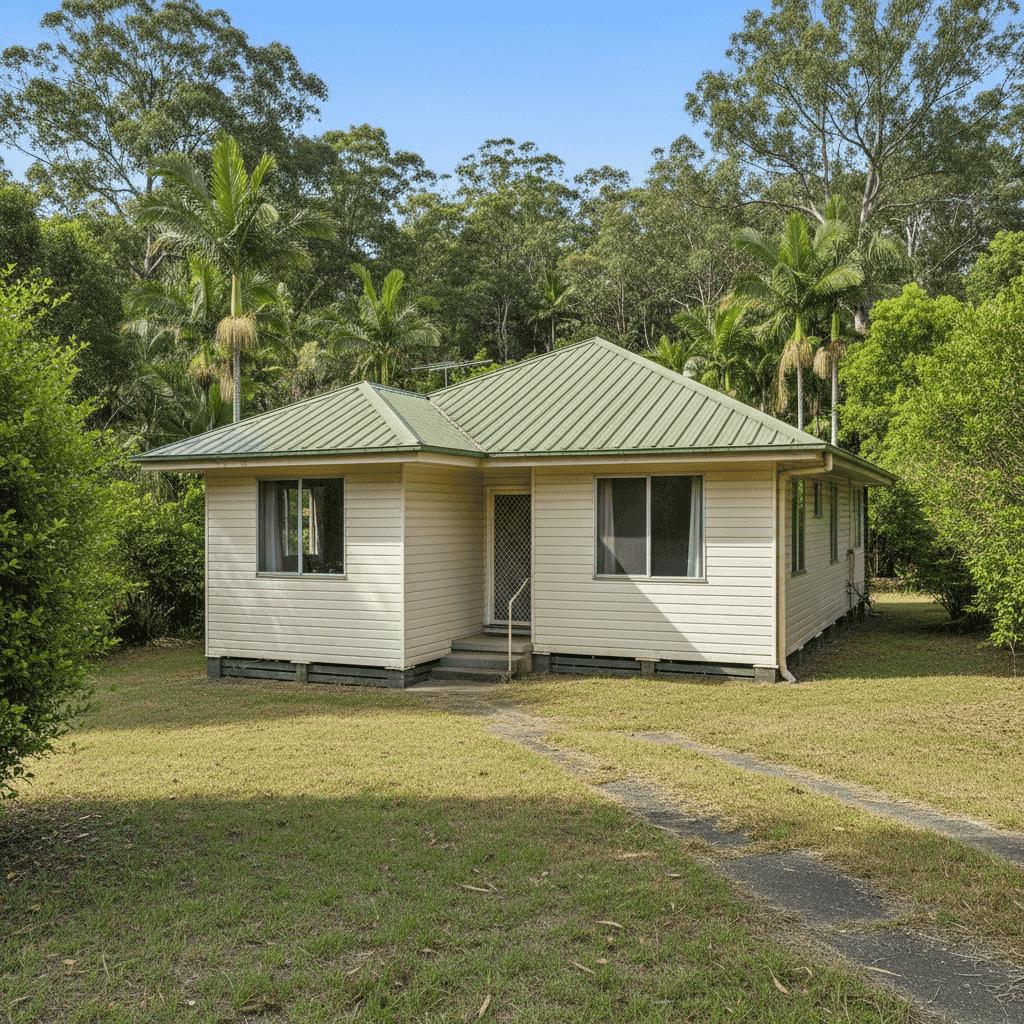
Nestled in the hinterland of the Sunshine Coast, Flaxton is a quiet, leafy suburb that offers a relaxed rural lifestyle without straying too far from the conveniences of Nambour and Maleny. For owners of free standing homes in this part of Queensland, getting the right home and contents insurance — at a price that makes sense — is an important piece of financial planning. This article breaks down a recent quote for a three-bedroom, one-bathroom home in Flaxton (postcode 4560), helping you understand what's driving the premium and how it stacks up against the broader market.
---
Is This Quote Fair?
The annual premium for this property came in at $3,905 per year (or $374 per month), covering both building and contents. The building is insured for $507,000, with contents covered at $180,000, and both building and contents excesses are set at $1,000 each.
CoverClub's pricing engine has rated this quote as Fair — Around Average, and the data backs that up. The suburb average premium for Flaxton sits at $3,853 per year, and the median is $3,957 — meaning this quote lands almost exactly in the middle of the pack for the local area. You're not getting a bargain, but you're also not being overcharged. Based on suburb-level data for Flaxton, the 25th percentile of quotes comes in at $2,519/yr, while the 75th percentile reaches $5,194/yr — so there's meaningful spread in what insurers are willing to charge for similar homes here.
The "Fair" rating reflects that this premium is competitive within the local context, though it's worth understanding what's influencing the price before deciding whether to accept it or shop around.
---
How Flaxton Compares
One of the most useful ways to assess a quote is to zoom out and look at the broader picture. Here's how this premium compares across different geographic levels:
| Benchmark | Average Premium | Median Premium |
|---|---|---|
| Flaxton (suburb) | $3,853/yr | $3,957/yr |
| Sunshine Coast LGA | $7,249/yr | — |
| Queensland (state) | $9,129/yr | $3,903/yr |
| National | $5,347/yr | $2,764/yr |
A few things stand out here. The Queensland state average of $9,129/yr is dramatically higher than Flaxton's suburb average — but this is largely driven by high-risk coastal and cyclone-prone areas in Far North Queensland, which pull the mean upward significantly. The state median of $3,903/yr is a much more representative figure, and this quote sits just slightly above that.
Compared to the national average of $5,347/yr, this quote looks reasonable. However, the national median of $2,764/yr is notably lower — a reminder that in many parts of Australia (particularly in lower-risk metropolitan suburbs), home insurance can be considerably cheaper. Flaxton's hinterland location, older housing stock, and timber flooring all contribute to a premium that sits above the national median.
The Sunshine Coast LGA average of $7,249/yr is worth noting too. Flaxton's premiums appear to be well below the LGA average, likely because it sits further inland and away from the coastal flood and storm surge risks that affect beachside suburbs.
---
Property Features That Affect Your Premium
Several characteristics of this property are directly relevant to how insurers price the risk. Understanding these can help you anticipate future changes and make informed decisions.
Fibro Asbestos External Walls This is one of the most significant factors in this quote. Homes with fibro asbestos cladding — common in Queensland homes built before the mid-1980s — attract higher premiums because repair or replacement work requires specialist licensed contractors and careful asbestos management. Insurers factor in the additional cost and complexity of claims involving this material. Built in 1980, this home falls squarely into the era when fibro was widely used.
Construction Year (1980) Older homes generally cost more to insure. Building codes have changed substantially over the decades, and a home built in 1980 may not meet current standards for things like electrical wiring, plumbing, and structural resilience. Insurers account for the higher likelihood of wear-related claims and the cost of bringing repairs up to modern standards.
Steel/Colorbond Roof This is a positive factor. Colorbond roofing is durable, fire-resistant, and performs well in storm conditions — all of which insurers view favourably. It's one of the reasons this premium isn't higher, given the other risk factors present.
Timber and Laminate Flooring Timber floors can be more expensive to repair or replace than concrete or tile, and they're more susceptible to water damage. This adds a modest upward pressure on the contents and building components of the premium.
Ducted Climate Control The presence of ducted climate control adds to the overall replacement value of the home, which is reflected in the building sum insured and, consequently, the premium.
Slab Foundation Concrete slab foundations are generally viewed positively by insurers — they're stable, resistant to movement, and less prone to certain types of structural damage compared to timber stumps or suspended floors.
---
Tips for Homeowners in Flaxton
1. Review your sum insured regularly With a building insured at $507,000, it's worth checking that this figure accurately reflects current rebuild costs — not the market value of the property. Construction costs have risen sharply in recent years, and underinsurance is a real risk. Use a building cost calculator or speak with a builder to verify your figure annually.
2. Consider the impact of your excess Both the building and contents excess on this policy are set at $1,000. Opting for a higher excess (say, $2,000 or $2,500) can reduce your annual premium meaningfully. If you have a good emergency fund and are unlikely to make small claims, this trade-off can be worthwhile.
3. Get asbestos documentation in order If you ever need to make a claim involving the external walls, having documentation about the asbestos type and condition can speed up the process. Consider getting a professional asbestos assessment report and keeping it with your insurance records.
4. Compare quotes at renewal time Insurance loyalty rarely pays. Even if your current premium seems fair, it's worth comparing quotes from multiple insurers at renewal. Pricing models vary significantly, and another insurer may assess your property's risk differently — potentially saving you hundreds of dollars a year.
---
Ready to Compare?
Whether you're happy with your current quote or looking for something better, CoverClub makes it easy to see how your premium stacks up and find competitive alternatives. Get a home insurance quote today and explore detailed insurance statistics for Flaxton and surrounding suburbs — all in one place, with no obligation.