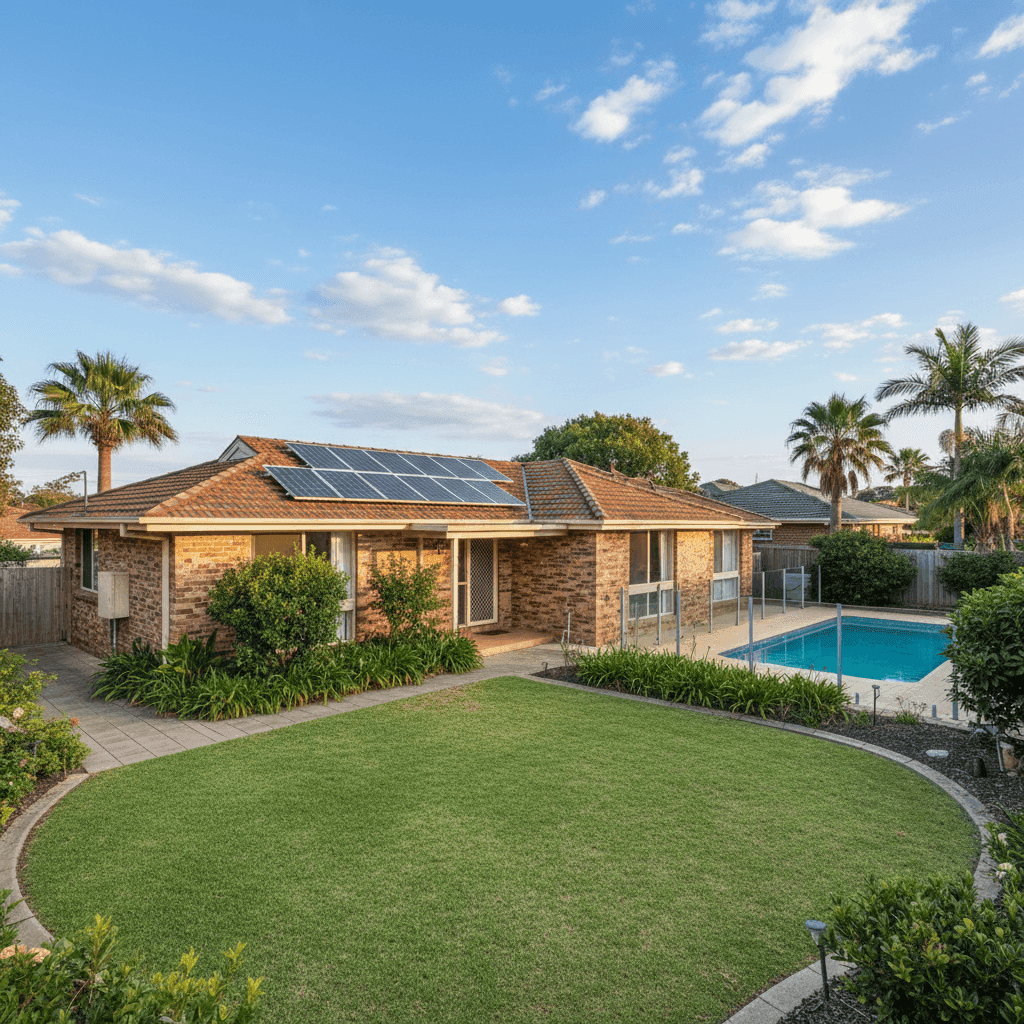
If you own a free standing home in Flinders, NSW 2529, understanding what you should expect to pay for home and contents insurance is an important step in protecting one of your most valuable assets. Flinders is a quiet coastal suburb in the Shellharbour local government area, sitting on the Illawarra coast south of Wollongong. Properties here tend to be well-established family homes, and with the ocean nearby, there are a handful of risk factors that insurers weigh up when pricing your cover.
This article breaks down a recent home and contents insurance quote for a five-bedroom, three-bathroom free standing home in Flinders — and puts that number in context against local, state, and national benchmarks.
---
Is This Quote Fair?
The quote in question comes in at $1,666 per year (or roughly $154 per month) for combined home and contents cover, with a building sum insured of $798,000 and contents valued at $50,000. The building excess is $3,000 and the contents excess is $1,000.
Our price rating for this quote is FAIR — around average. That's a reasonable outcome for a property of this size and specification, and here's why that assessment holds up.
Looking at Flinders suburb insurance data, the suburb average premium sits at $1,845 per year, with a median of $1,977. This quote lands noticeably below both figures — roughly $179 below the suburb average and over $300 below the median. That's a meaningful saving compared to what many neighbours are likely paying.
Of course, premiums vary widely depending on the insurer, the level of cover, and the specific risk profile of the property. The 25th percentile for the suburb is $1,141 per year, meaning there are cheaper options on the market — but those may come with reduced cover, higher excesses, or fewer inclusions. The 75th percentile sits at $2,506, so this quote is well clear of the more expensive end of the range.
On balance, a "fair" rating here means the price is competitive without being the cheapest available. For a large five-bedroom home with a pool, solar panels, and ducted climate control, it represents solid value.
---
How Flinders Compares to the Rest of NSW and Australia
One of the most striking takeaways from this quote is just how much cheaper Flinders is compared to broader benchmarks.
| Benchmark | Average Premium |
|---|---|
| Flinders (suburb) | $1,845/yr |
| Shellharbour LGA | $1,744/yr |
| NSW state average | $3,801/yr |
| National average | $2,965/yr |
The NSW state average of $3,801 per year is more than double the suburb average for Flinders — a stark contrast that reflects the significant premium loading applied to higher-risk areas across the state, including flood-prone inland regions and storm-affected coastal zones further north. Sydney's western suburbs, for example, carry considerably higher premiums due to flood risk.
Flinders, by comparison, benefits from relatively benign risk conditions. It is not classified as a cyclone risk area, and while coastal proximity does factor into pricing, the Illawarra region doesn't attract the same premium loading as parts of Queensland or northern NSW. The Shellharbour LGA average of $1,744 per year closely mirrors the suburb figure, suggesting consistent pricing across the local area.
Even against the national average of $2,965, Flinders homeowners are paying significantly less — a reflection of the comparatively lower natural hazard risk in this part of the NSW South Coast.
---
Property Features That Affect Your Premium
Several characteristics of this particular property have a direct bearing on what insurers charge.
Size and value: At 315 square metres with a building sum insured of $798,000, this is a substantial home. Larger homes cost more to rebuild, which naturally pushes premiums higher. That said, the premium here remains competitive relative to the insured value.
Brick veneer construction with a tiled roof: This is generally viewed favourably by insurers. Brick veneer is durable and performs well in fire scenarios, while tiled roofs offer good longevity and weather resistance. Combined with a slab foundation, this construction profile is considered lower risk than timber-framed or steel-roofed alternatives.
Swimming pool: A pool adds replacement value to the property and can introduce liability considerations, both of which can nudge premiums upward. Pools also require specific coverage inclusions to ensure the structure and equipment are protected.
Solar panels: Rooftop solar is increasingly common in Australian homes, but it's worth confirming that your policy explicitly covers the panels — both for damage and for any liability arising from electrical faults. Some insurers include solar as standard; others treat it as an optional add-on.
Ducted climate control: Ducted systems are expensive to repair or replace and are typically included under building cover. Their presence contributes to the overall insured value of the home.
Flooring — carpet: Carpet throughout is a relatively standard inclusion under contents or building cover depending on the policy wording. It's worth checking whether floor coverings are classified as building or contents in your specific policy to avoid gaps.
---
Tips for Homeowners in Flinders
1. Review your building sum insured regularly Construction costs have risen sharply in recent years. A sum insured of $798,000 may have been accurate at the time of the quote, but it's worth running a rebuild cost estimate annually to ensure you're not underinsured. Many insurers offer a calculator for this purpose.
2. Confirm solar panel coverage explicitly Don't assume your solar system is covered — ask your insurer directly. Check whether the panels are covered for accidental damage, storm damage, and electrical breakdown, and whether there's a separate sub-limit that applies.
3. Compare quotes across multiple insurers With the suburb's 25th percentile at $1,141 per year, there may be room to reduce your premium further without sacrificing cover quality. Use a comparison tool like CoverClub to see how different insurers price your specific property.
4. Consider your excess strategically This quote carries a $3,000 building excess and a $1,000 contents excess. Opting for a higher excess is one way to reduce your annual premium, but make sure you could comfortably cover that cost out of pocket in the event of a claim. For a home of this value, a $3,000 excess is on the higher side and worth revisiting.
---
Get a Better Deal on Home Insurance
Whether you're renewing your policy or shopping for the first time, comparing quotes is the single most effective way to make sure you're not overpaying. CoverClub makes it easy to benchmark your premium against real data from your suburb and beyond.
Compare home insurance quotes for your Flinders property today and see how your current cover stacks up.