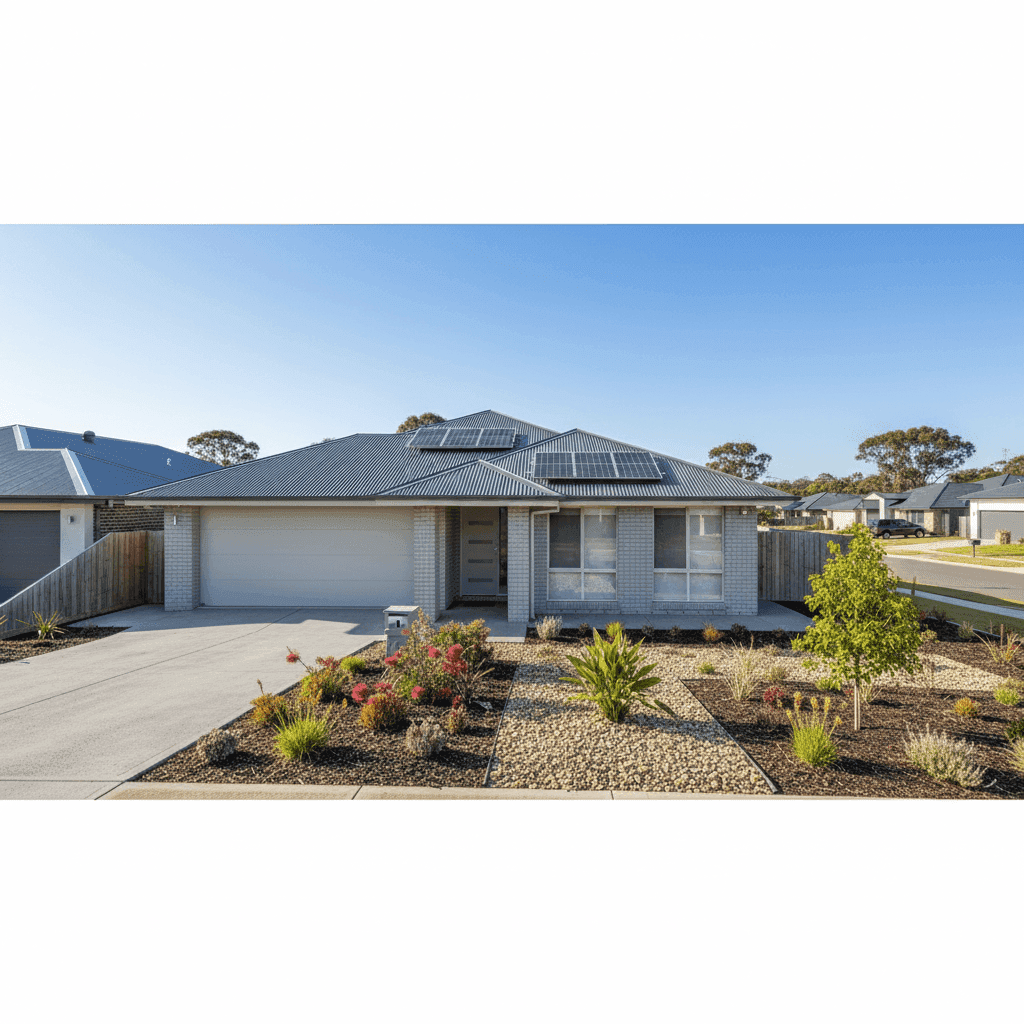
If you own a free standing home in Flinders, NSW 2529, you've probably noticed that home insurance costs can vary enormously depending on who you ask. Flinders is a coastal suburb nestled in the Shellharbour local government area on the NSW Illawarra coast — a beautiful place to live, but one where insurers weigh up a unique mix of coastal exposure, local risk factors, and property characteristics when setting your premium. In this article, we break down a real home and contents insurance quote for a 3-bedroom, 3-bathroom free standing home in Flinders, and put it in context against suburb, state, and national benchmarks.
---
Is This Quote Fair?
The quote in question comes in at $1,742 per year (or about $161 per month) for combined home and contents cover, with a building sum insured of $550,000 and contents valued at $119,000. The building excess sits at $2,000, and the contents excess at $1,000.
Our price rating for this quote is FAIR — Around Average.
That assessment holds up well when you look at the numbers. The suburb average for Flinders sits at $1,845 per year, and the suburb median is $1,977 per year. At $1,742, this quote comes in below both figures — meaning it's actually slightly better than what most Flinders homeowners are paying. It's comfortably within the middle of the market rather than at either extreme.
To put it another way: 25% of Flinders quotes come in at $1,141 or less (the 25th percentile), while 25% exceed $2,506 (the 75th percentile). This quote sits solidly between those goalposts, leaning toward the more competitive end of the upper half.
So while "fair" might sound underwhelming, it genuinely reflects a reasonable outcome — this isn't an overpriced policy, and it's not an outlier in either direction.
---
How Flinders Compares
One of the most striking things about this quote is how much more affordable it looks once you zoom out beyond the suburb level.
| Benchmark | Annual Premium |
|---|---|
| This Quote | $1,742 |
| Flinders Suburb Average | $1,845 |
| Flinders Suburb Median | $1,977 |
| Shellharbour LGA Average | $3,352 |
| NSW State Average | $3,801 |
| NSW State Median | $3,410 |
| National Average | $2,965 |
| National Median | $2,716 |
The contrast is stark. Compared to the NSW state average of $3,801, this quote is 54% cheaper. Even against the national average of $2,965, it comes in well below the mark. The Shellharbour LGA average of $3,352 — which encompasses a broader range of properties and risk profiles across the council area — is nearly double this quote.
This suggests that Flinders, while a coastal suburb, may benefit from relatively lower flood or storm risk compared to other parts of the Shellharbour LGA and NSW more broadly. It's worth noting that the suburb sample size here is 11 quotes, so while the local data is directionally useful, a larger dataset would give even greater confidence in these comparisons.
---
Property Features That Affect Your Premium
Every insurer looks at the specifics of your home when calculating your premium. Here's how the key features of this property factor in:
Brick Veneer Walls Brick veneer is one of the most common wall constructions in Australian suburbs and is generally viewed favourably by insurers. It offers solid fire resistance and durability, which can help keep premiums in check compared to timber-framed or clad exteriors.
Steel/Colorbond Roof A Colorbond steel roof is another tick in the right column. It's lightweight, highly durable, and performs well in high-wind conditions. Insurers tend to rate metal roofing positively, particularly in areas with any coastal weather exposure.
Slab Foundation A concrete slab foundation is considered low-risk by most insurers — there's no subfloor cavity to worry about, and slabs are generally resistant to termite ingress and subsidence issues common with older footing types.
Timber/Laminate Flooring Timber and laminate floors can be a moderate cost factor for contents and building claims — they're more expensive to repair or replace than carpet after water damage, for instance. However, this is a relatively minor pricing consideration in the overall picture.
Solar Panels This property has solar panels installed, which adds some replacement value to the building sum insured. It's important to ensure your building cover adequately accounts for the cost of reinstating solar systems, as panels and inverters can be expensive to replace. At $550,000 sum insured, there should be reasonable headroom here for a 139 sqm home built in 2007.
2007 Construction A build year of 2007 means this home is relatively modern — built to post-2000 Australian building codes that introduced stronger requirements around wind and structural loads. This generally works in the homeowner's favour from a risk assessment perspective.
No Pool, No Ducted Climate Control The absence of a swimming pool removes a common liability and maintenance risk factor. No ducted climate control also simplifies the building's mechanical systems, reducing potential claim complexity.
---
Tips for Homeowners in Flinders
1. Review your building sum insured regularly Construction costs have risen significantly across Australia over the past few years. A sum insured set even two or three years ago may no longer reflect the true cost of rebuilding your home. Use a building calculator or speak to a quantity surveyor to make sure $550,000 is still adequate for a 139 sqm brick veneer home in the current market.
2. Don't overlook your solar panels in your policy Solar panel systems are often an afterthought when it comes to insurance, but they can cost $8,000–$20,000 or more to replace. Confirm with your insurer that your panels, inverter, and associated wiring are explicitly covered under your building policy — and check whether storm damage, accidental damage, and power surge are all included.
3. Consider your excess levels strategically This policy carries a $2,000 building excess and a $1,000 contents excess. Higher excesses typically reduce your annual premium, but make sure you're comfortable covering that amount out of pocket if you need to make a claim. A lower excess might cost a little more annually but could be worth it for peace of mind.
4. Compare quotes at renewal — every year Insurance loyalty rarely pays. Premiums can shift significantly year on year, and insurers don't always pass on their best pricing to existing customers. Even if your current premium seems reasonable, it's worth running a comparison at renewal to make sure you're still getting a competitive deal for your specific property.
---
Compare Home Insurance Quotes in Flinders
Whether you're happy with your current cover or wondering if you could do better, it pays to see what the market has to offer. CoverClub makes it easy to compare home and contents insurance quotes for properties in Flinders and across Australia — so you can make a confident, informed decision rather than just rolling over your renewal.
Get a home insurance quote for your Flinders property →
You can also explore detailed premium data for Flinders (NSW 2529), the broader NSW market, and national benchmarks to see how your own premium stacks up.