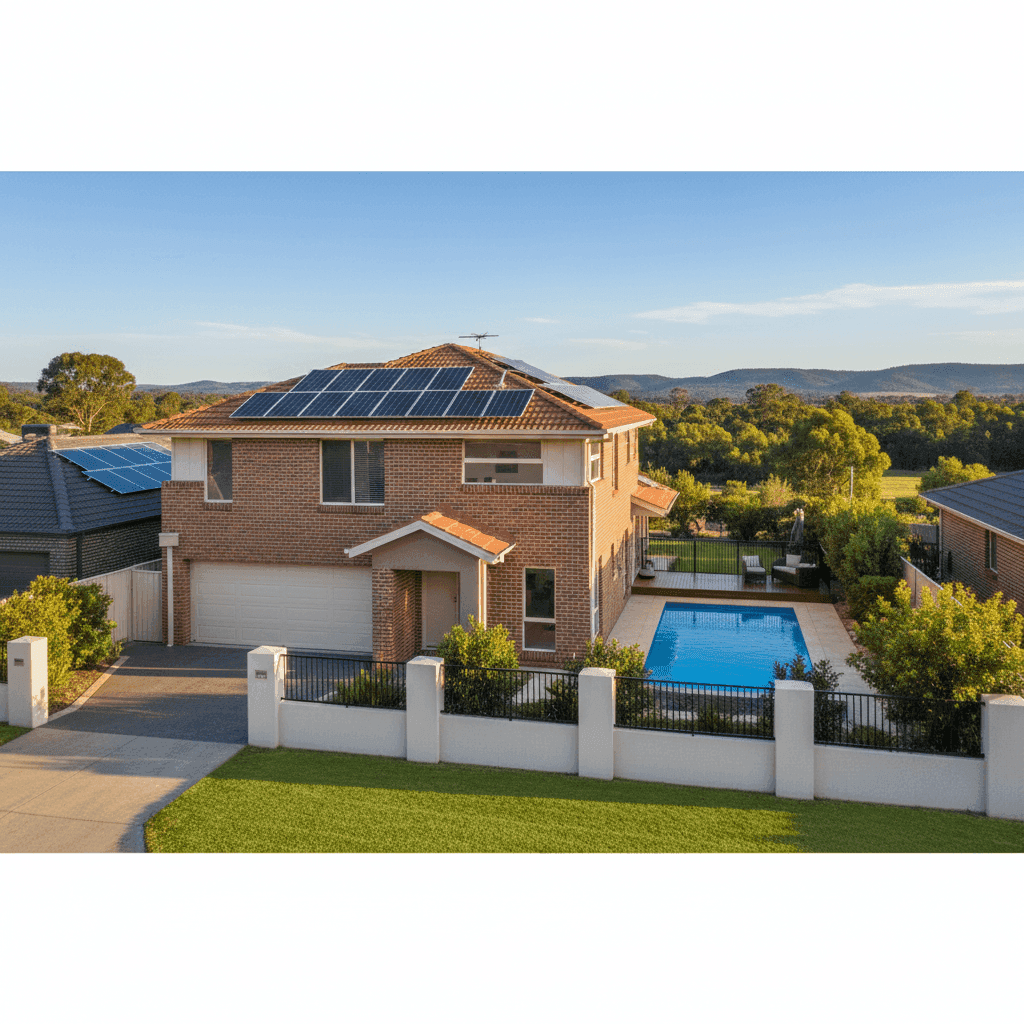
If you own a semi detached home in Flinders, NSW 2529, you're likely no stranger to the balancing act of protecting a coastal-adjacent property without overpaying for cover. Flinders sits within the Shellharbour local government area on the Illawarra coast — a region that blends relaxed suburban living with genuine coastal charm. But what does home and contents insurance actually cost for a property like this, and is a quote of $2,218 per year something to feel good about? Let's break it down.
---
Is This Quote Fair?
The short answer: yes, broadly speaking. This quote has been rated Fair (Around Average) — and the numbers back that up.
At $2,218 per year (or roughly $213 per month), this home and contents policy sits almost exactly in line with the suburb average of $2,234/year for Flinders. That's a difference of just $16 annually — essentially statistical noise. It's comfortably within the middle band of what homeowners in this postcode are paying, sitting between the 25th percentile ($1,596/yr) and the 75th percentile ($2,887/yr).
That said, "fair" doesn't necessarily mean "the best available." The suburb median — which filters out extreme high and low quotes — sits at $1,956/year, meaning roughly half of comparable properties in Flinders are being insured for less than this quote. There's meaningful room to shop around and potentially save $200–$300 annually without sacrificing quality cover.
---
How Flinders Compares to the Rest of NSW and Australia
Context is everything when evaluating an insurance premium. Here's how this quote stacks up across different benchmarks:
| Benchmark | Average Premium | Median Premium |
|---|---|---|
| Flinders (NSW 2529) | $2,234/yr | $1,956/yr |
| Shellharbour LGA | $1,744/yr | — |
| NSW State | $9,528/yr | $3,770/yr |
| National | $5,347/yr | $2,764/yr |
A few things stand out immediately. The NSW state average of $9,528/year looks alarming at first glance, but this figure is heavily skewed by high-risk and high-value properties across the state — particularly in flood-prone inland areas and premium Sydney suburbs. The state median of $3,770/year is a far more representative figure, and against that benchmark, this $2,218 quote looks genuinely competitive.
Nationally, the picture is similar. The national average premium of $5,347/year is dragged upward by catastrophe-prone regions in Queensland and Western Australia. The national median of $2,764/year is more telling — and this Flinders quote comes in $546 below that figure.
Interestingly, the Shellharbour LGA average of $1,744/year is notably lower than the Flinders suburb average. This suggests that while Flinders itself trends slightly higher within the LGA — possibly due to property values, proximity to the coast, or local risk factors — it's still well within a manageable range.
You can explore the full breakdown of premiums for this postcode at the Flinders NSW 2529 insurance stats page, or compare against the broader NSW insurance data.
---
Property Features That Affect Your Premium
This particular property has a number of characteristics that directly influence what insurers charge. Understanding these can help you have more informed conversations with providers.
Brick Veneer Walls & Tiled Roof Brick veneer construction with a tiled roof is generally viewed favourably by insurers. These materials are durable, fire-resistant, and relatively straightforward to repair or replace. Compared to timber-framed weatherboard homes or older slate roofs, this combination typically attracts more competitive premiums.
Slab Foundation A concrete slab foundation is a neutral-to-positive factor for insurers. It's structurally sound and less susceptible to subsidence issues than some pier-and-beam alternatives, though it can be more costly to repair if plumbing issues arise beneath the slab.
Swimming Pool The presence of a pool adds to the replacement cost of the property and introduces liability considerations — both of which push premiums upward. Pool fencing compliance, maintenance standards, and safety features all play a role in how insurers assess this risk.
Solar Panels Solar panels are an increasingly common feature, but they do add to the sum insured. At $500,000 building cover, it's worth confirming with your insurer that the solar system is explicitly included in the policy — some policies treat panels as a separate item or impose sub-limits.
Ducted Climate Control Ducted air conditioning systems are expensive to repair or replace and are typically included in the building sum insured. This is a meaningful addition to replacement cost that's easy to underestimate when setting your cover level.
214 sqm, 4 Bedrooms, 2 Bathrooms At 214 square metres, this is a generously sized semi detached home. Building size is one of the most direct drivers of premium — more floor space means higher rebuild costs. The $500,000 building sum insured works out to approximately $2,336 per square metre, which is broadly in line with current construction costs in NSW for this property type.
---
Tips for Homeowners in Flinders
1. Don't set and forget your sum insured Construction costs in NSW have risen significantly in recent years. If your building cover was set a few years ago, there's a real risk it no longer reflects what it would actually cost to rebuild. Use a building cost calculator or ask your insurer to review the figure annually.
2. Check your pool and solar panel cover explicitly Both features are common sources of claim disputes. Read your Product Disclosure Statement (PDS) carefully to confirm whether your pool equipment and solar panels are covered under the building section, and whether any sub-limits apply.
3. Compare quotes — even if you're happy with your current insurer This quote is rated "fair," but the suburb median suggests savings may be available. Running a comparison every 12 months takes less than 10 minutes and could put hundreds of dollars back in your pocket without reducing your level of protection.
4. Consider your excess level strategically Both the building and contents excess on this policy sit at $1,000. Opting for a higher voluntary excess can meaningfully reduce your annual premium — but make sure the amount is something you could genuinely afford to pay at short notice if you needed to make a claim.
---
Ready to See What You Could Be Paying?
Whether you're reviewing an existing policy or shopping for cover for the first time, comparing quotes is the single most effective way to make sure you're not overpaying. CoverClub makes it easy to see real premium data for your area and get quotes tailored to your property.