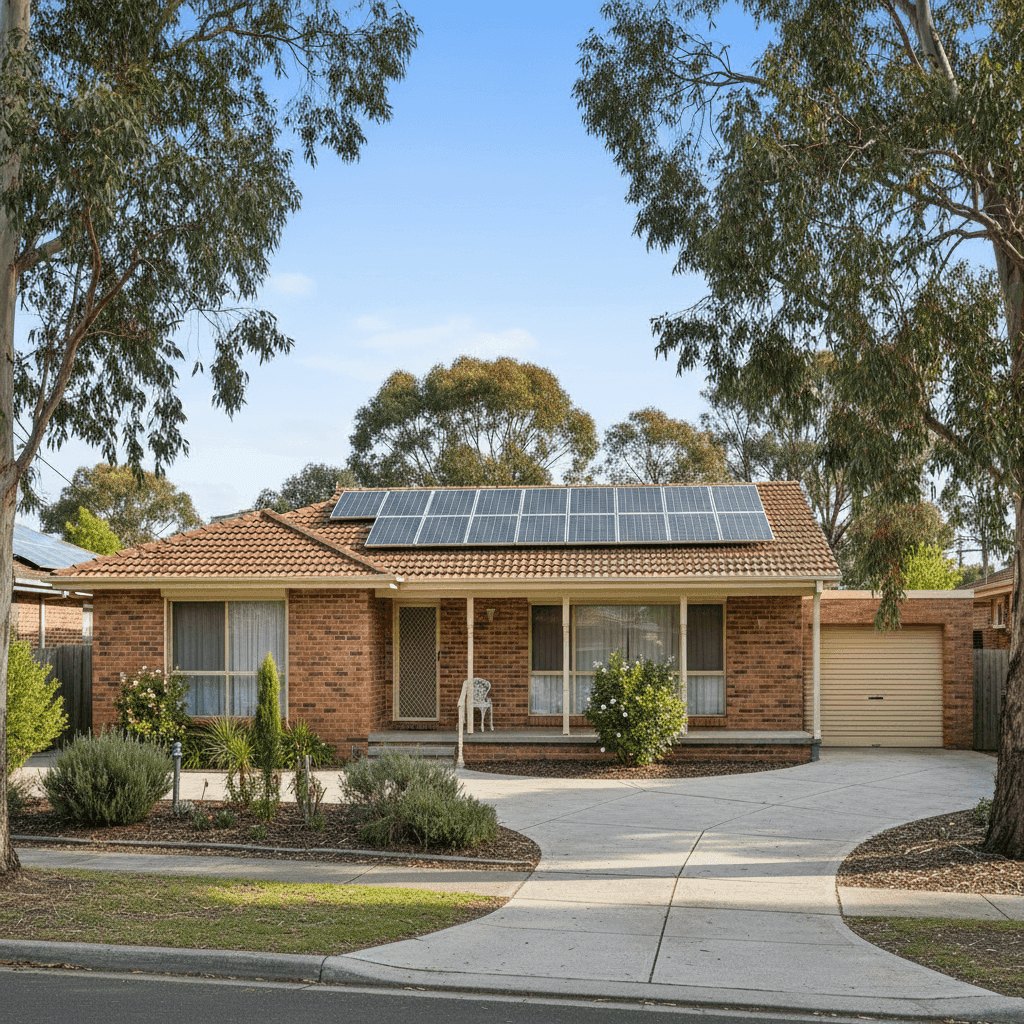
If you own a free standing home in Florey, ACT 2615, you're probably wondering whether you're paying a fair price for building insurance — or leaving money on the table. This article breaks down a real building-only insurance quote for a three-bedroom brick veneer home in Florey, compares it against ACT and national benchmarks, and offers practical tips to help you get the best value cover.
---
Is This Quote Fair?
The quote in question comes in at $1,381 per year (or roughly $124 per month) for building-only cover on a free standing home in Florey, with a building sum insured of $540,000 and a $2,000 excess.
Our price rating for this quote? Cheap — below average. That's a strong result for the homeowner.
To put that in context: the average home insurance premium across the ACT sits at $2,288 per year, with a state median of $2,186. This quote comes in at nearly 40% below the ACT average — a meaningful saving of over $900 annually. Against the national average of $5,347 per year, the gap is even more striking, though it's worth noting that national figures are heavily skewed by high-risk regions like Far North Queensland and flood-prone areas of NSW and Victoria.
For a well-constructed brick veneer home on a slab foundation with a tiled roof — all relatively low-risk building characteristics — a below-average premium makes sense. But it's still reassuring to see the numbers confirm what the property features suggest.
---
How Florey Compares
Florey is a quiet, established suburb in Belconnen, one of Canberra's largest district centres. It's predominantly made up of owner-occupied homes built in the 1970s through to the early 1990s, and the suburb has a reputation for being a stable, low-drama part of the ACT.
Here's how this quote stacks up across different benchmarks:
| Benchmark | Annual Premium |
|---|---|
| This Quote | $1,381 |
| LGA (Unincorporated ACT) Average | $2,172 |
| ACT State Average | $2,288 |
| ACT State Median | $2,186 |
| National Average | $5,347 |
| National Median | $2,764 |
At the LGA level, the average premium for homes in the Unincorporated ACT area is $2,172 per year — still well above this quote. You can explore more suburb-level data on the Florey insurance stats page, or browse ACT-wide home insurance statistics for broader context. For a full national picture, the national home insurance stats page is a useful reference.
It's worth noting that the ACT generally benefits from lower premiums compared to many other Australian states, largely due to its inland location (no cyclone or coastal storm surge risk), relatively modern building stock, and well-managed urban planning. Florey sits comfortably within that low-risk profile.
---
Property Features That Affect Your Premium
Several characteristics of this property work in the homeowner's favour when it comes to insurance pricing:
Brick Veneer Walls Brick veneer is one of the most common and well-regarded construction types in Australia. It offers solid fire resistance and structural durability, which insurers tend to reward with more competitive premiums compared to timber-framed or clad homes.
Tiled Roof Terracotta or concrete tiles are considered a low-risk roofing material. They're durable, fire-resistant, and handle the ACT's temperature extremes reasonably well. A tiled roof is generally preferable to older materials like fibrous cement sheeting or corrugated iron when it comes to underwriting.
Slab Foundation A concrete slab foundation is straightforward to insure and doesn't carry the same risk profile as raised timber stumps, which can be susceptible to moisture damage and termite activity.
Construction Year: 1988 Homes built in the late 1980s typically comply with building codes that introduced improved structural standards. While not as new as post-2000 builds, a 1988 home in good condition is generally well-regarded by insurers.
Solar Panels This property has solar panels installed, which adds some replacement value to the building sum insured. It's important to confirm with your insurer that rooftop solar is explicitly covered under your policy — most modern building policies do include it, but it's worth verifying.
Ducted Climate Control Ducted heating and cooling systems are a significant fixed asset and are typically covered under building insurance. Again, confirm the scope of coverage with your insurer, particularly for mechanical breakdown versus accidental damage scenarios.
Above-Average Fittings Quality With above-average fittings, the $540,000 sum insured appears appropriately calibrated for a 130 sqm home in the ACT. Underinsurance is a genuine risk for homeowners who haven't reviewed their sum insured in several years — construction costs have risen sharply since 2020.
No Pool, No Cyclone Risk The absence of a swimming pool removes a common liability and maintenance concern from the insurer's perspective. And being well inland, Florey carries no cyclone risk — a factor that dramatically inflates premiums in northern Australia.
---
Tips for Homeowners in Florey
1. Review Your Sum Insured Annually Construction costs in the ACT have increased significantly in recent years. A sum insured set three or four years ago may no longer reflect the true cost of rebuilding your home. Use a building cost calculator or speak with a quantity surveyor to ensure your $540,000 coverage is still adequate — underinsurance can leave you seriously out of pocket after a claim.
2. Confirm Solar Panel Coverage With solar panels on the roof, check your policy wording carefully. Most building policies cover solar panels as a fixed installation, but some have sub-limits or exclusions for certain types of damage (e.g., storm versus electrical fault). A quick call to your insurer can save significant headaches later.
3. Consider Your Excess Strategy This policy carries a $2,000 building excess. A higher excess typically reduces your premium, but it also means more out-of-pocket cost when you do claim. Given this quote is already below average, it may be worth modelling whether a lower excess (say $1,000) offers better overall value for your risk appetite.
4. Compare at Renewal Time Even if you're happy with your current premium, the insurance market moves. Insurers reprice risk regularly, and the best deal today may not be the best deal in 12 months. Set a reminder to compare quotes at least four to six weeks before your renewal date — that's enough time to make a considered switch without rushing.
---
Ready to Compare?
Whether you're a first-time buyer in Florey or a long-time homeowner reassessing your cover, it pays to shop around. CoverClub makes it easy to compare home insurance quotes from multiple insurers in minutes. Get a quote today and see how much you could save on your building insurance.