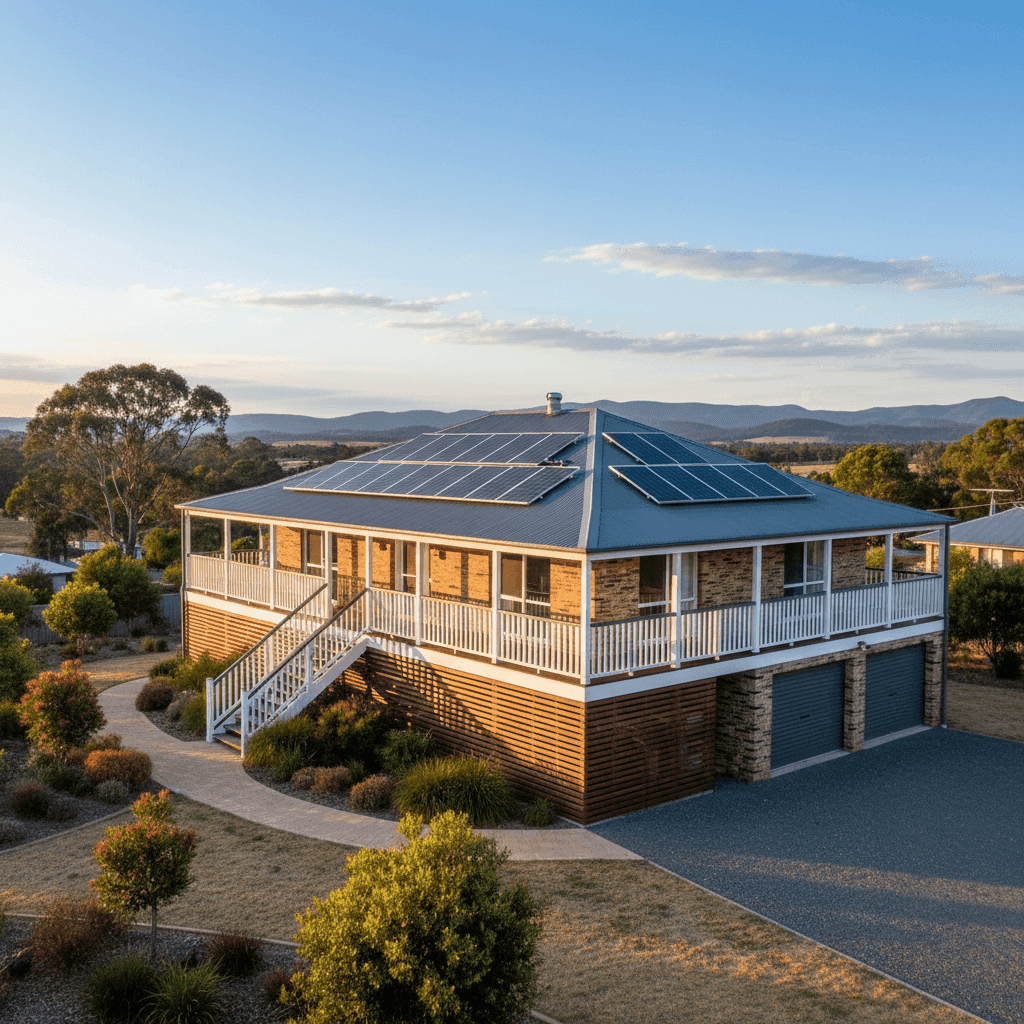
Flowerdale is a quiet residential locality in Tasmania's north-west, sitting within the Burnie local government area. For owners of free standing homes in this part of the state, understanding what drives your home insurance premium — and whether your quote stacks up — can mean the difference between overpaying and getting genuinely good value. In this article, we dig into a real home and contents insurance quote for a 3-bedroom free standing home in Flowerdale (TAS 7325) and put the numbers in context.
---
Is This Quote Fair?
The quote in question comes in at $2,077 per year (or $203/month), covering a building sum insured of $841,000 and $50,000 worth of contents. The building excess is $2,000, and the contents excess is $1,000.
Our price rating for this quote is Expensive (Above Average).
To understand why, it helps to look at the local market. The suburb average premium for comparable properties in Flowerdale sits at $1,738/yr, and the median is $1,848/yr. This quote lands above the 75th percentile for the suburb (which is $1,966/yr), meaning it's pricier than at least three-quarters of similar quotes in the area.
That said, "expensive" is relative. Compared to the broader Tasmanian market, this quote is actually sitting below both the state average of $2,458/yr and the state median of $2,272/yr. So while it's on the higher end locally, Tasmanian homeowners overall are paying even more — and nationally, the picture is even starker.
The bottom line? This quote isn't outrageous, but there's likely room to do better — particularly given how it compares to other Flowerdale properties.
---
How Flowerdale Compares
Here's a quick snapshot of where this quote sits across different benchmarks:
| Benchmark | Premium |
|---|---|
| This quote | $2,077/yr |
| Flowerdale suburb average | $1,738/yr |
| Flowerdale suburb median | $1,848/yr |
| Flowerdale 25th percentile | $1,585/yr |
| Flowerdale 75th percentile | $1,966/yr |
| LGA (Burnie) average | $2,099/yr |
| TAS state average | $2,458/yr |
| TAS state median | $2,272/yr |
| National average | $2,965/yr |
| National median | $2,716/yr |
Note: Suburb data is based on a sample of 5 quotes, so treat local figures as indicative rather than definitive.
Zooming out, this quote is $888/yr below the national average — a meaningful saving for any household budget. Compared to the national median of $2,716/yr, the gap is still a healthy $639. Tasmania as a whole tends to sit below the national average, which is partly a reflection of lower extreme weather risk compared to states like Queensland and Western Australia.
For a detailed breakdown of insurance pricing trends in the region, check out the Flowerdale suburb stats page and the broader Tasmania insurance stats.
---
Property Features That Affect Your Premium
Several characteristics of this particular property will be influencing the premium, for better or worse. Here's what stands out:
Construction Era (1972)
Homes built in the early 1970s are now over 50 years old. Older properties often attract higher premiums because ageing infrastructure — plumbing, wiring, roofing — carries a greater likelihood of claims. Insurers price this risk in, even when homes are well-maintained.
Brick Veneer Walls
Brick veneer is generally viewed favourably by insurers. It offers solid fire resistance and durability compared to weatherboard or timber cladding, which can help moderate your premium. It's one of the more insurer-friendly wall types in Australia.
Steel/Colorbond Roof
A Colorbond roof is another tick in the positive column. Steel roofing is durable, resistant to fire, and holds up well against wind and rain — all factors that reduce the likelihood of a weather-related claim.
Stump Foundation
The property sits on stumps, which is common in older Tasmanian homes. While stumps allow for ventilation and can reduce moisture-related issues, they can also be a consideration for insurers if the stumps themselves are ageing or show signs of deterioration. Some policies may have specific conditions around subfloor areas.
Elevated (Less Than 1m)
The home is slightly elevated, which can provide modest protection against surface water flooding. At under a metre, this isn't a dramatic elevation, but it does offer a small buffer compared to slab-on-ground construction in flood-prone areas.
Solar Panels
The presence of solar panels adds to the replacement cost of the building, which is likely a contributing factor to the higher sum insured of $841,000. Make sure your policy explicitly covers solar panels — not all policies include them as standard, and some treat them as a separate item.
Timber/Laminate Flooring
Timber and laminate floors can be costly to replace following water damage or fire. While they're not a major premium driver on their own, they do contribute to the overall contents and building replacement value.
No Pool, No Cyclone Risk Zone
The absence of a pool removes a common liability risk, and the property's location outside a designated cyclone risk area means it avoids the significant premium loadings that apply in parts of Queensland and Western Australia.
---
Tips for Homeowners in Flowerdale
If you're looking to get better value on your home insurance, here are four practical steps worth considering:
- Shop around — seriously. This quote sits above the local suburb average by around $330/yr. With only five quotes in our local sample, there's real variation in the market. Using a comparison tool like CoverClub to run multiple quotes side-by-side takes minutes and could save you hundreds.
- Review your sum insured. A building sum insured of $841,000 for a 130 sqm home is on the higher side. Make sure this figure reflects the actual rebuild cost (not the market value) of your home. Overinsuring drives up your premium unnecessarily, while underinsuring can leave you exposed at claim time. Consider using a building cost calculator to check your figure annually.
- Consider your excess settings. This policy carries a $2,000 building excess and a $1,000 contents excess. Opting for a higher excess is one of the most straightforward ways to reduce your annual premium — just make sure you could comfortably cover that amount if you needed to make a claim.
- Ask about solar panel coverage. Given the solar panels on this property, it's worth confirming exactly how they're covered under your policy. Some insurers include them as part of the building, others require a separate endorsement. Knowing this now avoids an unpleasant surprise at claim time.
---
Ready to Find a Better Rate?
Whether you're renewing your policy or buying coverage for the first time, comparing quotes is the single most effective way to make sure you're not paying more than you need to. CoverClub makes it easy to see real quotes for your specific property in minutes.