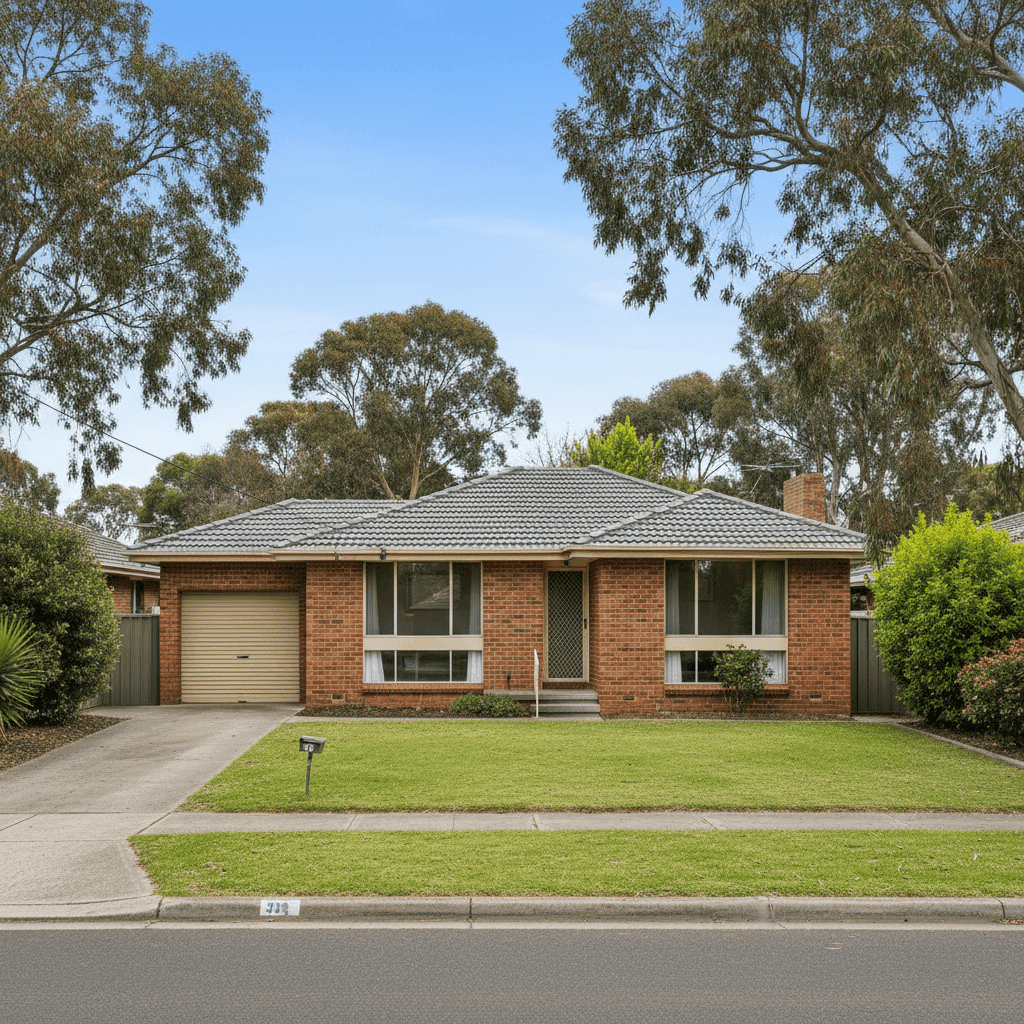
Flynn is a quiet, established suburb in Canberra's north-west, sitting within the ACT's Belconnen district. Known for its leafy streets and solid family homes, it's a suburb where brick veneer properties from the 1970s and 1980s make up a significant portion of the housing stock. If you own a free standing home here, understanding what you should be paying for building insurance — and why — can save you real money.
This article breaks down a recent building-only insurance quote for a four-bedroom, two-bathroom free standing home in Flynn ACT 2615, and puts that number into context against local, state, and national benchmarks.
---
Is This Quote Fair?
The quote in question comes in at $1,716 per year (or $164/month) for building-only cover, with a $5,000 building excess and a sum insured of $763,000. CoverClub's pricing engine rates this as FAIR — Around Average, and the data backs that up.
Compared to the suburb median of $1,704/year, this quote sits almost exactly in the middle of the Flynn market — just $12 above the median. That's a reassuring sign that the pricing is competitive and reflects genuine market rates rather than an inflated figure from a single insurer.
It's worth noting that the suburb average is slightly higher at $1,956/year, which suggests a handful of higher-priced quotes are pulling the mean upward. The 25th percentile sits at $1,442/year, meaning roughly a quarter of comparable properties in Flynn are insured for less — so there may still be room to shop around. On the other end, the 75th percentile reaches $2,622/year, indicating that some homeowners are paying significantly more, possibly due to higher sum insured values, different cover types, or simply not having compared quotes recently.
Overall, $1,716/year for a 235 sqm brick veneer home with a $763,000 sum insured is a reasonable outcome — but "fair" doesn't necessarily mean "the best available."
---
How Flynn Compares
Zooming out from the suburb level paints an even more favourable picture for Flynn homeowners.
| Benchmark | Average Premium |
|---|---|
| Flynn (suburb average) | $1,956/yr |
| Unincorporated ACT (LGA average) | $2,352/yr |
| ACT state average | $2,203/yr |
| National average | $2,965/yr |
The quote of $1,716/year sits well below the ACT average of $2,203/year — a saving of around $487/year — and is a substantial $1,249/year cheaper than the national average. Even against the LGA average for Unincorporated ACT ($2,352/year), this quote represents a meaningful discount.
This suggests that Flynn, as a suburb, benefits from relatively moderate insurance risk compared to other parts of the ACT and the broader country. Properties in higher-risk zones — those prone to flooding, bushfire, or cyclones — tend to attract significantly higher premiums, and Flynn's positioning in inner Canberra largely shields it from the most extreme risk categories.
You can explore more localised data on the Flynn suburb stats page to see how premiums are trending over time.
---
Property Features That Affect Your Premium
Every insurer prices a home based on its individual characteristics. Here's how the key features of this property are likely influencing the premium:
Brick Veneer Walls Brick veneer is one of the most common external wall materials across Canberra's suburban housing stock. It's generally viewed favourably by insurers — it offers solid fire resistance and durability — though it can be more expensive to repair than timber-clad homes. On balance, brick veneer tends to support competitive premiums.
Tiled Roof Terracotta or concrete tiles are a standard roofing choice for homes of this era. They're durable and perform well in the ACT's climate, which includes cold winters, occasional hail, and hot summers. Tile roofs are generally well-regarded by insurers, though hail damage is a known risk in the region.
Construction Year: 1973 Homes built in the early 1970s are now over 50 years old. While many have been well maintained, insurers may factor in the age of key systems like plumbing, electrical wiring, and roofing materials when pricing a policy. If your home hasn't had significant updates in these areas, it's worth reviewing whether your sum insured accurately reflects the cost of a full rebuild to modern standards.
Stump Foundation A home on stumps (also known as a post or pier foundation) can be more susceptible to movement over time, particularly in areas with clay-heavy soils. This may be a minor consideration for insurers, though it's more relevant in terms of maintenance than premium impact.
Ducted Climate Control The presence of ducted heating and cooling adds to the replacement value of the home and is correctly factored into the sum insured. It's a feature that can be easily overlooked when calculating rebuilding costs, so it's good to see it reflected here.
No Pool, No Solar Panels The absence of a pool and solar panels simplifies the risk profile slightly. Both features can add to a premium — pools carry liability considerations, and solar panels add to rebuild complexity and cost.
---
Tips for Homeowners in Flynn
1. Review your sum insured regularly With a sum insured of $763,000 for a 235 sqm home, the implied rebuild rate is around $3,247/sqm. Construction costs in the ACT have risen sharply in recent years, so it's worth cross-checking this figure against a current building cost estimate. Being underinsured at claim time can be a costly mistake.
2. Consider your excess strategically This policy carries a $5,000 building excess, which is on the higher end. A higher excess typically reduces your annual premium, but it means you'll need to cover more out of pocket if you need to make a claim. Think about what you could comfortably afford to pay in an emergency before locking in a high excess for the sake of a lower premium.
3. Shop around — even when your quote looks fair A "fair" rating means you're around the market average, but the 25th percentile in Flynn sits at $1,442/year. That's a potential saving of $274/year from your current quote. It takes only a few minutes to compare, and the savings can add up significantly over time.
4. Don't neglect home maintenance For a home built in 1973, staying on top of maintenance is both a practical and insurance-related concern. Many policies include exclusions for damage caused by gradual deterioration or lack of upkeep. Regular checks on your roof, gutters, plumbing, and stumps can help you avoid claim disputes down the track.
---
Ready to Compare?
Whether you're happy with your current insurer or looking for a better deal, it pays to see what else is out there. CoverClub makes it easy to compare building insurance quotes from multiple providers in minutes — no jargon, no pressure, just clear pricing data to help you make a confident decision.