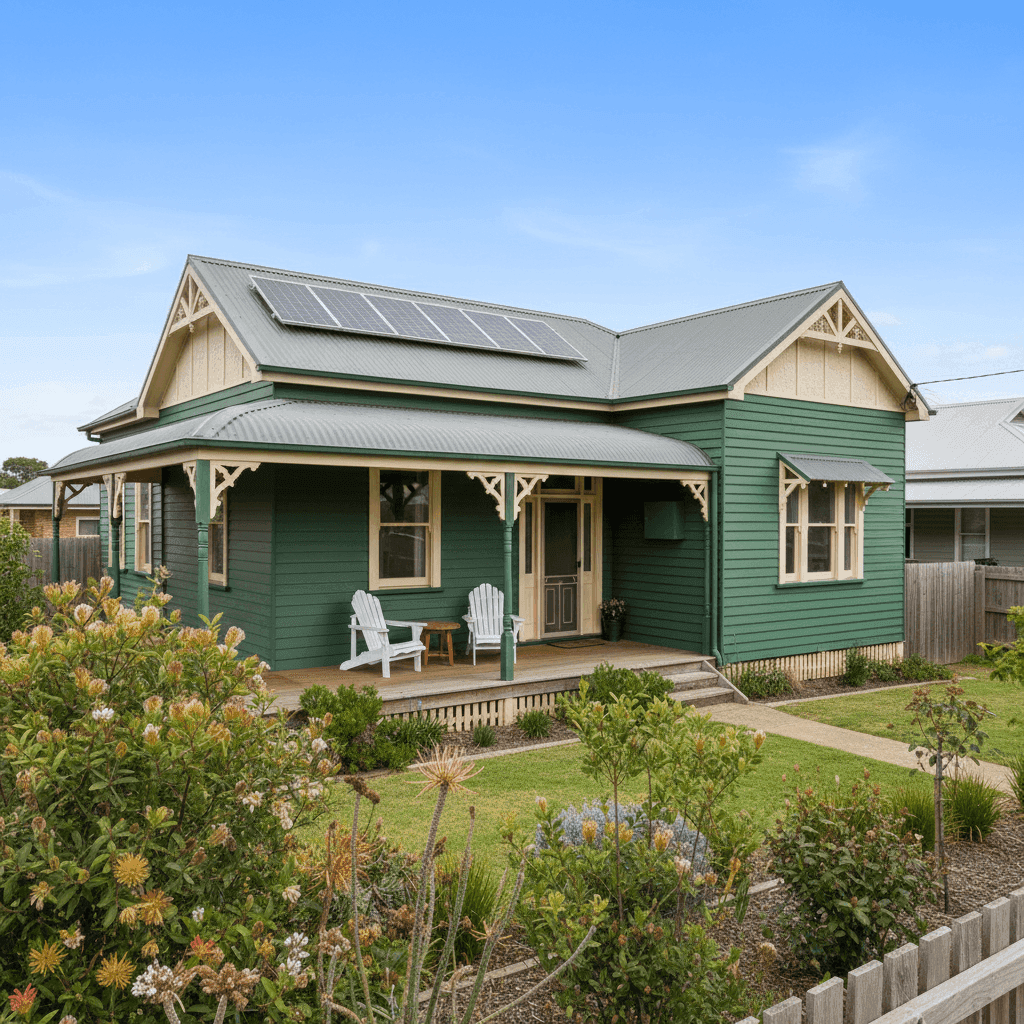
If you own a free standing home in Forbes, NSW 2871, you're likely no stranger to the balancing act of protecting a solid older property without overpaying for cover. This article breaks down a real home and contents insurance quote for a four-bedroom, two-bathroom weatherboard home in Forbes — and puts the numbers in context so you can judge whether your own premium stacks up.
---
Is This Quote Fair?
The quote in question comes in at $2,660 per year (or $259/month) for a combined home and contents policy, covering a building sum insured of $1,005,000 and contents valued at $225,000. The building excess is $5,000 and the contents excess is $2,000.
Our price rating for this quote is Expensive — above average for the Forbes area.
To understand why, it helps to look at what other homeowners in the same postcode are paying. Based on Forbes suburb insurance data, the suburb average premium sits at $2,223/yr, and the median is $1,786/yr. That means this quote is roughly $437 above the local average and nearly $875 above the median — a meaningful gap worth investigating before renewing.
That said, context matters. A quarter of Forbes homeowners pay $2,432 or more per year (the 75th percentile), so this quote isn't wildly out of range for properties with higher sum insured values or older construction. Still, there's a reasonable case to be made for shopping around.
---
How Forbes Compares to the Rest of Australia
One silver lining: Forbes homeowners are paying considerably less than the NSW state average of $3,801/yr (median: $3,410/yr). Compared to the national average of $2,965/yr (median: $2,716/yr), this quote is also sitting below the broader Australian benchmark — which is somewhat reassuring.
Here's a quick snapshot of how the numbers line up:
| Benchmark | Average Premium | Median Premium |
|---|---|---|
| Forbes (suburb) | $2,223/yr | $1,786/yr |
| NSW (state) | $3,801/yr | $3,410/yr |
| Australia (national) | $2,965/yr | $2,716/yr |
| This quote | $2,660/yr | — |
It's worth noting that the LGA average for Weddin — the local government area that encompasses Forbes — is an extraordinarily high $18,505/yr. This figure is likely skewed by a small number of high-value rural or farm properties in the dataset, so it shouldn't be taken as representative of typical residential premiums in town.
For Forbes residents, the key takeaway is that while premiums here are well below Sydney levels, this particular quote is above what most locals are paying, which warrants a closer look at the property's risk profile.
---
Property Features That Affect Your Premium
Several characteristics of this home have a direct bearing on the premium quoted. Understanding them can help you have a more informed conversation with your insurer — or find a better deal elsewhere.
Age and Construction (1929, Weatherboard)
Built in 1929, this is a heritage-era home — and insurers treat older properties with caution. Weatherboard timber construction, while charming and common throughout regional NSW, is considered a higher fire risk than brick veneer or full brick. Replacement costs for period-style joinery, high ceilings, and original timber features can also be significantly higher than for a modern equivalent, which helps explain the $1,005,000 building sum insured.
Stump Foundation and Timber Flooring
Homes on stumps (also called timber piers) are more vulnerable to subfloor moisture, pest damage, and movement over time. Insurers may price in a slightly higher risk of structural claims. The timber and laminate flooring throughout adds to the replacement cost calculation as well.
Steel/Colorbond Roof
On the positive side, a Colorbond steel roof is generally viewed favourably by insurers. It's durable, fire-resistant, and low-maintenance — a meaningful upgrade from the corrugated iron or terracotta tiles found on many homes of this era.
Solar Panels
The presence of solar panels adds to the insured value of the property. Panels and their associated inverter and wiring need to be covered under the building policy, which contributes to the higher sum insured figure.
Ducted Climate Control
Ducted air conditioning systems are expensive to repair or replace and are factored into building replacement costs. For a 214 sqm home, this is a non-trivial addition to the sum insured.
No Pool, No Cyclone Risk
Forbes is not in a designated cyclone risk zone, which keeps premiums lower than coastal Queensland or northern WA equivalents. The absence of a pool also removes a common source of liability and maintenance-related claims.
---
Tips for Homeowners in Forbes
1. Review Your Sum Insured Carefully
At $1,005,000, the building sum insured is substantial — and premiums scale with it. It's worth getting an independent building replacement cost estimate (not market value) to ensure you're not over-insured. Many homeowners in older suburbs inadvertently inflate their sum insured, which pushes premiums up unnecessarily.
2. Compare Multiple Quotes Before Renewing
The gap between this quote and the Forbes suburb median ($1,786/yr) suggests real savings are available. Use a comparison platform like CoverClub to see what multiple insurers would charge for the same level of cover — it takes minutes and could save you hundreds.
3. Consider Your Excess Settings
This policy carries a $5,000 building excess and a $2,000 contents excess — both on the higher side. Higher excesses typically reduce premiums, but make sure you're comfortable covering that amount out of pocket in the event of a claim. If cash flow is a concern, it may be worth modelling a lower excess option.
4. Protect the Subfloor and Roof
For a stump-founded weatherboard home, proactive maintenance goes a long way. Insurers can decline or reduce claims where damage is attributed to lack of maintenance. Keeping gutters clear, checking for subfloor moisture, and inspecting the Colorbond roof after storms are simple steps that protect both your home and your claims history.
---
Ready to Find a Better Deal?
Whether you're renewing an existing policy or insuring a Forbes property for the first time, it pays to compare. CoverClub makes it easy to benchmark your premium against real data from your suburb, state, and across Australia. Get a quote today and see what you could be saving — without compromising on the cover you need.