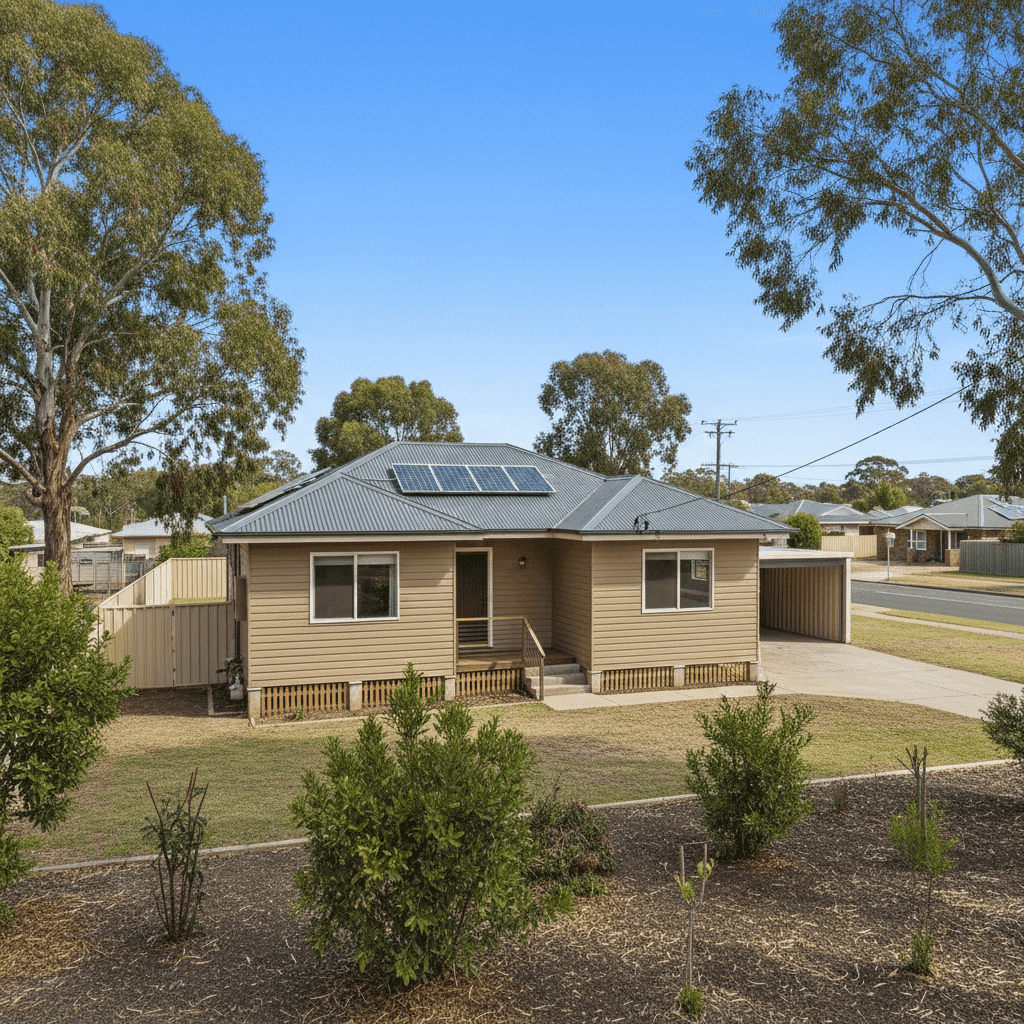
If you own a free standing home in Forbes, NSW 2871, you've probably noticed that home insurance premiums can vary dramatically — and not always in ways that are easy to explain. This article breaks down a real home and contents insurance quote for a three-bedroom, two-bathroom weatherboard home in Forbes, comparing it against local, state, and national benchmarks to help you understand whether you're getting a fair deal.
---
Is This Quote Fair?
The quote in question comes in at $8,340 per year (or $811/month) for combined home and contents cover, with a building sum insured of $459,000 and contents valued at $50,000. The building excess sits at $3,000 and the contents excess at $1,000.
Our price rating for this quote is EXPENSIVE — above average.
To put that into perspective: the average home insurance premium across Forbes (postcode 2871) is just $2,223 per year, with a median of $1,786. That means this quote is nearly 3.75 times the suburb average — a significant gap that warrants a closer look.
Even when stacked against the broader NSW state average of $3,801/year or the national average of $2,965/year, this quote stands out as notably high. It's worth digging into the property characteristics and coverage details to understand what's driving the cost.
---
How Forbes Compares
Forbes is a regional town in central-western NSW, and its insurance premiums reflect a relatively affordable market compared to coastal or flood-prone areas. Here's how the numbers stack up:
| Benchmark | Premium |
|---|---|
| This Quote | $8,340/yr |
| Forbes Suburb Average | $2,223/yr |
| Forbes Suburb Median | $1,786/yr |
| Forbes 25th Percentile | $1,308/yr |
| Forbes 75th Percentile | $2,432/yr |
| LGA (Weddin) Average | $2,337/yr |
| NSW State Average | $3,801/yr |
| NSW State Median | $3,410/yr |
| National Average | $2,965/yr |
| National Median | $2,716/yr |
(Based on 45 quotes sampled for the Forbes area.)
Even the 75th percentile for Forbes — meaning the most expensive quarter of quotes — sits at just $2,432/year. This quote at $8,340 is well beyond that threshold. You can explore the full Forbes suburb insurance stats here.
It's worth noting that the Weddin LGA average of $2,337 aligns closely with the suburb average, suggesting this isn't a localised anomaly — the quote is genuinely an outlier for the region.
---
Property Features That Affect Your Premium
Several characteristics of this particular property are likely contributing to the elevated premium. Understanding these factors can help you have more informed conversations with insurers.
Weatherboard Timber Construction
Weatherboard wood external walls are one of the most significant cost drivers in home insurance. Timber is considered a higher fire risk than brick or rendered masonry, and it's also more susceptible to rot, pest damage, and structural movement over time. Insurers typically apply a loading to weatherboard homes, and this is especially pronounced for older properties.
Age of Construction (1970)
Built in 1970, this home is over 50 years old. Older homes carry higher replacement and repair costs due to outdated wiring, plumbing, and materials that may no longer meet current building codes. Insurers factor in the likelihood of claims arising from ageing infrastructure, which can push premiums upward.
Stump Foundation
Homes on stumps (also known as pier or post foundations) are common in regional NSW, particularly in older builds. While they offer good ventilation and are relatively easy to access for repairs, they can be more vulnerable to subsidence, pest ingress, and structural movement — all of which insurers weigh up when pricing a policy.
Building Sum Insured: $459,000
The sum insured is a major lever on premium. At $459,000 for a 139 sqm home, this represents a rebuild cost of approximately $3,300 per sqm — which is on the higher end but not unreasonable given current construction costs, particularly for a weatherboard home requiring specialist materials and labour in a regional area.
Solar Panels
The presence of solar panels adds a modest cost to premiums, as they increase the replacement value of the home and introduce some additional risk (electrical faults, storm damage). However, this is unlikely to be a major driver of the premium on its own.
Ducted Climate Control
Ducted systems are expensive to replace and can be a source of claims. Their inclusion in the insured property adds to the overall replacement value, contributing incrementally to the premium.
---
Tips for Homeowners in Forbes
If you're a Forbes homeowner staring down a premium like this one, there are several strategies worth exploring before you simply renew.
1. Shop Around — Seriously
The single most effective thing you can do is compare quotes from multiple insurers. Given that this quote is so far above the suburb average, it's highly likely that other providers would offer meaningfully lower premiums for the same level of cover. Use CoverClub to compare quotes in minutes.
2. Review Your Sum Insured
Make sure your building sum insured accurately reflects the cost to rebuild — not the market value of the property. Overinsuring is a common mistake that quietly inflates premiums. Consider getting a professional building replacement cost assessment to ensure your figure is accurate.
3. Adjust Your Excess
The building excess on this policy is $3,000. Opting for a higher excess can reduce your annual premium, though you'll need to be comfortable covering more out-of-pocket in the event of a claim. For homeowners with solid emergency savings, this can be a smart trade-off.
4. Ask About Discounts
Many insurers offer discounts for bundling home and contents (already done here), paying annually rather than monthly, having security features like deadbolts and alarm systems, or being claim-free for several years. It's always worth asking what discounts are available — they're not always advertised upfront.
---
Compare Your Home Insurance Today
Whether you're renewing your policy or shopping for the first time, it pays to know what the market looks like. Forbes homeowners have access to some of the more affordable premiums in NSW — but only if you're comparing the right options. At CoverClub, we make it easy to benchmark your quote against real data from your suburb, state, and across Australia.
Get a home insurance quote now and see how your premium stacks up →