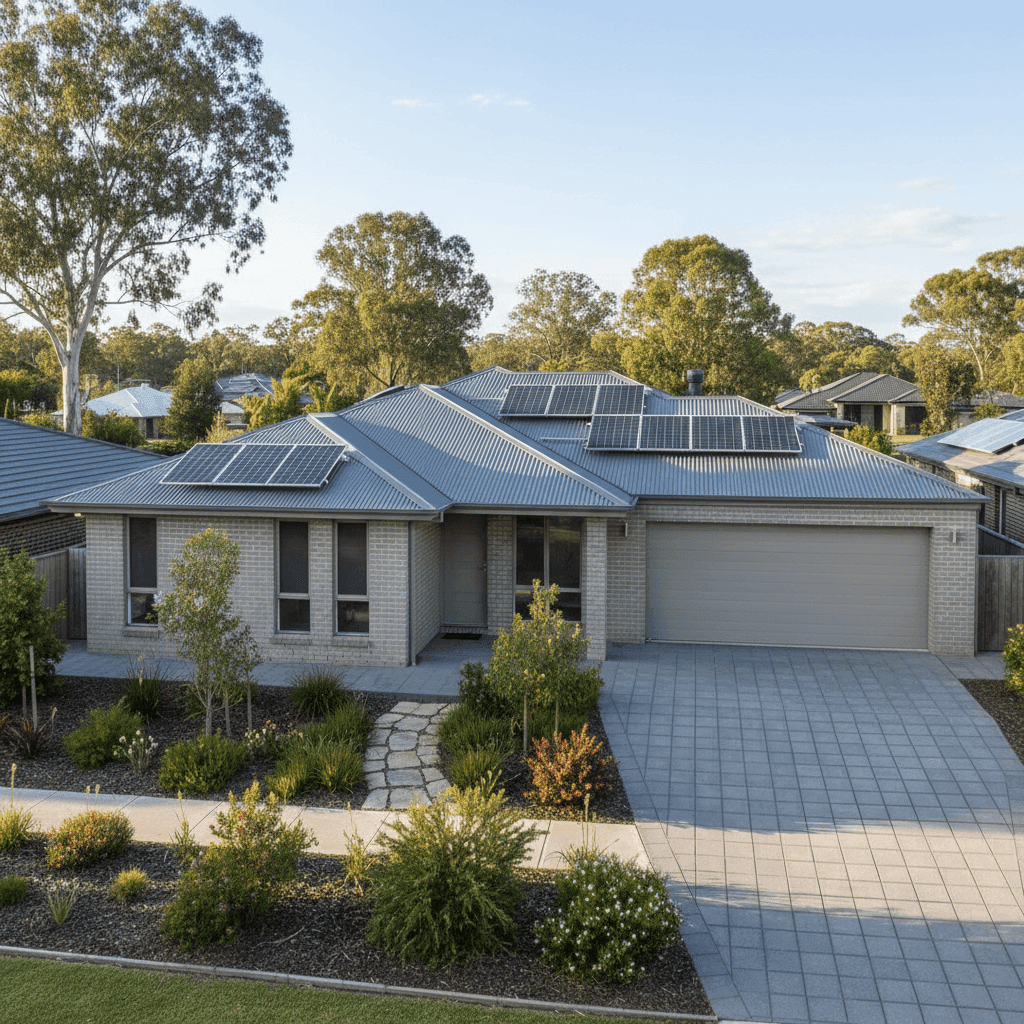
Forest Glen is a quiet, leafy suburb nestled in Queensland's Sunshine Coast hinterland — and like many owner-occupiers across the region, homeowners here are increasingly asking whether their insurance premiums are keeping pace with the market. This article takes a close look at a real home and contents insurance quote for a four-bedroom, double brick free standing home in Forest Glen (postcode 4556), comparing it against local, state, and national benchmarks to help you understand what's driving the price — and whether there's room to do better.
---
Is This Quote Fair?
The quote in question comes in at $3,893 per year (or $366/month) for combined home and contents cover, with a building sum insured of $438,000 and contents valued at $50,000. Both the building and contents excess are set at $2,000.
Our pricing analysis rates this quote as FAIR — Around Average. That's a reasonable outcome, though it's worth unpacking what "average" actually means in this context.
Within Forest Glen itself, the suburb average premium sits at $6,061/year, with a median of $4,719/year. This quote falls comfortably below both figures — and even sits below the suburb's 25th percentile of $3,137/year when you factor in the level of cover provided. That's a meaningful result. It suggests the policyholder is getting solid value relative to many of their neighbours, even if there may still be room to shop around.
Compared to the broader Queensland state average of $4,547/year, this quote is around 14% cheaper — a notable saving. Against the Sunshine Coast LGA average of $4,608/year, the gap is similar.
Where things look slightly less flattering is against the national average of $2,965/year and national median of $2,716/year. Queensland consistently runs hotter than the rest of Australia on insurance pricing, largely due to elevated weather and climate risk — so some premium loading is expected and unavoidable for properties in this state.
---
How Forest Glen Compares
To put the numbers in perspective, here's a snapshot of how this quote stacks up across different benchmarks:
| Benchmark | Annual Premium |
|---|---|
| This Quote | $3,893 |
| Forest Glen Suburb Average | $6,061 |
| Forest Glen Suburb Median | $4,719 |
| Forest Glen 25th Percentile | $3,137 |
| Forest Glen 75th Percentile | $6,104 |
| QLD State Average | $4,547 |
| QLD State Median | $3,931 |
| Sunshine Coast LGA Average | $4,608 |
| National Average | $2,965 |
| National Median | $2,716 |
Based on a sample of 25 quotes from the Forest Glen area. View full [Forest Glen suburb insurance statistics](https://coverclub.com.au/stats/QLD/4556/forest-glen).
The spread within Forest Glen is quite wide — from $3,137 at the 25th percentile up to $6,104 at the 75th. This tells us that the type of property, level of cover, and insurer chosen can make an enormous difference to what you pay. This quote sits in the lower half of the local range, which is a positive sign.
It's also worth noting that Queensland as a whole tracks well above the national average, reflecting the state's exposure to severe weather events including storms, flooding, and hail — all of which are factored into insurer pricing models.
---
Property Features That Affect Your Premium
Several characteristics of this property are likely influencing the premium — both positively and negatively.
Double brick construction is generally viewed favourably by insurers. It offers superior structural integrity compared to timber or clad exteriors, and tends to perform better in storms and high winds. This is a meaningful factor in Queensland, where weather events are a leading cause of home insurance claims.
Steel/Colorbond roofing is another tick in the right column. Colorbond is durable, low-maintenance, and resistant to corrosion and fire — qualities that reduce risk in the eyes of underwriters. It's a common roofing choice across Queensland and is generally well-regarded by insurers.
Slab foundation is standard for modern construction and presents no particular risk loading. Combined with the 2015 build year, this property falls into a relatively modern bracket, which typically attracts more competitive premiums than older homes with ageing infrastructure or non-standard materials.
Solar panels are worth noting. While they're a great sustainability feature and can reduce energy bills, some insurers treat rooftop solar as an additional risk — particularly around storm damage, fire, or the cost of replacement. It's important to confirm with your insurer that your solar system is explicitly covered under your building policy, and that the sum insured accounts for its replacement value.
Timber and laminate flooring can be a modest risk factor for contents and building claims, particularly in the event of water damage. It's worth ensuring your policy covers floor coverings adequately.
At 139 sqm, this is a modestly sized home for four bedrooms, which may help keep the building replacement cost — and therefore the sum insured — at a manageable level. The $438,000 building sum insured reflects a reasonable per-square-metre rebuild cost for a double brick home of this standard.
---
Tips for Homeowners in Forest Glen
1. Review your sum insured regularly Construction costs have risen significantly in recent years. Make sure your building sum insured reflects current rebuild costs — not what it would have cost to build in 2015. Underinsurance is one of the most common and costly mistakes homeowners make. Consider using an independent building calculator or asking your insurer to review your coverage annually.
2. Confirm solar panel coverage If you have rooftop solar, check your policy documents carefully. Some standard building policies cover solar panels as a fixed fixture, while others require you to list them separately or take out additional cover. Given the cost of replacing a solar system, this is worth clarifying before you need to make a claim.
3. Shop around at renewal Insurance loyalty rarely pays off. Premiums can vary significantly between providers for the same property and level of cover — as the wide spread in Forest Glen's local data clearly shows. Use a comparison platform like CoverClub to benchmark your renewal quote against the market before automatically accepting it.
4. Consider your excess level This quote carries a $2,000 excess on both building and contents. Opting for a higher excess can reduce your annual premium, but make sure you're comfortable covering that amount out of pocket in the event of a claim. Conversely, if cash flow is a concern, a lower excess (with a higher premium) may offer better peace of mind.
---
Compare Your Home Insurance with CoverClub
Whether you're a Forest Glen local or elsewhere on the Sunshine Coast, it pays to know where your premium sits relative to the market. CoverClub makes it easy to benchmark your current policy and explore your options — all in one place. Get a home insurance quote today and see how your premium stacks up.