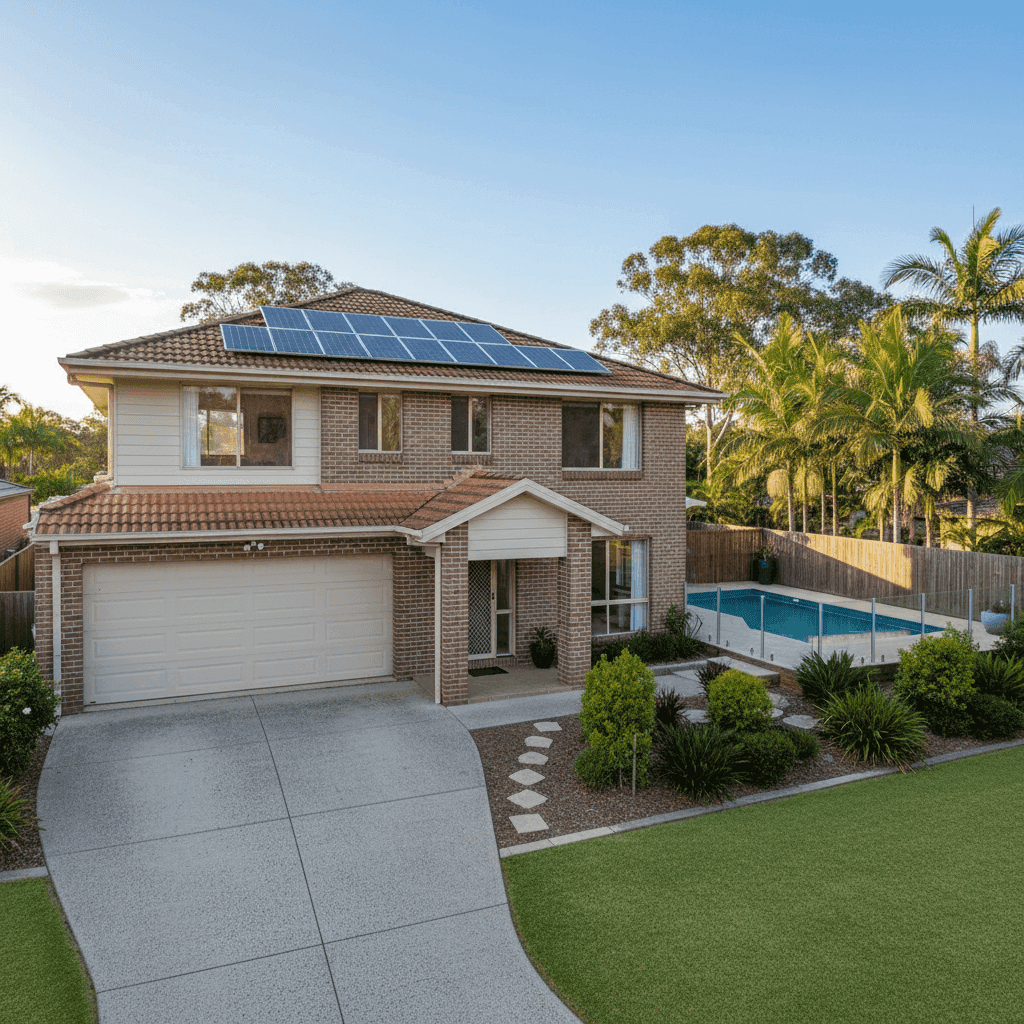
Forest Lake is a well-established residential suburb in Brisbane's south-west, sitting within the City of Logan and known for its leafy streets, artificial lake, and family-friendly atmosphere. It's the kind of suburb where brick veneer homes built in the early 2000s are the norm — solid, comfortable, and increasingly sought after. If you own a free standing home here, understanding what you should be paying for home and contents insurance is an important part of managing your household budget.
This article breaks down a recent insurance quote for a 4-bedroom, 3-bathroom free standing home in Forest Lake (postcode 4078), compares it against local, state, and national benchmarks, and offers practical tips to help you get the best value on your cover.
---
Is This Quote Fair?
The quote in question comes in at $1,704 per year (or approximately $166 per month) for combined home and contents insurance, with a $500 excess on both building and contents. The building is insured for $500,000 and contents for $20,000.
Our price rating for this quote is FAIR — Around Average.
Here's what that means in practice: the premium sits comfortably below the suburb average of $2,166/yr and the suburb median of $2,214/yr, which is a solid result. It's also below the 75th percentile of $2,714/yr — meaning roughly three-quarters of similar properties in Forest Lake are quoted at a higher rate. The only cohort paying less are those in the cheapest quarter of the market (the 25th percentile sits at $1,450/yr).
So while this isn't the cheapest quote available in the suburb, it's meaningfully below average — which is why we've rated it as fair rather than expensive. There may still be room to improve, but this is by no means a bad outcome.
---
How Forest Lake Compares
To put this quote in proper context, it helps to zoom out and look at the broader picture. Forest Lake's suburb insurance data is based on a sample of 70 quotes, giving us a reliable picture of what locals are actually paying.
| Benchmark | Premium |
|---|---|
| This Quote | $1,704/yr |
| Forest Lake Suburb Average | $2,166/yr |
| Forest Lake Suburb Median | $2,214/yr |
| LGA (Logan) Average | $4,617/yr |
| QLD State Average | $9,129/yr |
| QLD State Median | $3,903/yr |
| National Average | $5,347/yr |
| National Median | $2,764/yr |
The numbers tell a compelling story. Queensland's state-wide insurance data reflects the enormous variability in premiums across the state — driven largely by high-risk areas in Far North Queensland that are exposed to cyclones, flooding, and severe storms. The QLD state average of $9,129/yr is dramatically skewed by these outliers, which is why the median of $3,903/yr is a more useful comparison for most Brisbane-area homeowners.
Even against the national median of $2,764/yr, this Forest Lake quote holds up well — coming in more than $1,000 below that figure. Forest Lake benefits from its location: it's not in a cyclone risk zone, and while parts of greater Logan can experience flooding, the suburb's newer housing stock and planned drainage infrastructure help keep premiums relatively contained.
The LGA (Logan) average of $4,617/yr is worth noting — it's significantly higher than the Forest Lake suburb average, reflecting the diversity of properties and risk profiles across the broader Logan area.
---
Property Features That Affect Your Premium
Several characteristics of this particular property work in the owner's favour when it comes to insurance pricing.
Brick veneer construction is generally viewed favourably by insurers. It offers good fire resistance and structural durability, which reduces the likelihood of a total loss claim. Compared to timber-framed homes with weatherboard cladding, brick veneer typically attracts lower premiums.
Tiled roof is another positive. Terracotta or concrete tiles are durable and perform well in hail events — a relevant consideration in south-east Queensland, where severe hailstorms can cause significant damage. A colorbond or metal roof might be slightly cheaper to replace, but tiles are well-regarded for longevity.
Slab foundation is standard for homes built in this era and region, and presents no particular risk flags for insurers.
Timber and laminate flooring can be a consideration for contents and building claims — these materials can be costly to repair or replace if water damage occurs, so it's worth ensuring your sum insured accounts for this.
Solar panels are an increasingly common feature on Queensland homes, but they do add to your replacement cost. Make sure your building sum insured of $500,000 factors in the cost of reinstalling your solar system — panels, inverter, and installation — which can easily run to $10,000–$20,000 depending on system size.
Swimming pool — pools add value to a property but also add liability exposure. Most home insurance policies cover the pool structure under building cover, but it's worth confirming this with your insurer and checking whether pool-related liability (e.g. a guest being injured) is included in your policy.
Ducted climate control is a significant fixed asset. Ducted systems can cost $10,000–$20,000+ to replace, and they're typically covered under building insurance. Again, this reinforces the importance of an adequate building sum insured.
At 235 sqm, this is a comfortably sized home, and the $500,000 building sum insured equates to roughly $2,128/sqm — a reasonable figure for a well-appointed brick veneer home in this market, though it's always worth getting an independent building cost estimate to confirm.
---
Tips for Homeowners in Forest Lake
1. Review your building sum insured annually Construction costs have risen significantly in recent years. A sum insured that was adequate in 2022 may not be sufficient today. Use a building cost calculator or speak to a quantity surveyor to ensure you're not underinsured — particularly with features like ducted air conditioning, solar panels, and quality fittings adding to your replacement cost.
2. Don't overlook your contents coverage A contents sum insured of $20,000 is on the lower end for a 4-bedroom, 3-bathroom home. Take the time to do a proper room-by-room inventory of your belongings — furniture, appliances, electronics, clothing, and jewellery can add up quickly. Underinsuring your contents could leave you significantly out of pocket after a claim.
3. Compare quotes at renewal — every year Insurance premiums can shift substantially from year to year, and loyalty doesn't always pay. The 70-quote sample for Forest Lake shows a wide spread between the cheapest and most expensive policies. Shopping around at renewal is one of the simplest ways to avoid overpaying.
4. Check your policy for pool and solar panel inclusions Given this property has both a pool and solar panels, it's worth reading the fine print on what's covered. Some policies exclude certain pool equipment or cap solar panel replacement costs. Knowing your policy's limits before you need to make a claim is far better than discovering gaps afterwards.
---
Compare Your Quote with CoverClub
Whether you're a Forest Lake local or shopping for cover elsewhere in Queensland, CoverClub makes it easy to see how your premium stacks up. Our suburb-level data gives you real benchmarks — not guesses — so you can walk into renewal negotiations with confidence.
Get a home insurance quote today and find out if you're paying a fair price for your home and contents cover.