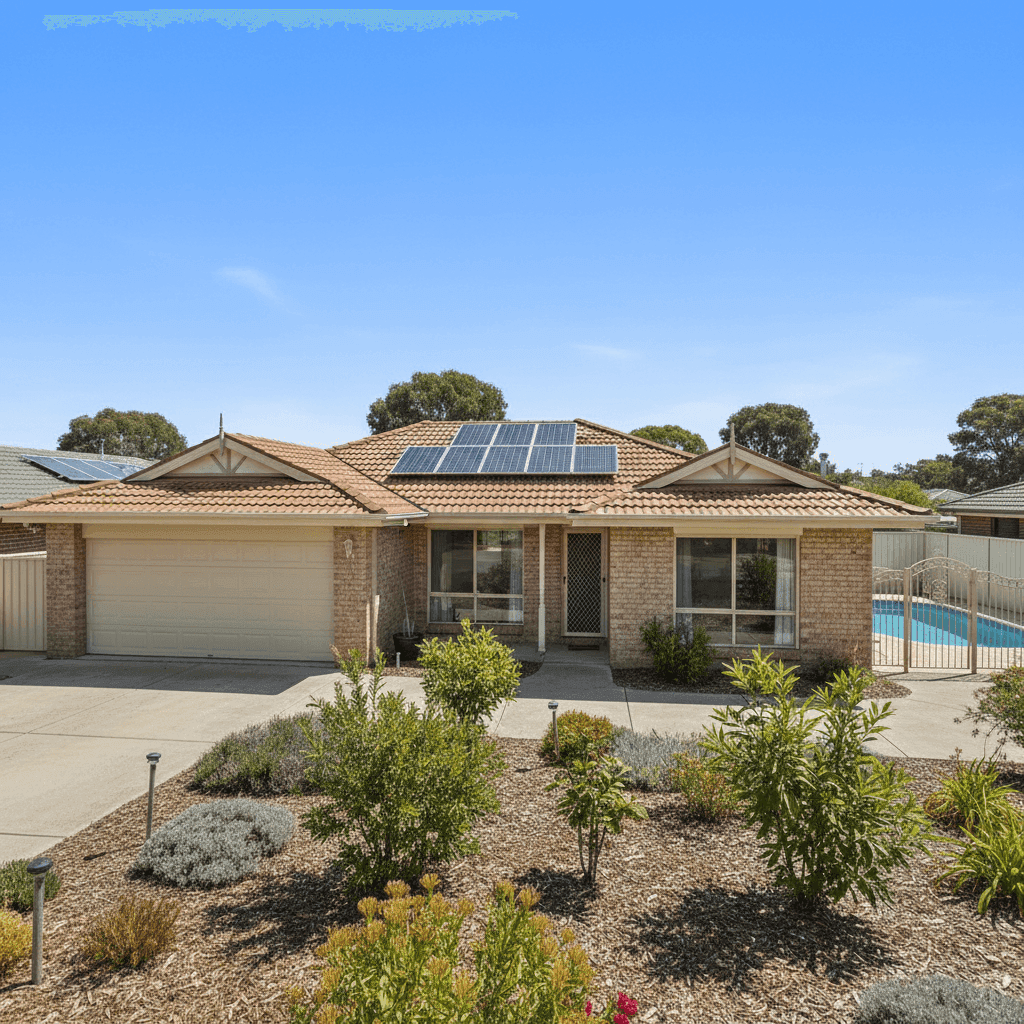
If you own a free standing home in Forrestfield, WA 6058, you're probably curious whether what you're paying for home and contents insurance is reasonable — or whether you're leaving money on the table. This article breaks down a real insurance quote for a 3-bedroom, 1-bathroom brick home in the suburb, compares it against local, state, and national benchmarks, and offers practical tips to help you get the best value on your cover.
---
Is This Quote Fair?
The quote in question comes in at $1,097 per year (or about $108 per month) for combined home and contents insurance, covering a building sum insured of $734,000 and contents valued at $80,000. The building excess is $2,000 and the contents excess is $600.
Our price rating for this quote is FAIR — Around Average.
That assessment holds up well when you look at the numbers in context. The suburb average for Forrestfield sits at $1,336 per year, meaning this quote comes in roughly $239 below the local average — a meaningful saving. It also sits comfortably above the suburb's 25th percentile of $749/yr, which tells us it's not an unusually bare-bones policy, and well below the 75th percentile of $1,688/yr, suggesting there's no obvious overpaying happening here.
The suburb median — the midpoint of all quotes we've seen in the area — is $1,006/yr, so this quote lands just slightly above that middle mark. In short, it's a competitive price for a well-specified property with extras like a pool and solar panels factored in.
---
How Forrestfield Compares
To put this quote in broader perspective, it helps to zoom out and look at Forrestfield's insurance pricing data alongside WA state averages and national benchmarks.
| Benchmark | Average Premium | Median Premium |
|---|---|---|
| Forrestfield (6058) | $1,336/yr | $1,006/yr |
| LGA (Kalamunda) | $1,810/yr | — |
| Western Australia | $2,144/yr | $1,944/yr |
| Australia (National) | $2,965/yr | $2,716/yr |
The contrast is striking. Forrestfield homeowners are paying, on average, nearly half what the typical Australian household pays for home insurance. Even compared to the broader WA state average, Forrestfield comes in around $800/yr cheaper.
This reflects a few key factors: Forrestfield is not in a cyclone-risk zone, it sits in a relatively low-flood-risk area of the Perth Hills foothills, and the suburb's housing stock — much of it solid double brick construction from the 1970s and 80s — is generally regarded as lower risk by insurers. Based on 85 quotes in our local dataset, the pricing picture for this suburb is fairly well-established.
The quote analysed here, at $1,097/yr, sits below the suburb average and below the LGA average, making it a genuinely competitive result for a property of this specification.
---
Property Features That Affect Your Premium
Every home is different, and insurers weigh up a range of property characteristics when calculating your premium. Here's how the key features of this particular property are likely influencing the price:
Double Brick Construction
Double brick walls are widely regarded by Australian insurers as one of the most resilient building materials. They offer excellent resistance to fire, wind, and impact damage, which typically translates to lower premiums compared to weatherboard or lightweight clad homes.
Tiled Roof
A tiled roof is another positive signal for insurers. Concrete or terracotta tiles are durable, fire-resistant, and have a long lifespan — all factors that reduce the likelihood of a major claim. This is in contrast to older corrugated iron roofs, which can be more susceptible to storm damage.
Slab Foundation
A concrete slab foundation is standard for Perth homes of this era and is generally considered low-risk. It avoids the complications that can arise with raised timber stumps or reactive clay soils that affect some other parts of Australia.
Swimming Pool
Having a pool on the property adds a modest amount of complexity to a home insurance policy. Insurers factor in the liability risk associated with pools, and the pool structure itself may be included in the building sum insured. It's worth confirming exactly what your policy covers in relation to pool equipment and fencing.
Solar Panels
Solar panels are increasingly common on Perth homes and are typically covered as part of the building sum insured. However, it's important to check whether your policy covers panels for accidental damage, storm damage, and — critically — the inverter and associated electrical components.
Ducted Climate Control
Ducted air conditioning systems are a significant fixed asset and are generally included in the building sum insured. Given the Perth climate, this is a common feature, and most standard home insurance policies will cover it as part of the structure.
Construction Year (1978)
Homes built in the late 1970s are well past the early-build quality issues of some post-war homes, but insurers do consider age when assessing risk. Electrical systems, plumbing, and roofing materials in homes of this era may be approaching the end of their serviceable life, which can slightly increase premium costs compared to newer builds.
Above Average Fittings Quality
The above average fittings rating — think quality kitchen appliances, stone benchtops, premium bathroom fixtures — contributes to a higher building sum insured. This is appropriate; underinsuring a well-appointed home is a common and costly mistake.
---
Tips for Homeowners in Forrestfield
Whether you're reviewing your current policy or shopping around for the first time, here are four practical steps worth taking:
- Review your sum insured annually. Building costs in Perth have risen significantly in recent years. A sum insured of $734,000 for a 160 sqm double brick home is within a reasonable range, but it's worth recalculating your rebuild cost each year — especially if you've done any renovations or added fixtures. Underinsurance is one of the most common issues Australian homeowners face at claim time.
- Check your pool and solar panel coverage specifically. These are two features that can have gaps in standard policies. Ask your insurer whether pool equipment (pumps, filters, heating) and solar panel inverters are explicitly covered, and whether accidental damage is included or requires an add-on.
- Consider your excess settings carefully. This quote carries a $2,000 building excess, which is on the higher side. A higher excess generally reduces your premium, but make sure it's an amount you could comfortably pay out of pocket in the event of a claim. If cash flow is a concern, a lower excess (with a slightly higher premium) may be the smarter trade-off.
- Compare quotes at renewal time. Loyalty doesn't always pay in insurance. Insurers often offer better rates to new customers, and the market can shift significantly from year to year. Even if your current premium feels reasonable, it costs nothing to compare — and the savings can be substantial.
---
Compare Your Home Insurance Today
Whether you're a long-time Forrestfield resident or new to the suburb, comparing home insurance quotes is one of the simplest ways to make sure you're getting fair value. At CoverClub, we make it easy to see how your premium stacks up and find a policy that suits your property and budget.
Get a home insurance quote now and see how your home compares in seconds.