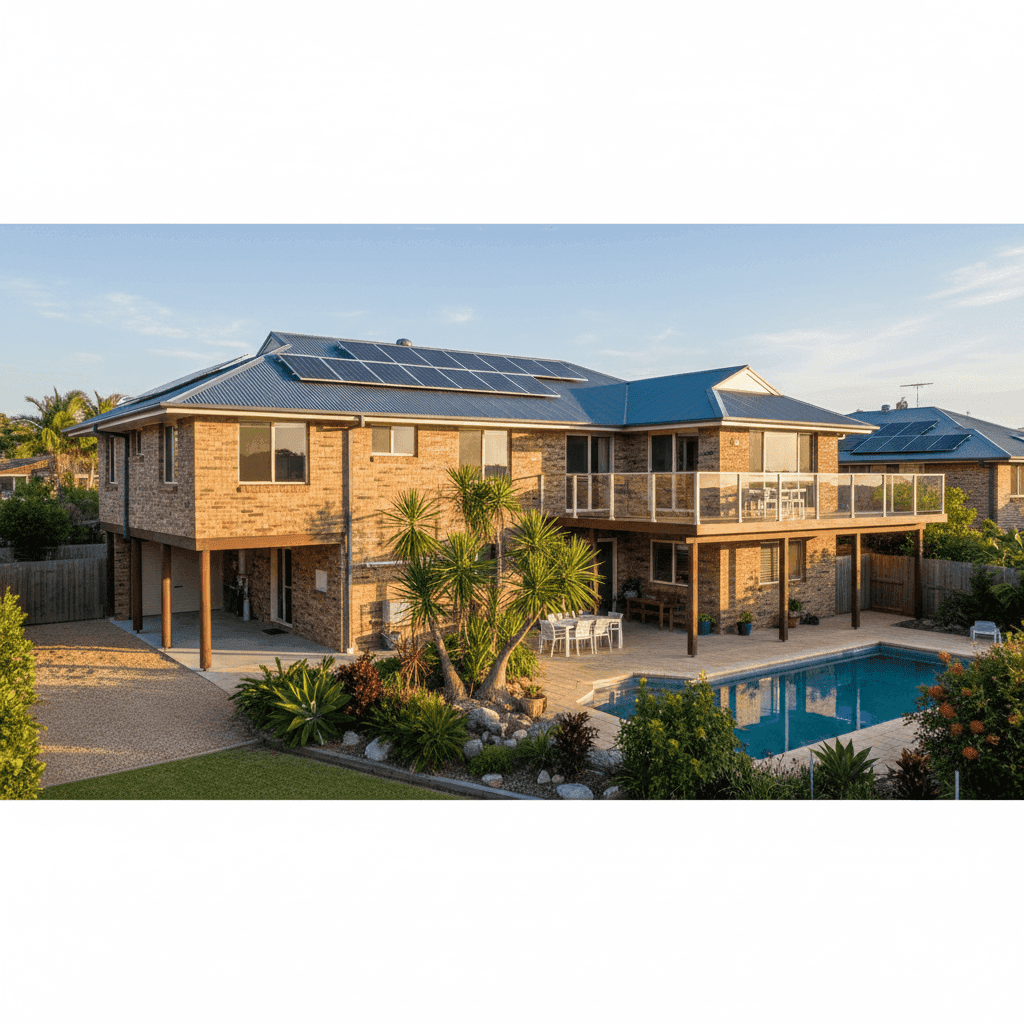
Forster is one of the Mid-North Coast's most sought-after coastal towns — and with that lifestyle comes the responsibility of protecting your home. This article breaks down a real home and contents insurance quote for a four-bedroom, free-standing home in Forster, NSW 2428, and puts the numbers in context so you can make a more informed decision about your own cover.
---
Is This Quote Fair?
The short answer: yes, broadly. This quote has been rated Fair (Around Average), which is a reasonable outcome for a well-appointed coastal property with several features that insurers pay close attention to.
The annual premium of $3,816 (or $366/month) covers:
- Building sum insured: $983,000
- Contents value: $50,000
- Building excess: $1,000
- Contents excess: $1,000
A "Fair" rating doesn't mean you're getting a bargain — it means the price is in the ballpark of what similar properties in the area are attracting. Given the elevated building sum insured of nearly $1 million, a premium just above the suburb median is actually a reasonably competitive result. That said, the wide spread of premiums in Forster (more on that below) means there's always potential to do better by shopping around.
---
How Forster Compares
The pricing landscape in Forster is notably varied, which reflects the diversity of property types, ages, and risk profiles across the postcode. Here's how this quote stacks up:
| Benchmark | Premium |
|---|---|
| This quote | $3,816/yr |
| Forster suburb median | $3,604/yr |
| Forster suburb average | $4,910/yr |
| Forster 25th percentile | $1,649/yr |
| Forster 75th percentile | $7,006/yr |
| NSW state median | $3,770/yr |
| NSW state average | $9,528/yr |
| National median | $2,764/yr |
| National average | $5,347/yr |
| Mid-Coast LGA average | $5,840/yr |
(Based on 105 quotes sampled for the Forster 2428 postcode. [View full Forster suburb stats →](https://coverclub.com.au/stats/NSW/2428/forster))
At $3,816, this quote sits just above the suburb median of $3,604 and comfortably below both the suburb average ($4,910) and the Mid-Coast LGA average ($5,840). It also tracks well below the NSW state average of $9,528 — though that figure is heavily skewed by high-value and high-risk properties across the state, making the median a more reliable yardstick.
Compared to the national picture, this quote is above the national median of $2,764, which is expected for a coastal NSW property with a high building sum insured. Coastal locations typically carry additional risk factors — storm surge, flooding, and wind events — that push premiums above inland equivalents.
The wide gap between the 25th percentile ($1,649) and the 75th percentile ($7,006) in Forster tells an important story: your premium is highly sensitive to your specific property details. A modest home on flat ground with a lower sum insured could sit in the bottom quartile, while a larger elevated home with a pool and solar panels will naturally attract a higher premium. For a broader view of how NSW compares, explore the NSW state insurance stats here.
---
Property Features That Affect Your Premium
Several characteristics of this property have a meaningful influence on what insurers charge. Understanding these can help you anticipate your costs — and potentially find ways to reduce them.
Elevated Foundation (Stumps)
This home is elevated by at least one metre on a stump foundation — a style commonly associated with Queensland-influenced coastal architecture but also found throughout coastal NSW. Elevation can be a double-edged sword for insurers: it may reduce flood risk in some scenarios, but it can also increase vulnerability to wind uplift and storm damage. Insurers assess this carefully.
Brick Veneer Walls & Colorbond Roof
Brick veneer is generally viewed favourably by insurers — it's durable, fire-resistant, and relatively low-maintenance. Paired with a steel Colorbond roof, this combination is considered one of the more resilient construction types in Australian conditions. Both materials perform well in coastal environments, which may help moderate the premium.
Timber and Laminate Flooring
Timber and laminate floors can be more expensive to repair or replace after a water damage event compared to tiles. Insurers factor in flooring type when assessing contents and building repair costs, which can nudge premiums slightly higher.
Swimming Pool
A pool adds to the replacement value of the property and introduces additional liability considerations. It's a standard inclusion in the building sum insured calculation and contributes to the overall premium.
Solar Panels
Solar panels are increasingly common and most modern home insurance policies cover them as part of the building. However, they do add to the overall insured value and can be costly to replace — particularly a ducted system paired with a full rooftop array.
Ducted Climate Control
Ducted air conditioning is a significant fixed asset and forms part of the building sum insured. Systems of this type can cost tens of thousands of dollars to replace, which is appropriately reflected in a higher building value — and consequently, a higher premium.
Construction Year: 2017
A relatively modern build, constructed to post-2010 building codes, is generally viewed positively by insurers. Newer homes tend to have better structural integrity, updated electrical systems, and improved resistance to weather events. This likely works in favour of a more competitive premium.
---
Tips for Homeowners in Forster
1. Review Your Sum Insured Annually
Building costs have risen sharply in recent years. A sum insured of $983,000 for a 235 sqm home reflects current construction costs, but it's worth recalculating each year using an independent building cost estimator. Being underinsured is a common and costly mistake — especially in a coastal area where rebuild costs can be elevated due to logistics and demand.
2. Consider a Higher Excess to Lower Your Premium
With both building and contents excesses set at $1,000, there may be room to increase these — particularly if you have an emergency fund in place. Opting for a $2,000 or $2,500 excess can reduce your annual premium meaningfully, and for a property of this value, it's often a sensible trade-off.
3. Bundle Your Building and Contents Cover
This quote already combines building and contents insurance, which is a smart move. Many insurers offer discounts for bundling, and managing a single policy is simpler at claim time. If you're currently holding separate policies with different providers, it's worth comparing the bundled cost.
4. Compare at Renewal — Not Just Once
The insurance market in Forster is competitive, and premiums can shift significantly from year to year. Don't assume your renewal quote is the best available. Loyalty rarely pays in insurance — shopping the market at each renewal is one of the most reliable ways to avoid overpaying.
---
Ready to Compare Your Own Quote?
Whether you're a homeowner in Forster or anywhere else in Australia, comparing quotes is the single most effective way to ensure you're not paying more than you need to. CoverClub makes it simple to see how your premium stacks up and find a better deal.