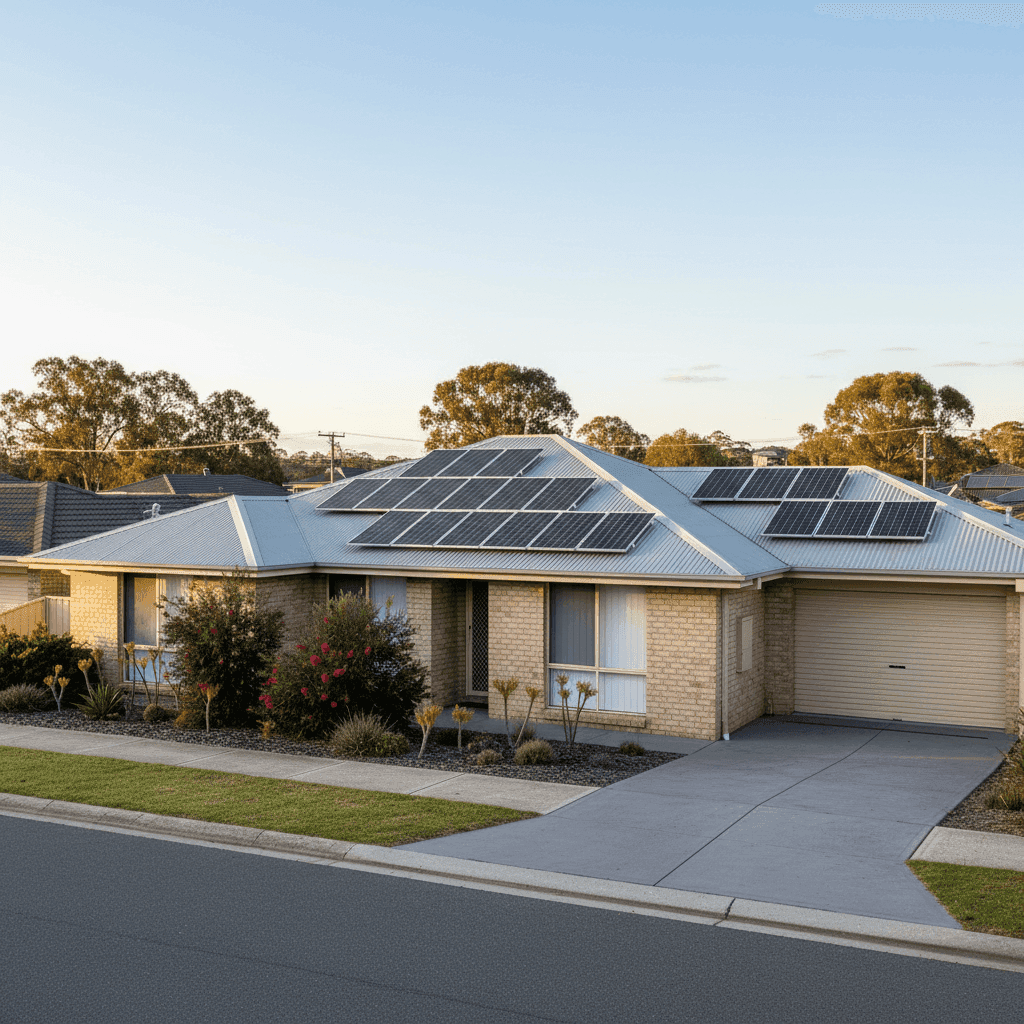
Forster is one of the Mid-North Coast's most popular coastal towns — a relaxed holiday destination that many Australians also call home year-round. If you own a free standing home in this area, understanding what you should be paying for building insurance is essential. This article breaks down a real building-only insurance quote for a three-bedroom, two-bathroom home in Forster (postcode 2428), and puts it in context against suburb, state, and national benchmarks.
---
Is This Quote Fair?
The quoted annual premium for this property is $4,950 per year (or $468 per month), covering the building only with a sum insured of $500,000 and a building excess of $5,000.
Our price rating for this quote is FAIR — Around Average, which is a reasonable outcome for a coastal NSW property. Here's why that matters:
- The suburb average for Forster (based on 105 quotes) sits at $4,910/yr, meaning this quote lands almost exactly on the local average — just $40 above it.
- The suburb median, however, is notably lower at $3,604/yr, which tells us the market in Forster has a wide spread. A meaningful portion of homeowners are paying less, while others are paying considerably more.
- The 75th percentile reaches $7,006/yr, so this quote is comfortably below what the pricier end of the market looks like in this postcode.
In short, while the quote isn't a bargain, it's not an outlier either. It sits in a reasonable band for a brick veneer home of this size and age in a coastal location. That said, the gap between the median ($3,604) and this quote ($4,950) suggests there is room to explore whether a better price exists with a different insurer.
---
How Forster Compares to the Rest of NSW and Australia
Putting this quote into a broader context is where things get interesting. You can explore the full data on the Forster suburb stats page, but here's a quick summary:
| Benchmark | Average Premium | Median Premium |
|---|---|---|
| Forster (2428) | $4,910/yr | $3,604/yr |
| NSW (State) | $9,528/yr | $3,770/yr |
| National | $5,347/yr | $2,764/yr |
| Mid-Coast LGA | $5,840/yr | — |
A few things stand out here:
NSW has a very high state average ($9,528/yr), driven largely by high-risk postcodes — think flood-prone inland areas, bushfire zones, and parts of Sydney with elevated rebuild costs. The NSW median of $3,770/yr is far more representative of what typical homeowners pay, and Forster's median sits just below that. You can explore NSW home insurance stats to see how different regions compare.
Nationally, the average is $5,347/yr, which means this Forster quote is actually slightly below the national average — a positive sign. The national home insurance stats show that coastal and flood-exposed areas across Queensland and Northern Australia push that figure up considerably.
Within the Mid-Coast LGA, the average of $5,840/yr is higher than this quote, suggesting the property is priced competitively relative to its local government area peers.
---
Property Features That Affect Your Premium
Several characteristics of this property directly influence what insurers charge. Here's how each one plays into the pricing:
Brick Veneer Walls Brick veneer is one of the most common wall types in Australian homes and is generally viewed favourably by insurers. It offers solid fire resistance and durability, which can help moderate premiums compared to timber-framed or clad exteriors.
Steel / Colorbond Roof Colorbond roofing is widely considered a low-maintenance, durable option. It performs well in coastal environments where salt air can degrade other materials, and insurers typically price it neutrally to positively.
Slab Foundation A concrete slab is a stable and well-understood foundation type. Unlike homes on stumps or piers, slab homes carry less risk of subsidence-related claims, which can be a modest positive factor in premium calculations.
Construction Year: 1980 A home built in 1980 is over four decades old. While it may be structurally sound, older homes can attract slightly higher premiums because they may have ageing plumbing, wiring, or roofing components that increase the likelihood of a claim. Ensuring your home has been updated where needed — particularly electrical systems — is worth considering.
Solar Panels This property has solar panels installed, which are included in the building sum insured. It's important to confirm with your insurer that solar panels are explicitly covered, as some policies treat them as a fixed improvement while others may require specific mention. Damage to panels from storms or hail is a real risk in coastal NSW.
Ducted Climate Control Ducted air conditioning systems add to the rebuild cost of a home and are a meaningful contributor to the $500,000 sum insured. Ensuring this system is factored into your building replacement estimate is important to avoid being underinsured.
Timber / Laminate Flooring Timber and laminate flooring can be costly to replace following water damage — a risk worth keeping in mind given Forster's coastal climate and occasional storm activity.
Building Size: 139 sqm At 139 sqm, this is a modest-to-mid-sized home. The sum insured of $500,000 equates to roughly $3,597 per sqm, which is broadly in line with current construction costs in regional NSW.
---
Tips for Homeowners in Forster
1. Review your sum insured regularly Construction costs have risen sharply in recent years. A sum insured set several years ago may no longer reflect the true cost to rebuild your home. Use a building cost calculator or speak to a quantity surveyor to make sure your coverage keeps pace with reality.
2. Ask about your excess options This policy carries a $5,000 building excess, which is on the higher end. A higher excess typically reduces your premium, but it also means more out-of-pocket expense when you do make a claim. Consider whether a lower excess — even at a slightly higher premium — might better suit your financial situation.
3. Confirm solar panel coverage explicitly With solar panels on the roof, make sure your policy documentation clearly states they are covered. Ask your insurer whether they are covered for storm, hail, and accidental damage, and whether there are any sub-limits that apply.
4. Compare quotes before renewal The spread of premiums in Forster is wide — from $1,649/yr at the 25th percentile to $7,006/yr at the 75th percentile. That range tells you different insurers price this suburb very differently. Shopping around at renewal time could save you hundreds of dollars a year without sacrificing coverage quality.
---
Ready to Compare?
Whether you're reviewing an existing policy or shopping for the first time, comparing quotes is the single most effective way to make sure you're not overpaying. Get a home insurance quote at CoverClub and see how your property stacks up against the market in seconds. Our data covers thousands of properties across Australia, so you can make an informed decision with confidence.