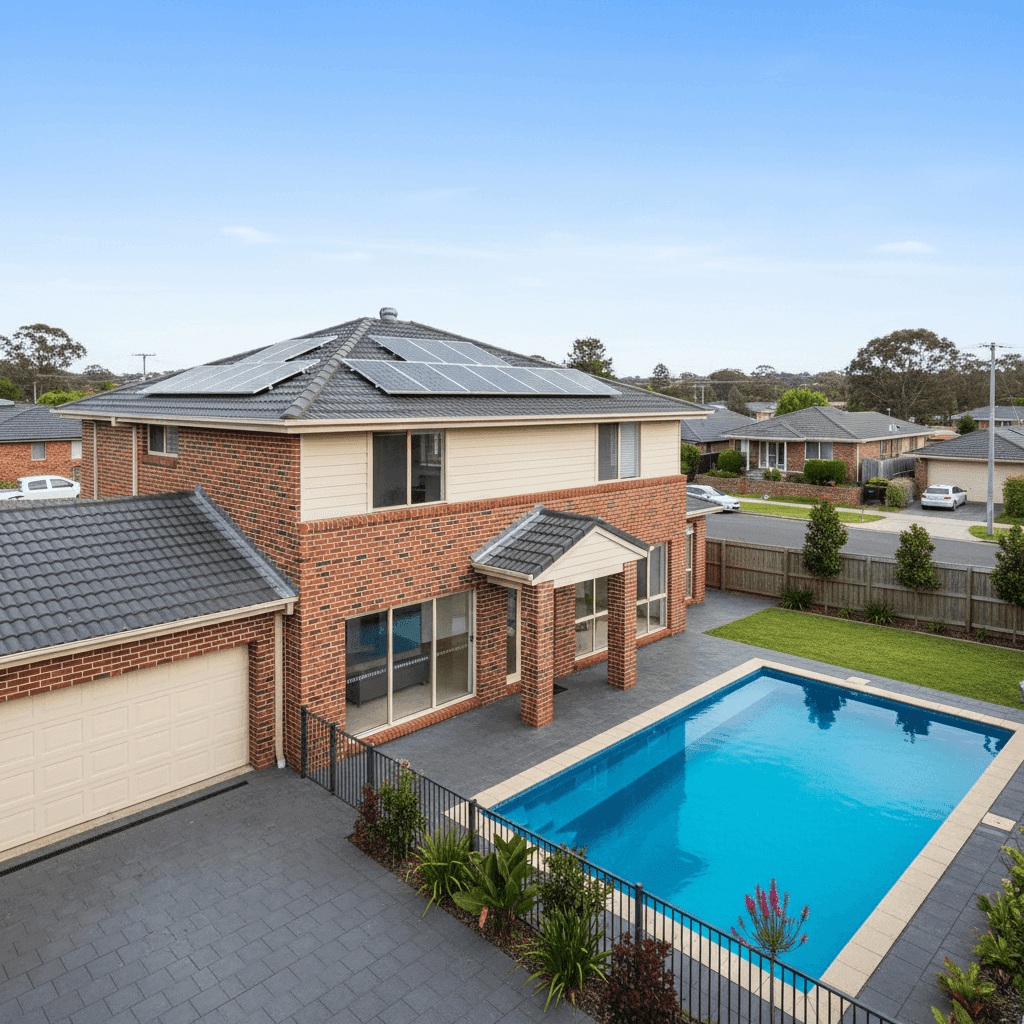
Fountaindale is a quiet, leafy suburb on the Central Coast of New South Wales, sitting within the 2258 postcode and forming part of the Central Coast LGA. It's a popular choice for families seeking larger homes with outdoor space — and a four-bedroom, free-standing brick veneer home here is a solid example of what the area has to offer. If you own or are considering insuring a property like this, understanding how your premium stacks up against local and national benchmarks is essential to making sure you're getting genuine value.
---
Is This Quote Fair?
The annual premium for this property comes in at $4,280 per year (or around $419 per month), covering both building and contents with a building sum insured of $832,000 and contents valued at $80,000. Both the building and contents excess are set at $1,000 each.
Our pricing analysis rates this quote as CHEAP — below average — and the data backs that up convincingly. When you look at what other homeowners in Fountaindale are paying, this premium is remarkably competitive. The suburb average sits at $8,182 per year, meaning this quote comes in at roughly half the local average. Even the lowest quartile of Fountaindale quotes — the cheapest 25% of premiums sampled — averages $7,125 per year, still well above what's being paid here.
In short, if you've received a quote in this range for a comparable property in Fountaindale, you're looking at a genuinely strong result. The question worth asking, of course, is whether the cover itself is adequate — a cheap premium only represents good value if the policy actually protects you when it matters.
---
How Fountaindale Compares
To put this quote in proper context, here's how Fountaindale's home insurance premiums compare across different benchmarks:
| Benchmark | Annual Premium |
|---|---|
| This Quote | $4,280 |
| Fountaindale Suburb Average | $8,182 |
| Fountaindale Suburb Median | $8,331 |
| Central Coast LGA Average | $8,387 |
| NSW State Average | $9,528 |
| National Average | $5,347 |
| National Median | $2,764 |
A few things stand out here. First, Fountaindale and the broader Central Coast LGA are notably expensive places to insure a home — the suburb average of $8,182 is significantly higher than the national average of $5,347. This likely reflects a combination of factors including the region's exposure to bushfire risk, the relatively high rebuild costs associated with larger suburban homes, and the overall insurance market dynamics on the Central Coast.
Second, the NSW state average of $9,528 is the highest of all benchmarks shown, which reflects the concentration of high-value, high-risk properties across the state — from flood-prone areas to bushfire corridors. The national median of $2,764 is considerably lower, pulled down by lower-cost properties in regional and lower-risk areas across Australia.
Against all of these figures, the $4,280 quote looks very attractive — sitting below the national average and dramatically below both the local suburb and state averages.
---
Property Features That Affect Your Premium
Several characteristics of this property play a meaningful role in determining its insurance premium — some working in the homeowner's favour, others adding complexity.
Brick veneer construction with a concrete tile roof is generally viewed favourably by insurers. Brick veneer offers good structural integrity and fire resistance compared to lightweight cladding materials, while concrete roofing is durable and less susceptible to storm damage than some alternatives. Together, these materials typically attract more competitive premiums.
Slab foundation is another positive signal for insurers — it's a common and well-understood construction method in Australian suburban homes, and it generally performs well in terms of settlement risk compared to older or more complex footing types.
The swimming pool adds some liability exposure to the policy and may contribute to a slightly higher premium than an equivalent property without one. Pools require appropriate fencing and safety compliance under NSW law, and any damage to pool infrastructure can be costly to repair.
Solar panels are worth paying attention to from an insurance perspective. They represent a significant asset — often worth $5,000 to $15,000 or more — and their coverage under a standard home insurance policy can vary. It's important to confirm whether the panels are included in the building sum insured and what conditions apply to storm or hail damage claims.
Ducted climate control adds to the overall value of the home's fixtures and fittings, and contributes to the building sum insured. At $832,000, the building coverage appears appropriately calibrated for a 214 sqm home of this specification built in 2005.
The property is not located in a cyclone risk area, which removes one category of significant weather-related loading that affects premiums in northern parts of Australia. This is a straightforward positive for the premium calculation.
---
Tips for Homeowners in Fountaindale
1. Review your building sum insured regularly. Construction costs have risen substantially in recent years across NSW. A home built in 2005 may have a significantly higher rebuild cost today than when it was first insured. Make sure your $832,000 sum insured reflects current labour and material costs — your insurer or an independent quantity surveyor can help you verify this.
2. Confirm solar panel coverage in your policy documents. Solar panels are not always automatically covered under a standard building policy, or may be subject to specific sub-limits and exclusions. Ask your insurer directly how panels are treated in the event of storm, hail, or fire damage.
3. Keep your pool compliant with NSW safety standards. Beyond the legal obligation, maintaining up-to-date pool fencing and safety compliance can support your position in the event of a liability claim. Some insurers may ask about pool safety as part of the underwriting process.
4. Compare quotes at renewal — don't auto-renew by default. Given that this quote is already well below the Fountaindale suburb average, it's a good benchmark to hold onto. But premiums can shift significantly between insurers and between years. Shopping the market at renewal is one of the most effective ways to avoid paying more than you need to.
---
Compare Your Home Insurance at CoverClub
Whether you're reviewing an existing policy or shopping for the first time, understanding what others in your suburb are paying is a powerful starting point. CoverClub makes it easy to see how your premium stacks up and to get a home insurance quote tailored to your property. With suburb-level pricing data across NSW and the rest of Australia, you can make a more informed decision — and potentially save hundreds of dollars a year.