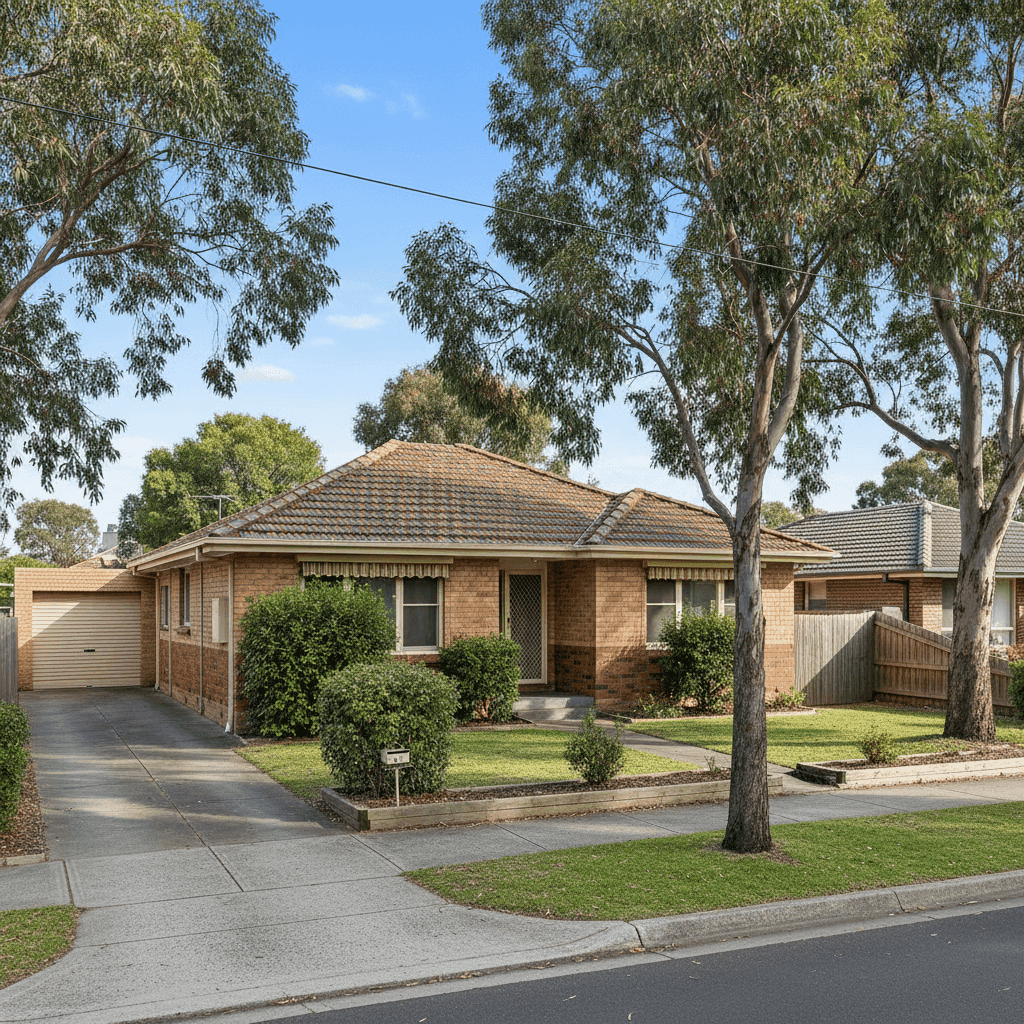
If you own a free standing home in Frankston North, VIC 3200, you're probably wondering whether the building insurance quote sitting in your inbox is worth accepting — or whether you could do better. This article breaks down a real quote for a four-bedroom, brick veneer home in the suburb, comparing it against local, state, and national benchmarks so you can make a genuinely informed decision.
---
Is This Quote Fair?
The quote in question comes in at $1,579 per year (or $158/month) for building-only cover, with a $3,000 building excess and a sum insured of $520,000. Based on comparison data from 52 quotes collected in the Frankston North area, this premium has been rated FAIR — Around Average.
That rating holds up under scrutiny. The suburb average sits at $1,495/yr and the median at $1,541/yr, meaning this quote lands just modestly above the midpoint for the area. It falls comfortably within the interquartile range — between the 25th percentile ($1,271/yr) and the 75th percentile ($1,756/yr) — which means it's neither a standout bargain nor cause for alarm.
In short: this is a reasonable quote, but it's not the sharpest price available in Frankston North. Homeowners who shop around could potentially find cover closer to the lower end of that range without sacrificing quality.
---
How Frankston North Compares
One of the most striking takeaways from this data is just how affordable Frankston North is relative to broader benchmarks. Here's a quick snapshot:
| Benchmark | Average Premium |
|---|---|
| Frankston North (suburb) | $1,495/yr |
| Frankston LGA | $3,283/yr |
| Victoria (state) | $2,921/yr |
| National | $2,965/yr |
The suburb average of $1,495/yr is roughly half what homeowners pay on average across Victoria and nationally. Even compared to the broader Frankston LGA average of $3,283/yr, Frankston North comes out significantly cheaper — a difference of nearly $1,800 per year.
This is a meaningful finding. It suggests that Frankston North, despite being part of a coastal fringe LGA, carries a relatively contained risk profile when it comes to home insurance pricing. For homeowners in the suburb, that's genuinely good news.
You can explore the full breakdown for your postcode at the Frankston North suburb stats page, or compare it against all of Victoria and the national picture.
---
Property Features That Affect Your Premium
Every home is different, and insurers weigh up a range of property characteristics when calculating your premium. Here's how the features of this particular home are likely influencing the quote:
Brick Veneer Walls
Brick veneer is one of the most common external wall materials in Australian suburbia, and insurers generally view it favourably. It offers solid fire resistance and durability, which can help keep premiums in check compared to timber-clad or weatherboard homes.
Tiled Roof
A tiled roof is another reassuring feature from an insurer's perspective. Tiles are long-lasting, fire-resistant, and relatively low-maintenance. That said, a home built in 1975 with original tiles may attract some scrutiny — ageing roofs can be more susceptible to storm damage and may require maintenance to remain in good condition.
Stump Foundation
The property sits on stumps, which is a common foundation type for homes of this era in Victoria. While stumps are durable, they can be susceptible to movement over time — particularly in areas with reactive soils — and may require periodic re-levelling. Some insurers factor this into their risk assessment.
Timber and Laminate Flooring
Timber and laminate floors are a standard feature in many Australian homes and don't typically drive premiums up significantly. However, they can be more vulnerable to water damage than tiled floors, which is worth keeping in mind when reviewing your policy's water damage provisions.
Construction Year: 1975
Homes built in the mid-1970s are well past the 50-year mark, which can influence how insurers assess rebuild costs and structural risk. The $520,000 sum insured for a 205 sqm home reflects a rebuild cost of around $2,537/sqm — a reasonable figure for a standard-quality finish in metropolitan Victoria.
No Pool, Solar Panels, or Ducted Climate Control
The absence of a pool, solar panels, and ducted air conditioning keeps this property's risk profile relatively straightforward. Each of those features can add complexity (and cost) to an insurance policy, so their absence likely contributes to the more moderate premium here.
---
Tips for Homeowners in Frankston North
Whether you're reviewing an existing policy or shopping for new cover, here are four practical steps worth taking:
- Review your sum insured regularly. Construction costs have risen sharply in recent years across Victoria. A sum insured set even two or three years ago may no longer be sufficient to fully rebuild your home. Use an independent building cost calculator or ask your insurer to reassess.
- Consider your excess carefully. This quote carries a $3,000 building excess. A higher excess typically reduces your annual premium, but make sure you could comfortably cover that amount out of pocket if you needed to make a claim. If $3,000 feels steep, it's worth asking whether a lower excess option is available — and what the premium difference would be.
- Don't overlook storm and water damage provisions. Victoria experiences its share of severe weather, including hailstorms and flash flooding. Check that your policy clearly covers storm damage to your roof and any resulting internal water damage — particularly relevant given the tiled roof and timber flooring in this home.
- Shop around at renewal time. Even if your current quote is rated "fair," that doesn't mean it's the best available. Insurers price risk differently, and comparing quotes from multiple providers each year is one of the most reliable ways to avoid paying more than you need to.
---
Compare Your Options with CoverClub
Whether this quote looks right for your situation or you're keen to see what else is out there, CoverClub makes it easy to compare home insurance options across Australia. Get a quote today and see how your premium stacks up against what other homeowners in Frankston North are paying. A few minutes of comparison could save you hundreds of dollars a year.