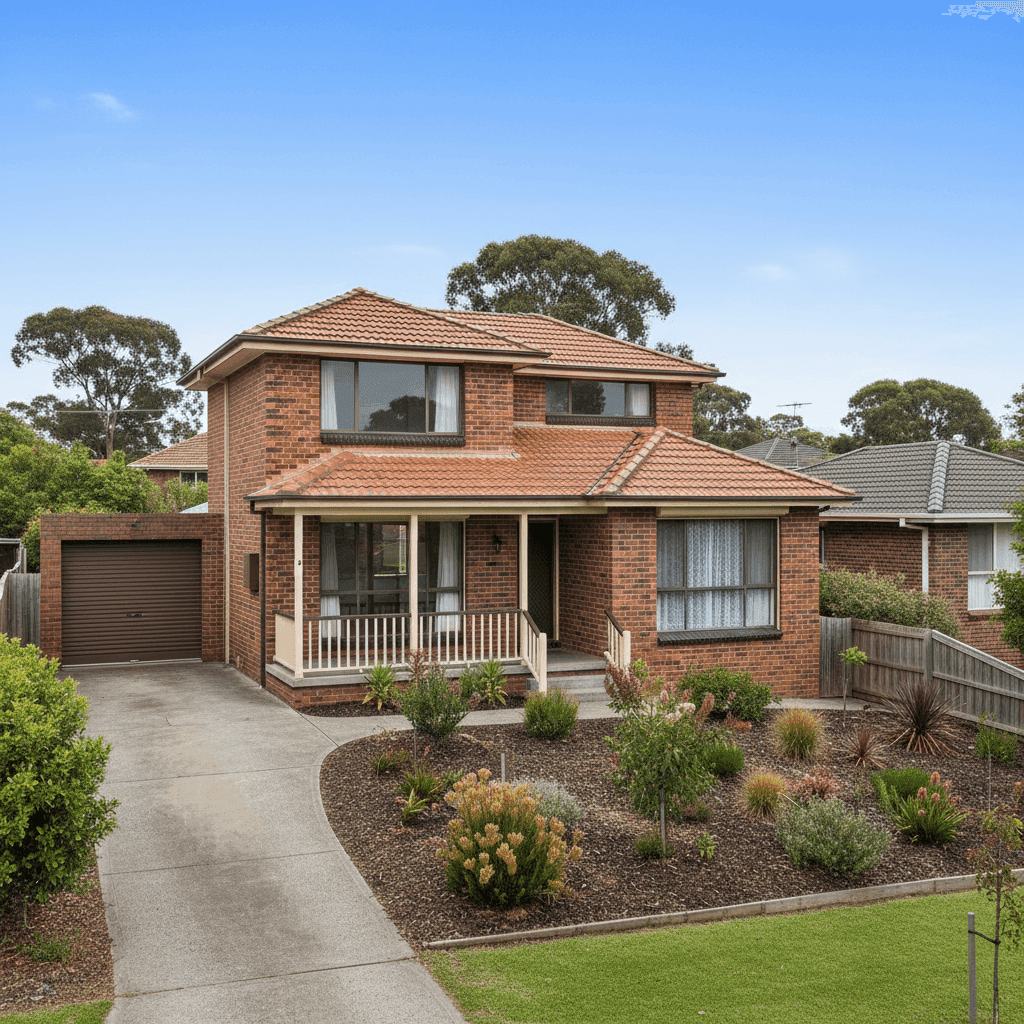
If you own a free standing home in Frankston North, VIC 3200, you're probably curious whether you're getting a fair deal on home insurance — or quietly paying too much. This article breaks down a real building insurance quote for a four-bedroom brick veneer home in the suburb, comparing it against local, state-wide, and national benchmarks so you can make a genuinely informed decision.
---
Is This Quote Fair?
The quote in question comes in at $1,041 per year (or about $105 per month) for building-only cover on a 4-bedroom, 1-bathroom free standing home, with a building excess of $3,000.
Our price rating for this quote is CHEAP — Below Average, which is a strong result for the homeowner. To put that in perspective:
- The suburb average for Frankston North is $1,495/yr, meaning this quote is roughly $454 cheaper than what most locals are paying.
- It sits comfortably below the 25th percentile for the suburb ($1,271/yr), meaning it's cheaper than at least 75% of quotes collected in the area.
- Compared to the Victorian state average of $2,921/yr, this premium is less than 36% of the typical cost across the state.
By any measure, this is a competitively priced policy. That said, it's worth understanding why the premium is low — and whether the cover level is adequate — before celebrating too quickly.
---
How Frankston North Compares
Frankston North sits within the City of Frankston LGA, where the average home insurance premium is $1,940/yr. The suburb itself tracks notably cheaper than the broader LGA, which suggests localised risk factors (or a favourable mix of property types) are keeping premiums down in this pocket of Melbourne's south-east.
Here's a quick snapshot of how the numbers stack up:
| Benchmark | Average Premium |
|---|---|
| Frankston North (suburb) | $1,495/yr |
| Frankston LGA | $1,940/yr |
| Victoria (state) | $2,921/yr |
| Australia (national) | $2,965/yr |
The gap between Frankston North and the Victorian state average is striking — locals pay roughly half what the typical Victorian homeowner does. And compared to the national average of $2,965/yr, Frankston North premiums are exceptionally affordable.
This divergence is driven by a combination of factors: distance from high-risk bushfire zones, relatively low flood exposure for many parts of the suburb, and a housing stock that's largely made up of solid, well-established homes.
Based on 52 quotes collected in the suburb, the spread is fairly tight:
- 25th percentile: $1,271/yr
- Median: $1,541/yr
- 75th percentile: $1,756/yr
The quote analysed here falls well below even the cheapest quarter of the market — a genuinely impressive outcome.
---
Property Features That Affect Your Premium
Several characteristics of this particular property work in the homeowner's favour when it comes to pricing.
Brick veneer construction is viewed favourably by most Australian insurers. It offers solid fire resistance and structural durability compared to timber-framed or clad exteriors, which can translate into lower premiums.
Tiled roofing is similarly well-regarded — tiles are long-lasting, fire-resistant, and less susceptible to storm damage than corrugated iron or Colorbond in many scenarios. Combined with brick veneer walls, this property presents a relatively low-risk profile from a construction standpoint.
Stump foundations are common in homes of this era (built in 1975) and are generally acceptable to insurers, though some providers may factor in the age of the stumps and potential subsidence risk. It's worth checking whether your policy covers damage related to foundation movement.
Timber and laminate flooring is standard for a home of this vintage and doesn't typically push premiums higher, though it's worth noting that contents cover (not included in this policy) would be relevant if you have high-value floor coverings.
At 205 sqm, this is a generously sized home for a 1975-era build. The sum insured of $200,000 covers the building structure — homeowners should periodically review this figure to ensure it reflects current rebuild costs, which have risen sharply across Australia in recent years due to labour and materials inflation.
The absence of a pool, solar panels, and ducted climate control keeps things simple and removes several common premium add-ons from the equation.
---
Tips for Homeowners in Frankston North
1. Review your sum insured regularly Building costs have climbed significantly since the pandemic. A sum insured set even two or three years ago may no longer be sufficient to fully rebuild your home. Use a building cost calculator or speak with a quantity surveyor to get an updated estimate — underinsurance is one of the most common and costly mistakes Australian homeowners make.
2. Consider whether building-only cover is enough This policy covers the structure but not your belongings. If you own furniture, appliances, clothing, and valuables, a combined building and contents policy may offer better overall value. Compare quotes at CoverClub to see what a combined policy would cost.
3. Understand your excess before you claim The $3,000 building excess on this policy is on the higher side. A higher excess typically lowers your premium, which is a reasonable trade-off if you're financially comfortable absorbing that cost in the event of a claim. If $3,000 would be a stretch, it may be worth comparing policies with a lower excess — even if the annual premium is slightly higher.
4. Don't set and forget Insurance is one of those things that's easy to overlook once it's in place. Set a reminder to review your policy at renewal each year. Insurers don't always reward loyalty with their best rates, and the market can shift. A quick comparison at renewal could save you hundreds of dollars.
---
Compare Home Insurance Quotes in Frankston North
Whether this quote is the right fit depends on your individual circumstances — but the data is clear that it represents excellent value against the local market. If you're a homeowner in Frankston North and haven't compared your premium recently, now is a great time to start.
Get a home insurance quote at CoverClub and see how your current policy stacks up against the competition. It takes just a few minutes and could put real money back in your pocket.