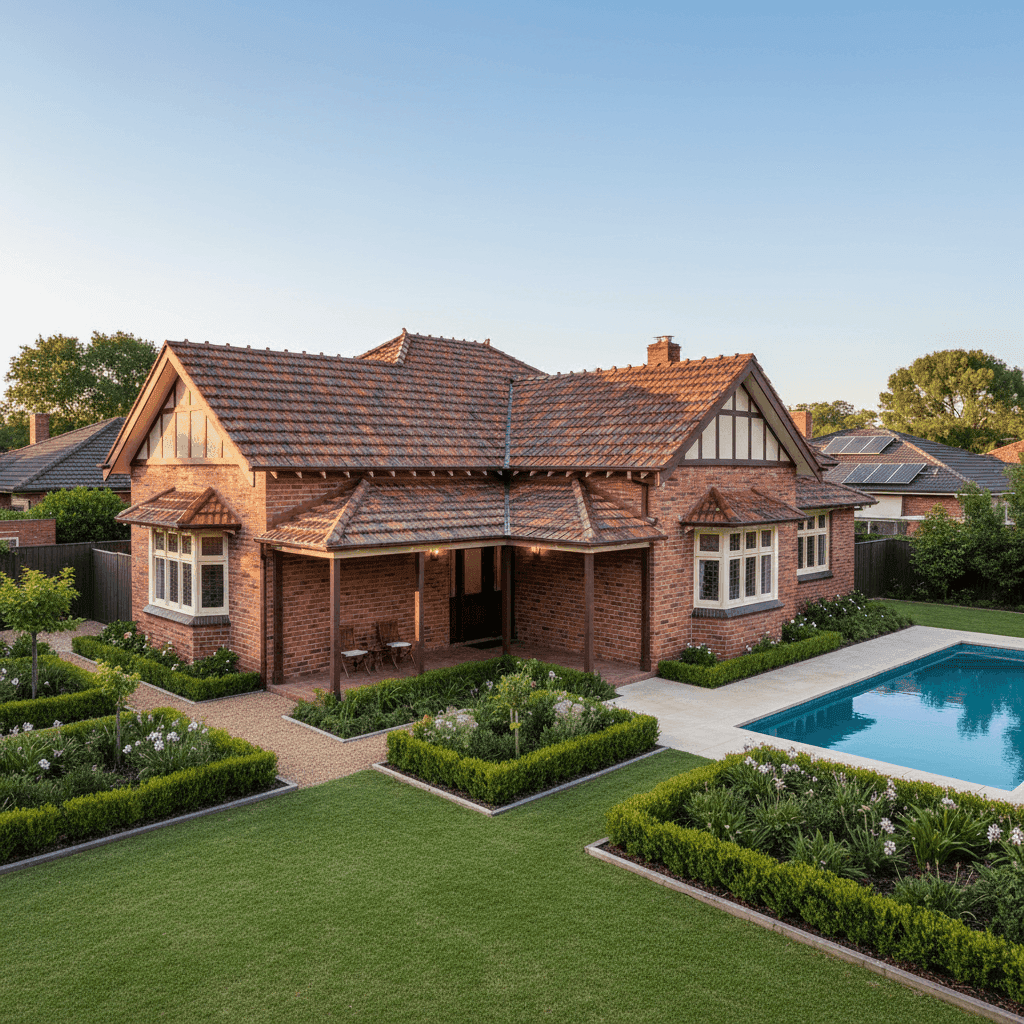
If you own a free standing home in Frankston South, VIC 3199, you're sitting in one of Melbourne's most desirable coastal-fringe suburbs — and your insurance premium reflects that. This article breaks down a recent building insurance quote for a five-bedroom, three-bathroom home in the area, compares it against local, state, and national benchmarks, and offers practical advice for homeowners looking to get the best value on their cover.
---
Is This Quote Fair?
The quote in question sits at $4,425 per year (or $424/month) for building-only cover, with a sum insured of $1,668,000 and a standard $1,000 excess. Our price rating for this quote is Expensive (Above Average).
To put that in context: the suburb average for Frankston South sits at just $2,305/year, and the median is even lower at $2,084/year. That means this quote is coming in at roughly 92% above the suburb average — a significant gap that warrants a closer look.
That said, "expensive" doesn't automatically mean "wrong." A large, heritage-era home with high-end finishes, a pool, and a substantial sum insured will always attract a higher premium than a modest modern townhouse. The real question is whether the premium is proportionate to the risk and the asset being protected.
Given the property's size (334 sqm), its 1930s construction, above-average fittings quality, and a replacement cost of $1,668,000, some elevation above the suburb average is entirely expected. However, the magnitude of the gap does suggest there may be room to shop around.
---
How Frankston South Compares
Understanding where this quote sits relative to broader benchmarks helps put the number in perspective.
| Benchmark | Premium |
|---|---|
| This Quote | $4,425/yr |
| Frankston South Suburb Average | $2,305/yr |
| Frankston South Suburb Median | $2,084/yr |
| Frankston South 25th Percentile | $1,647/yr |
| Frankston South 75th Percentile | $2,656/yr |
| Frankston LGA Average | $3,283/yr |
| VIC State Average | $3,000/yr |
| VIC State Median | $2,718/yr |
| National Average | $5,347/yr |
| National Median | $2,764/yr |
A few things stand out here. First, this quote is above the VIC state average of $3,000/year — meaning it's pricier than most Victorian homeowners are paying. Second, it's also above the Frankston LGA average of $3,283/year, which covers a broader range of property types and values across the municipality.
On the flip side, the national average of $5,347/year is considerably higher — largely driven by premiums in cyclone-prone regions of Queensland and Western Australia, as well as high-value properties in capital city markets. Relative to that national figure, this Frankston South quote is actually below average, which offers some reassurance.
The suburb sample size of 103 quotes gives us a reasonably reliable picture of the local market. With 75% of Frankston South quotes coming in under $2,656/year, this premium is clearly at the upper end — but it's worth noting that the comparison pool likely includes many smaller or newer homes with lower sums insured.
---
Property Features That Affect Your Premium
Several characteristics of this property directly influence what insurers charge. Understanding these factors can help you have more informed conversations with insurers and brokers.
Age and Construction (1930, Brick Veneer on Stumps)
Homes built in the 1930s come with charm — and complexity. Older properties often have non-standard materials, ageing plumbing and electrical systems, and construction methods that are more expensive to repair or replicate. This home's brick veneer external walls are generally well-regarded by insurers (more so than weatherboard or asbestos-era materials), but the stump foundation introduces additional considerations. Subfloor access, potential for subsidence, and timber decay can all factor into how insurers assess risk.
Flooring: Timber and Laminate
Timber and laminate flooring is both a premium feature and a potential claims driver. Timber floors are expensive to replace, particularly in a heritage home where matching original boards may be difficult. Water damage — from burst pipes, storm ingress, or appliance leaks — is one of the most common home insurance claims in Victoria, and timber flooring amplifies the cost of those events.
Above-Average Fittings Quality
The above-average fittings quality rating is a significant premium driver. Insurers use this to estimate the cost of like-for-like replacement — and if your kitchen, bathrooms, and fixtures are high-end, the cost to rebuild to the same standard is materially higher. This is reflected in the $1,668,000 sum insured, which is substantial even for a 334 sqm home.
Swimming Pool
A pool adds both value and liability to a property. From an insurance perspective, pools can increase the risk of accidental damage claims and, in some policies, may affect public liability provisions. Not all insurers price pools the same way, so this is worth clarifying when comparing quotes.
Ducted Climate Control
Ducted heating and cooling systems are a meaningful inclusion in the building sum insured. These systems are expensive to install and repair, and their presence contributes to the overall replacement cost of the home.
Roof Type
The roof is listed as "other" — meaning it may be a non-standard material such as slate, terracotta tiles, or a heritage profile. Non-standard roofing materials can be more costly to source and install, which may contribute to a higher assessed replacement value and, in turn, a higher premium.
---
Tips for Homeowners in Frankston South
1. Compare Multiple Quotes — Every Year
Insurance markets shift, and loyalty doesn't always pay. With this quote sitting well above the suburb average, it's worth getting at least two or three competing quotes at renewal time. Use CoverClub to compare quotes across multiple insurers in minutes.
2. Review Your Sum Insured Carefully
A sum insured of $1,668,000 is significant. Make sure it reflects the actual cost to rebuild — not the market value of the property. Overinsuring drives up your premium unnecessarily, while underinsuring leaves you exposed at claim time. Consider a professional building valuation every few years, particularly for older homes where rebuild costs can be harder to estimate.
3. Ask About Excess Options
This quote carries a $1,000 excess. Many insurers allow you to increase your excess in exchange for a lower premium. If you have the financial buffer to absorb a higher out-of-pocket cost in the event of a claim, opting for a $2,500 or $5,000 excess could meaningfully reduce your annual outlay.
4. Understand What's Included (and What's Not)
Building-only cover protects the physical structure — walls, roof, floors, fixed fittings — but does not cover your personal belongings. For a home of this size and quality, contents insurance is worth serious consideration as a separate policy. Make sure you also understand how your insurer handles pool damage, stump repairs, and heritage or non-standard materials before you commit.
---
Ready to Find a Better Deal?
Whether this quote is the right fit or simply a starting point, the smartest move is to compare. At CoverClub, we make it easy to see how your premium stacks up against real quotes from across Frankston South and Victoria. Get a quote today and find out if you could be paying less for the same — or better — cover. You can also explore local suburb insurance data for Frankston South to benchmark your own situation.