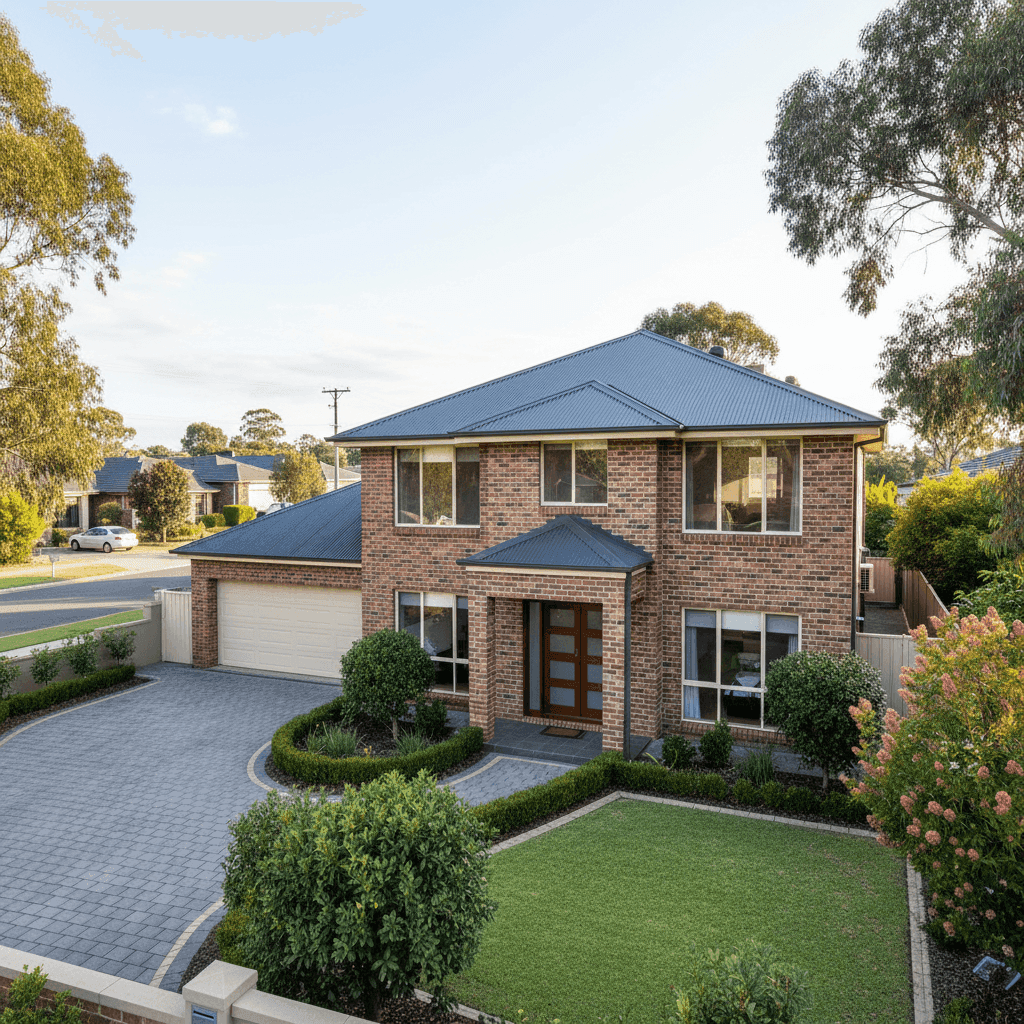
Frankston South is one of the Mornington Peninsula's most sought-after coastal suburbs — a leafy, established pocket of Victoria where larger family homes sit on generous blocks and property values reflect the area's enduring appeal. If you own a substantial free standing home here, understanding what you should be paying for home and contents insurance is just as important as knowing your property's market value. This article breaks down a real insurance quote for a five-bedroom property in Frankston South, compares it against local, state, and national benchmarks, and offers practical guidance for homeowners looking to get the best deal.
---
Is This Quote Fair?
The quote in question sits at $3,061 per year (or $293 per month) for combined home and contents cover, with a building sum insured of $1,401,000 and contents valued at $90,000. Both the building and contents excess are set at $1,000.
Our price rating for this quote is Expensive — above average for the Frankston South area.
To put that in context: the suburb average annual premium across 103 quotes recorded for postcode 3199 is $2,305, and the median sits lower again at $2,084. This quote lands well above both figures — and even clears the suburb's 75th percentile of $2,656, meaning it's pricier than roughly three-quarters of comparable quotes in the area.
That said, it's worth noting this is a large, well-appointed property. At 286 sqm with five bedrooms, three bathrooms, above-average fittings, and a high building sum insured of $1.4 million, the elevated premium isn't entirely surprising. Bigger homes with higher replacement values naturally attract higher premiums — the key question is whether there's room to negotiate or shop around.
---
How Frankston South Compares
Zooming out to a broader view reveals some useful context:
| Benchmark | Annual Premium |
|---|---|
| Frankston South suburb average | $2,305 |
| Frankston South suburb median | $2,084 |
| Frankston South 25th percentile | $1,647 |
| Frankston South 75th percentile | $2,656 |
| Frankston LGA average | $3,283 |
| VIC state average | $3,000 |
| VIC state median | $2,718 |
| National average | $5,347 |
| National median | $2,764 |
| This quote | $3,061 |
Interestingly, while this quote is expensive relative to the Frankston South suburb average, it actually sits below the broader Frankston LGA average of $3,283 — suggesting that neighbouring parts of the local government area attract even steeper premiums. It also falls comfortably below the national average of $5,347, which is heavily skewed by high-risk regions such as Far North Queensland and flood-prone areas in New South Wales.
When stacked against the Victorian state average of $3,000, this quote is only marginally above — just $61 more per year. For a property of this size and rebuild value, that's a relatively competitive outcome at the state level, even if it feels steep compared to the local suburb median.
The takeaway? This quote isn't dramatically out of step with what large homes in Victoria typically pay, but Frankston South homeowners with more modest properties or lower sum insured values should expect to pay noticeably less.
---
Property Features That Affect Your Premium
Several characteristics of this property have a direct bearing on what insurers charge:
Brick veneer construction is generally viewed favourably by insurers. It offers solid fire resistance and structural durability compared to weatherboard or fibre cement cladding, which can help moderate premiums.
Steel/Colorbond roofing is another positive signal for insurers. Colorbond is lightweight, highly durable, resistant to corrosion, and performs well in both fire and storm conditions — all factors that reduce the likelihood of a major claim.
Slab foundation is the standard for homes of this era and construction type in Victoria. It's generally considered low-risk from an insurer's perspective, with fewer concerns around subsidence or termite ingress compared to raised timber stumps.
Timber and laminate flooring is common in homes built in the 1970s and adds to the replacement cost of the property. Timber floors, in particular, can be expensive to repair or replace after water damage or fire, which insurers factor into their pricing.
Construction year (1975) places this home in a cohort that insurers assess carefully. Homes of this age may have older plumbing, wiring, or roofing materials that haven't been updated, which can increase the risk profile. If significant renovations or upgrades have been made, it's worth informing your insurer, as this can positively influence your premium.
Above-average fittings quality means the cost to repair or replace fixtures — think stone benchtops, quality cabinetry, premium tapware — is higher than a standard home. This is appropriately reflected in the $1,401,000 building sum insured, but it does push the premium upward.
Ducted climate control is a high-value fixed asset that contributes to the building sum insured and replacement cost. Systems in a home of this size can cost tens of thousands of dollars to replace, so ensuring it's adequately covered is important.
---
Tips for Homeowners in Frankston South
1. Verify your sum insured regularly With a building sum insured of $1,401,000, it's critical to ensure this figure accurately reflects current rebuild costs — not market value. Construction costs have risen sharply in recent years, and being underinsured is a common and costly mistake. Use a building cost calculator or speak with a quantity surveyor to validate this figure annually.
2. Shop around — even if you're happy with your insurer This quote sits above the suburb median by nearly $1,000 per year. That gap is worth investigating. Use CoverClub's free quote comparison tool to benchmark your premium against multiple insurers without the legwork. Loyalty doesn't always pay in insurance.
3. Consider your excess strategically Both the building and contents excess are set at $1,000. Opting for a higher excess — say $2,000 or $2,500 — can meaningfully reduce your annual premium. If you have the financial buffer to absorb a larger out-of-pocket cost in the event of a claim, this is often a smart trade-off.
4. Update your insurer on any renovations or upgrades If this 1975-built home has had its electrical wiring, plumbing, or roof updated, make sure your insurer knows. Modernised systems reduce risk and can lead to a lower premium. Conversely, failing to disclose major changes could affect your ability to claim successfully.
---
Compare Your Home Insurance Today
Whether this quote reflects your own situation or you're simply benchmarking what you currently pay, knowledge is your best negotiating tool. CoverClub makes it easy for Frankston South homeowners to compare home and contents insurance quotes in minutes — no jargon, no pressure, just clear data to help you make a confident decision.
Get a free home insurance quote at CoverClub →
You can also explore detailed premium data for your area at the Frankston South suburb stats page or broaden your view with Victoria-wide insurance statistics.