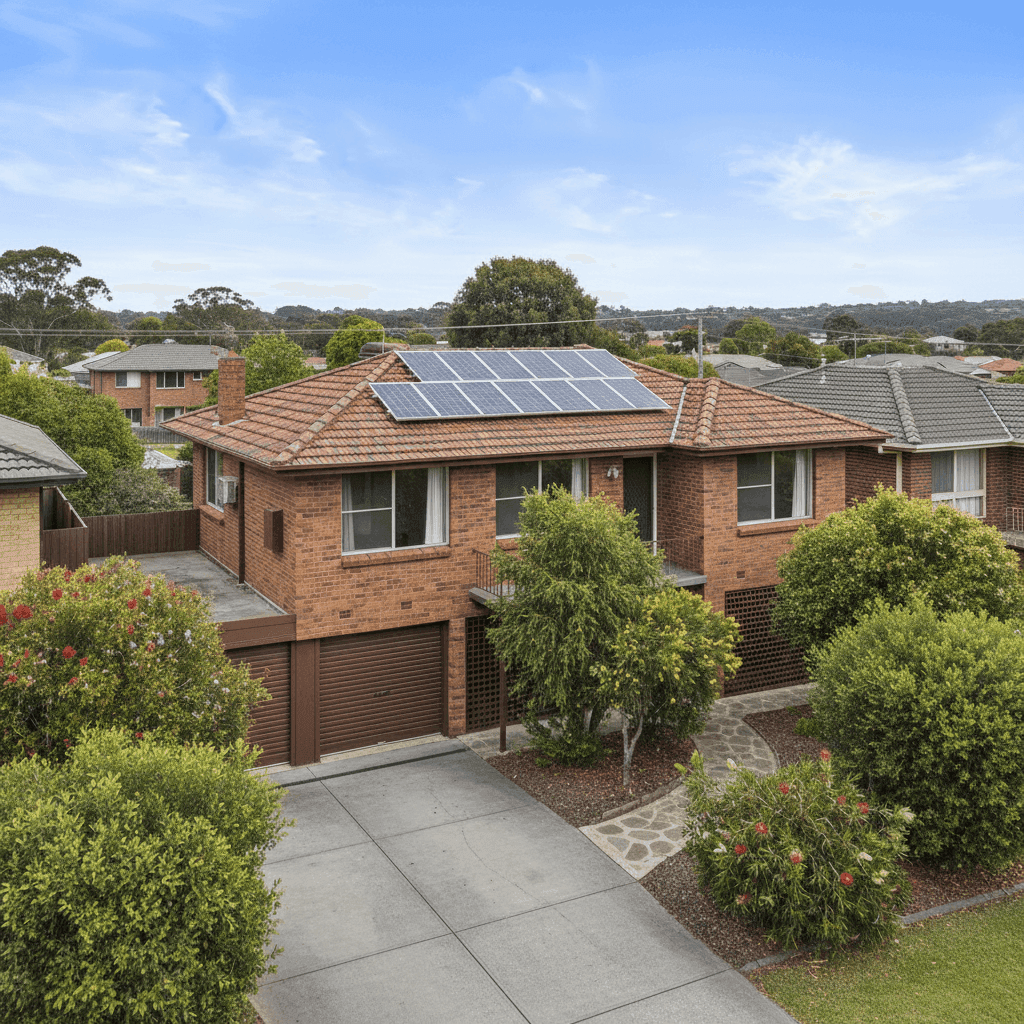
If you own a free standing home in Frankston South, VIC 3199, you're likely curious about what a fair home insurance premium looks like — and whether the quote sitting in your inbox is actually a good deal. This article breaks down a real home and contents insurance quote for a four-bedroom, two-bathroom brick veneer property in Frankston South, comparing it against local, state, and national benchmarks so you can make a truly informed decision.
---
Is This Quote Fair?
The short answer: yes — and then some.
This quote comes in at $1,213 per year (or roughly $118 per month) for a combined home and contents policy, covering a building sum insured of $685,000 and contents valued at $115,000. CoverClub's pricing engine rates this as Cheap (Below Average) — meaning it sits well below what most homeowners in the area are paying.
To put that into perspective, the suburb average premium in Frankston South is $3,190 per year, and the median sits at $2,759 per year. Even at the 25th percentile — meaning only one in four quotes are cheaper — the figure is $2,191 per year. This quote at $1,213 undercuts even that lower benchmark significantly, suggesting the policyholder has landed an exceptionally competitive rate.
The building excess is set at $3,000 and the contents excess at $1,000, which are on the higher side and will partly explain the lower annual premium. A higher excess means you're agreeing to absorb more of the cost in the event of a claim, which reduces the insurer's risk and, in turn, your upfront cost. It's a legitimate trade-off — just one worth understanding before you sign.
---
How Frankston South Compares
Frankston South sits within the City of Frankston LGA, where the average home insurance premium is $3,283 per year — slightly above the suburb's own average of $3,190. Across Victoria, the state average is $2,921 per year (median: $2,694), while nationally, Australian homeowners pay an average of $2,965 per year (median: $2,716).
Here's a quick summary of how this quote stacks up:
| Benchmark | Annual Premium |
|---|---|
| This Quote | $1,213 |
| Frankston South 25th Percentile | $2,191 |
| Frankston South Median | $2,759 |
| Frankston South Average | $3,190 |
| Frankston LGA Average | $3,283 |
| VIC State Average | $2,921 |
| National Average | $2,965 |
The data is drawn from 133 quotes collected in the Frankston South suburb, giving a solid statistical foundation for comparison. You can explore the full local data on the Frankston South insurance stats page, or broaden your view with Victoria-wide insurance data and national home insurance statistics.
---
Property Features That Affect Your Premium
Every home is unique, and insurers price risk based on a combination of construction characteristics, location factors, and the features of the dwelling itself. Here's how the specifics of this property likely influence the premium:
Brick Veneer Walls & Tiled Roof Brick veneer construction with a tiled roof is one of the most common combinations in suburban Victoria — and generally one of the more favourably priced. Both materials are considered durable and fire-resistant compared to alternatives like weatherboard or metal sheeting, which can translate to lower premiums.
Built in 1964 At over 60 years old, this home is well into its second half-century. Older homes can attract higher premiums due to the potential for ageing plumbing, wiring, and structural components. However, a well-maintained 1960s brick veneer home can still be priced competitively, especially if no significant claims history is attached to the property.
Stump Foundation & Timber/Laminate Flooring The home sits on stumps and is elevated by less than one metre. This style of foundation is common in older Victorian homes and can offer some resilience against minor flooding, though it also introduces specific risks around subfloor maintenance and pest damage. Timber and laminate flooring is generally straightforward to replace, keeping contents and building repair costs manageable.
Solar Panels This property has solar panels installed on the roof. Insurers typically factor in the replacement cost of solar systems when calculating building cover, so it's important to ensure the sum insured of $685,000 adequately accounts for the panels' value. Most modern home policies cover solar panels as part of the building, but it's worth confirming this with your insurer.
No Pool, No Ducted Climate Control, Not in a Cyclone Zone The absence of a pool removes a common liability risk that can push premiums higher. No ducted climate control means less complex mechanical infrastructure to insure. And being outside a designated cyclone risk area is a meaningful advantage — cyclone-prone regions in northern Australia often attract significant premium loadings.
Standard Fittings With standard-quality fittings throughout, the cost to repair or rebuild is more predictable and typically lower than homes with high-end or bespoke finishes. This keeps the building sum insured — and the premium — more grounded.
---
Tips for Homeowners in Frankston South
Whether you're reviewing your existing policy or shopping around for the first time, here are four practical steps to make sure you're getting the best value:
- Review your sum insured annually. Building costs in Victoria have risen sharply in recent years. Your $685,000 building sum insured should reflect what it would actually cost to rebuild your home from the ground up — not its market value. Use a building cost calculator or speak with a quantity surveyor to verify this figure each year.
- Understand your excess trade-off. This policy carries a $3,000 building excess, which is relatively high. If you're unlikely to make small claims, this can be a smart way to keep premiums low. But make sure you have that amount readily accessible in the event of an emergency.
- Confirm solar panels are covered. With solar panels on the roof, double-check your policy's product disclosure statement (PDS) to confirm they're included under building cover and that the sum insured is sufficient to replace them. Some policies have specific sub-limits for solar systems.
- Shop around at renewal time. The fact that this quote is priced well below the suburb average is a reminder that premiums can vary enormously between insurers for the same property. Loyalty doesn't always pay — comparing quotes annually is one of the simplest ways to avoid overpaying.
---
Ready to Compare?
Whether you're a first-time buyer in Frankston South or a long-time homeowner wondering if you're getting a fair deal, CoverClub makes it easy to see what the market looks like for your specific property. Get a home insurance quote today and find out how your premium compares — you might be surprised by how much you could save.