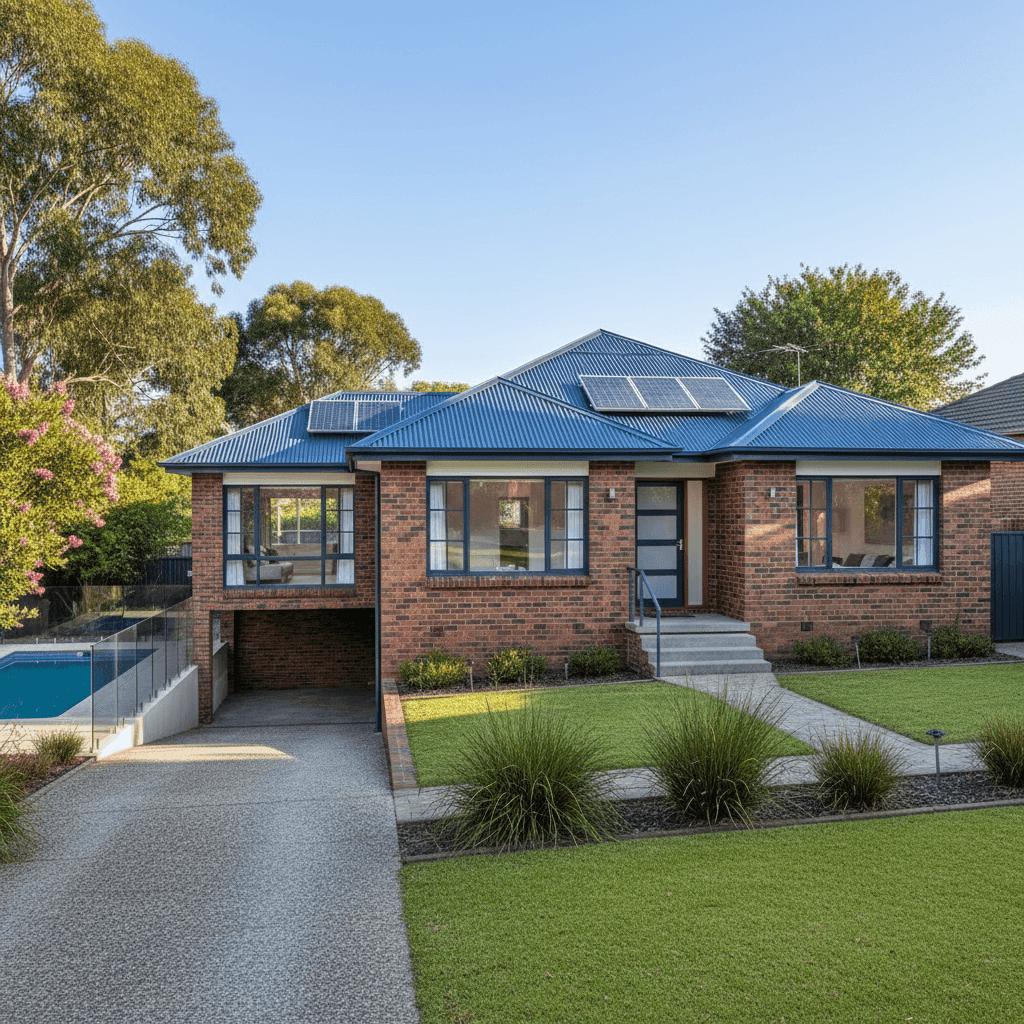
If you own a free standing home in Frankston South, VIC 3199, you already know it's one of the Mornington Peninsula's most desirable pockets — leafy streets, elevated blocks, and properties that command genuine value. But with that desirability comes the responsibility of protecting what is likely your most significant asset. This article breaks down a real building insurance quote for a six-bedroom, four-bathroom home in Frankston South, compares it against local, state, and national benchmarks, and offers practical advice for homeowners in the area.
---
Is This Quote Fair?
The annual premium for this quote comes in at $2,401 per year (or $223/month), covering building only with a $2,000 building excess. The sum insured is set at $863,000 — a figure that reflects the substantial size and above-average fittings quality of this property.
Our price rating for this quote is FAIR (Around Average), and the data backs that up. At $2,401/yr, this premium sits:
- Below the Frankston South suburb average of $3,190/yr
- Below the suburb median of $2,759/yr
- Above the suburb's 25th percentile of $2,191/yr (the cheapest quarter of quotes)
- Well below the suburb's 75th percentile of $3,810/yr
In practical terms, this homeowner is paying less than the majority of their neighbours for building cover, while still sitting comfortably within the normal range. It's not a bargain-basement price, but it's a solid result for a property of this size and specification.
---
How Frankston South Compares
Understanding how your suburb stacks up against broader benchmarks is one of the most useful things you can do when evaluating a quote. Here's how Frankston South sits in context:
| Benchmark | Average Premium | Median Premium |
|---|---|---|
| Frankston South (3199) | $3,190/yr | $2,759/yr |
| Victoria (VIC) | $2,921/yr | $2,694/yr |
| National | $2,965/yr | $2,716/yr |
A few things stand out here. First, Frankston South's suburb average ($3,190) is noticeably higher than both the Victorian state average ($2,921) and the national average ($2,965). This suggests that properties in this suburb tend to attract higher premiums — likely due to a combination of higher rebuild values, the age of local housing stock, and the elevated, coastal-adjacent nature of many blocks.
Interestingly, the LGA (Frankston City) average sits at just $1,940/yr — significantly lower than the Frankston South suburb figure. This reflects the diversity within the Frankston local government area; the broader LGA includes a wide range of property types and price points, while Frankston South skews toward larger, higher-value homes that naturally carry higher insured values and premiums.
This quote, at $2,401/yr, beats both the suburb average and the state average — a positive outcome for the homeowner. Based on 133 quotes sampled in the suburb, this result places the property in a favourable position relative to comparable local homes.
---
Property Features That Affect Your Premium
Several characteristics of this property have a meaningful influence on how insurers calculate risk and set premiums. Here's what matters most:
Age and Construction (Built 1960)
At over 60 years old, this home is considered an older dwelling by insurer standards. Older properties can carry higher rebuild risk due to outdated materials, heritage-style construction methods, and the potential for hidden wear in plumbing, wiring, or structural elements. Brick veneer external walls are generally viewed favourably by insurers — they offer solid fire resistance and structural durability — but the combination of age and a stump foundation means some insurers will price in additional risk for subsidence or movement over time.
Roof Type
The steel/Colorbond roof is a positive factor. Modern metal roofing is resilient, low-maintenance, and performs well in storm conditions — all things insurers appreciate. It's a meaningful upgrade from older tile or fibrous cement roofing common on homes of this era.
Elevated Position
This property is elevated by less than one metre. While this is a modest elevation, it can offer minor protection against surface water ingress and is noted by some insurers as a marginal risk reducer compared to ground-level slabs.
Timber and Laminate Flooring
Timber and laminate flooring can be a double-edged sword. It adds to the home's character and value, but timber in particular can be vulnerable to water damage, requiring costly replacement. This is factored into rebuild cost estimates and can nudge premiums slightly upward.
Pool, Solar Panels, and Ducted Climate Control
The presence of a swimming pool, solar panels, and ducted climate control all contribute to the overall insured value. These are significant assets in their own right — solar panel replacement alone can run into the tens of thousands — and insurers account for them when calculating what it would cost to fully rebuild and restore the property.
Above-Average Fittings Quality
With above-average fittings, this home likely features quality fixtures, stone benchtops, premium appliances, and high-end finishes. These details push the rebuild cost higher and are a key reason why the $863,000 sum insured is appropriate for a property of this calibre.
---
Tips for Homeowners in Frankston South
1. Review your sum insured regularly Construction costs have risen sharply in recent years. A sum insured that was accurate two or three years ago may now fall short of what it would actually cost to rebuild your home. Given the size, age, and quality of fittings in a property like this, an annual review — ideally using a quantity surveyor's assessment — is strongly recommended.
2. Consider your excess strategically This quote carries a $2,000 building excess. A higher excess typically reduces your premium, but make sure you're comfortable covering that amount out of pocket in the event of a claim. For a property of this value, a $2,000 excess is reasonable, but it's worth modelling a few scenarios to find the right balance for your situation.
3. Don't overlook your pool and solar assets Ensure your policy explicitly covers your swimming pool structure and solar panel system. Some standard building policies have sub-limits or exclusions for these items. Confirm with your insurer what is and isn't covered — and for how much.
4. Compare quotes at renewal time The insurance market moves. The fact that this quote sits below the suburb average is encouraging, but that doesn't mean it will remain competitive at renewal. Shopping around annually — even if you ultimately stay with your current insurer — is one of the simplest ways to avoid paying more than you need to.
---
Ready to Compare?
Whether you're reviewing an existing policy or shopping for cover on a new purchase, getting multiple quotes is always worthwhile. Use CoverClub to compare home insurance quotes for your Frankston South property and see how your premium stacks up against the market. It takes just a few minutes and could save you hundreds of dollars a year.