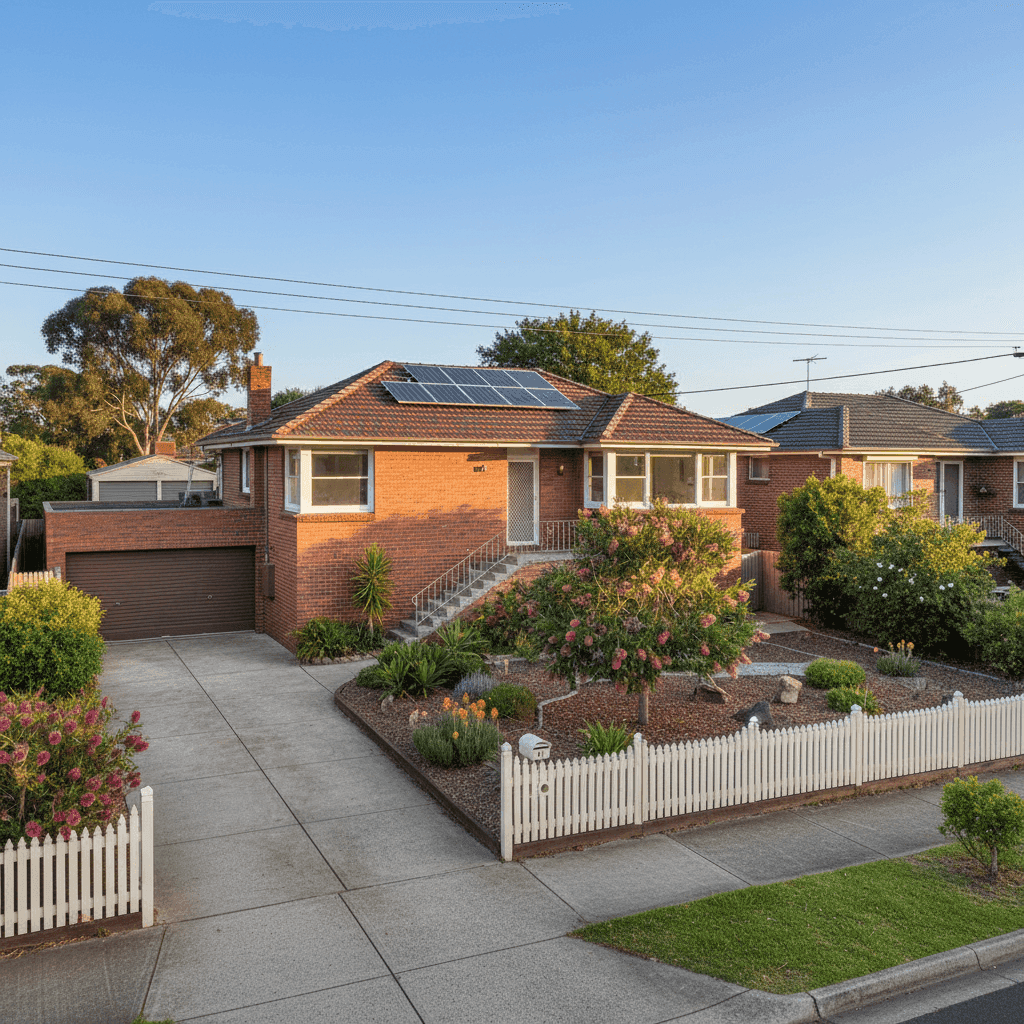
Frankston sits at the southern end of Port Phillip Bay, roughly 40 kilometres from Melbourne's CBD, and it's one of those suburbs that offers a genuinely liveable lifestyle without the inner-city price tag. For homeowners here, understanding what a fair home insurance premium looks like can be just as important as knowing the local property market. This article breaks down a real home and contents insurance quote for a three-bedroom, two-bathroom free standing home in Frankston (VIC 3199) — and puts it in context against suburb, state, and national benchmarks.
---
Is This Quote Fair?
The short answer: yes — and then some. At $908 per year (or roughly $85 per month), this quote for combined home and contents cover lands firmly in the "Cheap" category, sitting well below the Frankston suburb average of $1,352/yr and the suburb median of $1,332/yr.
To put that in perspective, this policy covers:
- Building sum insured: $506,000
- Contents value: $90,000
- Building excess: $3,000
- Contents excess: $1,000
The higher building excess of $3,000 is one factor that helps bring the annual premium down — insurers reward policyholders who are willing to absorb a larger share of smaller claims. That said, the $1,000 contents excess is fairly standard, and the overall coverage levels are solid for a property of this size and age.
Based on data from 82 quotes collected in the Frankston suburb, this premium sits below the 25th percentile of $923/yr — meaning fewer than one in four quotes in this area came in this low. That's a genuinely competitive result.
---
How Frankston Compares
One of the more striking takeaways from this quote is just how affordable Frankston is relative to broader benchmarks. Here's how the numbers line up:
| Benchmark | Average Premium | Median Premium |
|---|---|---|
| Frankston (3199) | $1,352/yr | $1,332/yr |
| Frankston LGA | $1,940/yr | — |
| Victoria (VIC) | $2,921/yr | $2,694/yr |
| National | $2,965/yr | $2,716/yr |
The suburb-level figures are significantly lower than both the Victorian state average and the national average — by more than double in some cases. This reflects Frankston's relatively low exposure to the extreme weather events (such as cyclones, flooding, and severe bushfires) that push premiums sky-high in other parts of the country.
It's also worth noting the gap between the Frankston suburb average ($1,352) and the broader Frankston LGA average ($1,940). The LGA encompasses a wider geographic area that may include higher-risk pockets, whereas the 3199 postcode specifically tends to attract more moderate premiums. You can explore localised data further on the Frankston suburb stats page.
For this particular quote, landing at $908/yr against a suburb average of $1,352/yr represents a saving of around $444 per year — nothing to sneeze at.
---
Property Features That Affect Your Premium
Several characteristics of this property work in the homeowner's favour from an insurance pricing perspective.
Brick veneer construction is generally viewed favourably by insurers. It's durable, fire-resistant, and widely used across Melbourne's suburbs — meaning it's well understood by underwriters. Compared to weatherboard or timber-clad homes, brick veneer typically attracts lower premiums.
Tiled roofing is another tick in the right column. Tiles are long-lasting and perform well in the moderate weather conditions typical of the Mornington Peninsula fringe. They're less susceptible to wind damage than corrugated iron in non-cyclonic areas, and they hold up well over decades.
Stump foundations are common in homes built in the 1960s across Victoria, and this property — constructed in 1962 — is no exception. While stumps can sometimes raise questions around subsidence or pest activity, they're a known quantity for insurers in this region and don't typically carry a significant premium loading when the home is well-maintained.
Solar panels are present on this property, which is worth flagging. Some insurers include solar panels under the building policy automatically, while others treat them as an optional add-on or require specific declaration. It's important to confirm with your insurer that the panels are covered under your building sum insured — both for damage to the panels themselves and for any liability arising from installation or malfunction.
At 169 square metres, the home is a comfortable size for a three-bedroom, two-bathroom layout. The building sum insured of $506,000 appears proportionate to the size and construction type, though it's always worth periodically reviewing your sum insured to ensure it reflects current rebuilding costs, which have risen considerably in recent years.
The absence of a pool and ducted climate control keeps things simple — fewer high-value fixtures mean fewer potential claims and a cleaner risk profile for insurers.
---
Tips for Homeowners in Frankston
1. Review your building sum insured annually Construction costs across Victoria have climbed sharply in recent years. The sum insured on your building policy should reflect what it would actually cost to rebuild your home from scratch — not its market value. If you haven't revisited this figure recently, it's worth getting an updated estimate. Being underinsured at claim time can be a costly mistake.
2. Confirm solar panel coverage with your insurer As mentioned above, solar panels aren't always covered as standard. Before renewing your policy, ask your insurer explicitly whether your panels are included, what events are covered (storm, fire, accidental damage), and whether there are any exclusions around installation age or panel brand.
3. Don't let your policy auto-renew without shopping around The fact that this quote came in at $908/yr — well below the suburb average — demonstrates that significant variation exists in the market. Insurers adjust their pricing models regularly, and loyalty doesn't always pay. Comparing quotes at renewal time is one of the simplest ways to avoid overpaying.
4. Consider your excess levels carefully The $3,000 building excess on this policy is on the higher side, and while it brings the premium down, it means you'd be out of pocket for that amount before your insurer steps in on a building claim. If you're confident you could absorb that cost in an emergency, it's a reasonable trade-off. If not, it may be worth exploring policies with a lower excess — even if the annual premium is slightly higher.
---
Ready to See What You Could Pay?
Whether you're a Frankston local or researching home insurance across Victoria, comparing quotes is the fastest way to find out if you're getting a fair deal. CoverClub makes it easy to see real premium estimates based on your specific property — no obligation, no fluff.
Get a home insurance quote today and find out where your property sits in the market.