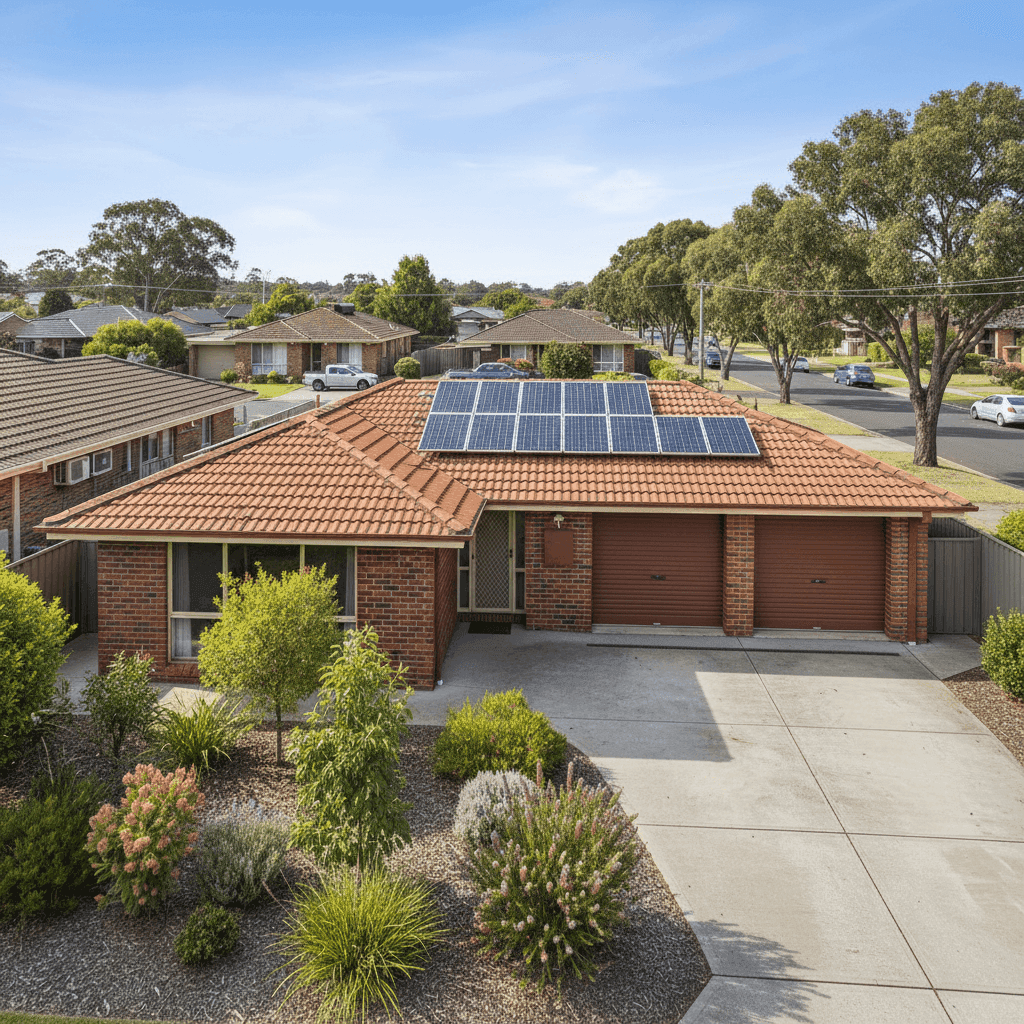
If you own a four-bedroom free standing home in Frankston, VIC 3199, you're probably wondering whether the premium you're being quoted is genuinely competitive — or whether there's a better deal out there. This article breaks down a real building insurance quote for a property in this suburb, benchmarks it against local, state, and national data, and offers practical guidance for homeowners looking to get the most from their cover.
---
Is This Quote Fair?
The quote in question comes in at $1,277 per year (or $122/month) for building-only cover on a 214 sqm, four-bedroom, two-bathroom free standing home, with a sum insured of $648,000 and a building excess of $5,000.
Our rating for this quote is FAIR — Around Average, and the numbers back that up.
Compared to the suburb average of $1,355/yr for Frankston, this quote sits about 6% below the local average and just under the suburb median of $1,288/yr. That's a modest but meaningful saving — not a standout bargain, but certainly not overpriced either.
What makes this rating particularly reassuring is the context: the quote lands squarely in the middle of the local price range. The cheapest 25% of Frankston quotes come in at $830/yr or less, while the most expensive 25% exceed $1,681/yr. At $1,277, this premium sits comfortably in the second quartile — reasonable value for the level of cover being provided.
---
How Frankston Compares
One of the most striking findings when you zoom out is just how affordable Frankston is relative to the broader Victorian insurance market.
| Benchmark | Average Premium | Median Premium |
|---|---|---|
| Frankston (suburb) | $1,355/yr | $1,288/yr |
| Frankston LGA | $3,283/yr | — |
| Victoria (state) | $3,000/yr | $2,718/yr |
| National | $5,347/yr | $2,764/yr |
The suburb-level premiums for Frankston are significantly lower than the LGA average of $3,283/yr — a gap that likely reflects the variation in risk profiles across the broader Frankston council area, which includes coastal and bushfire-adjacent pockets that attract higher premiums.
Compared to national benchmarks, Frankston homeowners are in a genuinely favourable position. The national average of $5,347/yr is more than four times this particular quote, and even the national median of $2,764/yr is more than double. Much of that national figure is skewed by high-risk regions — cyclone-prone areas in Queensland and the Northern Territory, bushfire corridors in regional NSW and Victoria, and flood-affected zones — none of which apply to this property.
For a metropolitan Melbourne suburb with relatively stable risk characteristics, Frankston's pricing reflects a manageable insurance environment.
---
Property Features That Affect Your Premium
Several characteristics of this property play a meaningful role in how insurers price the risk.
Brick veneer construction with a tiled roof is generally viewed favourably by insurers. Brick veneer offers solid resistance to fire and wind damage, while tiles are durable and widely understood by assessors. This combination tends to attract more competitive premiums than, say, weatherboard cladding or a corrugated iron roof on an older home.
Built in 1980, the home is now over four decades old. Older homes can attract slightly higher premiums due to the potential for aging wiring, plumbing, and structural components that may increase the likelihood of a claim. However, this is often offset by the solid construction standards of that era, particularly for brick veneer homes.
Stump foundations and timber/laminate flooring are worth noting. Homes on stumps can be more susceptible to subfloor moisture issues, and timber flooring — while attractive — can be more costly to replace than concrete slab alternatives. These factors are typically reflected in the sum insured rather than dramatically affecting the premium itself.
Solar panels are an increasingly common feature and one that insurers are paying closer attention to. Panels add replacement value to the building and, in some cases, can introduce a minor fire risk if not properly maintained. It's worth confirming with your insurer that solar panels are explicitly covered under your policy — some standard building policies include them automatically, while others may require an endorsement.
Ducted climate control is another feature that adds to the replacement cost of the building. Ducted systems are expensive to reinstall, and having them factored into the sum insured of $648,000 is important to avoid being underinsured.
The property is not in a cyclone risk area, which keeps premiums lower compared to northern Australian properties where cyclone loading can dramatically increase costs.
---
Tips for Homeowners in Frankston
1. Review your sum insured regularly With a sum insured of $648,000 on a 214 sqm home, the implied rebuild cost is approximately $3,028/sqm — broadly in line with current Victorian construction rates. However, building costs have risen sharply in recent years. It's worth revisiting this figure annually, or using a professional building cost estimator, to ensure you're not underinsured. Underinsurance is one of the most common and costly mistakes homeowners make.
2. Consider your excess carefully This policy carries a $5,000 building excess, which is relatively high. A higher excess typically reduces your premium, but it also means you'll need to cover more out-of-pocket in the event of a claim. Make sure this aligns with your financial buffer — if a $5,000 outlay would be a stretch, it may be worth comparing quotes with a lower excess to find the right balance.
3. Maintain your solar panels and electrical systems Given the home's age and the presence of solar panels, keeping up with routine maintenance and periodic electrical inspections is both a safety measure and an insurance consideration. Some insurers may reduce or deny claims if damage is found to result from poor maintenance. A licensed electrician's check every few years is a sound investment.
4. Shop around at renewal time Insurance loyalty rarely pays. Insurers frequently offer better rates to new customers than to those who simply roll over their policy each year. Using a comparison platform like CoverClub at renewal time takes just a few minutes and can surface meaningfully cheaper options — especially if your property details or risk profile have changed.
---
Compare Your Own Quote
Whether you're a first-time buyer or a long-time Frankston homeowner, it pays to know where your premium stands. CoverClub makes it easy to benchmark your quote against real data from your suburb and beyond. Get a building insurance quote today and see how your premium stacks up — you might be paying more than you need to.